
%[Nighttime garden with LED floodlight illuminating flower bed and lawn]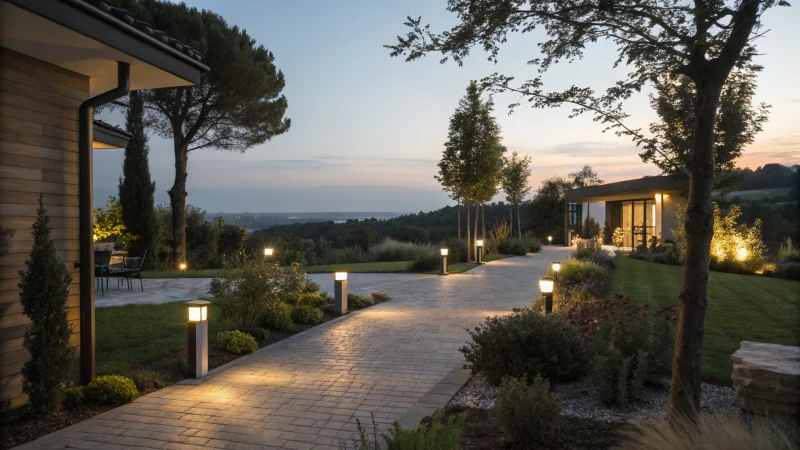
Ever wondered how much light a 100 watt LED floodlight can really throw?
The area covered by an LED flood light depends on its wattage, beam angle, and mounting height. Typically, a 100W LED flood light can cover around 100–150 square meters, while higher wattage models (e.g., 400W) can cover up to 500 square meters or more, making them ideal for large outdoor spaces, commercial areas, and industrial sites.
Sure, knowing the basics helps, but let me tell you, there's more to it than just wattage. I remember when I first set up outdoor lights; I underestimated how beam angles and height affect coverage. Let's explore these nuances so you can light your space just right.
A 100 watt LED floodlight covers up to 200 sq meters.False
Typically, a 100 watt LED floodlight covers 50 to 150 sq meters.
Beam angle affects floodlight coverage area.True
Beam angle influences how light is distributed, affecting coverage.
How Do Beam Angles Affect Flood Light Coverage?
Ever wondered how beam angles can transform your lighting setup?
Beam angles in flood lights control how light spreads and its brightness over an area. Wider angles offer a broad but less intense spread, ideal for large spaces, while narrower angles focus light, enhancing brightness in a smaller zone.
%[An outdoor scene at dusk with three flood lights casting different beam angles]
Understanding Beam Angles in Flood Lights
When I first started exploring lighting options for my own projects, I was surprised to learn just how much beam angles could influence the end result. Picture this: you're setting up a backyard party, and you want to avoid that harsh, blinding light that ruins the vibe. Instead, you aim for something cozy yet bright enough to keep everyone safe. This is where understanding beam angles becomes crucial.
Beam angles dictate how light spreads from the fixture to the environment. In essence, they affect the coverage area and the brightness intensity.
| Beam Angle | Coverage | Intensity |
|---|---|---|
| Narrow (30°) | Focused area | High |
| Medium (60°) | Balanced spread | Moderate |
| Wide (120°) | Large, open spaces | Lower |
Application Scenarios
-
Narrow Beam Angles (30°-60°)
I remember the time when I had to ensure our home security was top-notch. Narrow beam angles were my go-to for security lighting1. They provided that sharp, focused illumination needed to keep every corner of the property well-lit and secure. It's like having an extra set of eyes watching over the place.
-
Wide Beam Angles (120°-180°)
Think of those grand outdoor events where you need to light up vast areas like parking lots or stadiums. I once helped organize a community festival, and wide beam angles made the open spaces look inviting without leaving anyone in the dark.
-
Medium Beam Angles
When working on a commercial project, striking the right balance was key. Medium beam angles were perfect for achieving just the right amount of brightness across a room, ensuring everything was visible without the light being overwhelming.
Factors Influencing Choice of Beam Angles
- Mounting Height: Picture hanging lights at various heights; higher mounting requires wider beams for broader coverage without gaps.
- Purpose of Lighting: Different tasks require different focuses; task-specific applications might need narrow beams for precision while ambiance lighting needs a softer touch.
- Environmental Factors: Reflective surfaces can amplify coverage; obstructions may necessitate adjustment of angles.
For more meticulous planning, tools like beam angle calculators can be incredibly helpful in crafting the perfect lighting environment tailored to your needs. Explore how different beam types2 impact specific needs to ensure optimal lighting solutions. Understanding these nuances ensures your setup is both efficient and effective, creating spaces that are as functional as they are beautiful.
Narrow beam angles provide high-intensity lighting.True
Narrow beams focus light on specific areas, increasing intensity.
Wide beam angles are ideal for small, confined spaces.False
Wide beams are suited for large, open spaces, not confined ones.
How Does Mounting Height Influence Light Distribution?
Imagine trying to light up your backyard for a cozy evening gathering, only to find the light barely reaching the edges. That's where mounting height comes in.
Mounting height plays a pivotal role in light distribution, determining both the coverage area and intensity. Higher lights spread their glow wider but with less punch, while lower ones focus brightness intensely over smaller spaces.
%[Technical diagram illustrating light distribution from fixtures at different heights.]
The Science Behind Light Distribution
I've always been fascinated by how something as simple as changing the height of a light fixture can transform an entire space. Picture this: you're setting up lights for a community basketball court. If the lights are too low, you get intense brightness on one part of the court, leaving the rest in the shadows. Raise them up, and suddenly, you have a uniform glow that reaches every corner.
Here's a quick look at how it all breaks down:
| Mounting Height | Coverage Area | Light Intensity |
|---|---|---|
| Low (2-4 m) | Small | High |
| Medium (5-7 m) | Moderate | Medium |
| High (8-10 m) | Large | Low |
Applications in Different Settings
Low Mounting Height (2–4 meters): This is perfect for those intimate spaces like your garden or a pathway where you want to highlight specific plants or create a romantic ambiance. I remember setting up lights for a friend's garden party—it was all about creating that warm, inviting glow.
High Mounting Height (6–10 meters): Think of expansive parking lots or industrial areas. Here, the challenge is to cover large spaces without leaving dark spots. When I worked on a project for a commercial complex, we had to ensure safety and visibility across a sprawling area—definitely a task where higher mounting saved the day.
Factors Affecting Light Distribution
- Beam Angle: It's like adjusting the nozzle of a garden hose. A narrow angle will spotlight certain areas, while a wide angle spreads light more broadly. I once used this trick while lighting a stage for a local event—concentrated beams for the performers, softer light for the audience.
- Wattage: More wattage can compensate for reduced brightness at higher mounts. It reminds me of how we chose high-wattage lamps for a friend's warehouse—it was all about maximizing efficiency without blowing the budget.
- Environmental Conditions: Shadows from buildings or trees can play havoc with your lighting plans. Reflective surfaces can help bounce light around. I recall how we used white walls to our advantage in an art gallery setup—it made the space feel much brighter than it actually was.
Importance of Mounting Height in Design
Understanding mounting height is crucial for designing efficient lighting solutions. It's not just about aesthetics; it's about functionality and energy savings too. In one project, we strategically placed lights to reduce electricity usage while ensuring each area was well-lit. This approach not only cut costs but also contributed to sustainability goals—a win-win in my book!
By considering these factors, designers like me can create lighting systems that not only look great but also work efficiently, enhancing both functionality and beauty while keeping an eye on sustainability3.
Higher mounting height reduces ground-level light intensity.True
As lights are mounted higher, their intensity at ground level decreases.
Low mounting height covers large areas with uniform light.False
Low mounting heights focus light intensely over small areas, not large ones.
How Do Environmental Factors Influence Coverage?
Ever wondered how your environment subtly steers the course of your coverage plans?
Environmental factors influence coverage by altering accessibility, effectiveness, and distribution. In health insurance, socio-economic status impacts access, while in lighting, physical obstructions like buildings affect light spread.

Impact on Health and Insurance Coverage
Growing up in a bustling city, I never really noticed how much the air quality affected us until I moved to a more rural area. Suddenly, I realized that the slight wheeze I always thought was normal was actually pollution-induced. This got me thinking about how environmental conditions such as pollution levels4 and climate deeply impact health coverage. For instance, areas with high pollution often see increased healthcare claims due to respiratory diseases, which insurance providers factor into their policy pricing. Moreover, socio-economic conditions play a huge role too. Lower-income areas, where I used to volunteer, often struggle with reduced coverage options.
| Factor | Impact on Coverage |
|---|---|
| Pollution | Increases healthcare claims; affects insurance rates |
| Climate | Influences disease prevalence and insurance costs |
| Socio-economic Status | Alters access to quality healthcare |
Role in Lighting Systems
I remember when we were installing lights for a community park, the placement was crucial. It reminded me of how environmental factors such as obstructions and reflectivity are pivotal in lighting projects. Structures like trees or buildings cast shadows, reducing the effective area covered by lighting systems. However, reflective surfaces can enhance coverage by bouncing light, while darker surfaces absorb it.
- Obstructions: Can create shadows, requiring additional fixtures for complete coverage.
- Reflectivity: Light-colored surfaces extend coverage by reflecting light efficiently.
Broader Implications in Business
In my journey through various business ventures, adapting to climate change5 and socio-economic shifts has been a constant theme. Businesses need to be nimble. For example, logistics firms may need to adjust routes due to extreme weather conditions, impacting delivery coverage. Similarly, companies offering internet services might face infrastructure challenges in areas prone to natural disasters.
- Logistics: Adapt routes to account for weather disruptions.
- Internet Services: Infrastructure adjustments in disaster-prone areas.
Understanding these influences is essential for planning effectively, enhancing service delivery, and improving risk management strategies across various sectors.
High pollution increases healthcare claims.True
Pollution leads to respiratory issues, raising healthcare claims.
Reflective surfaces reduce lighting coverage.False
Reflective surfaces enhance lighting by bouncing light effectively.
Why Choose Different Wattages for Various Applications?
Ever wondered why some lights are bright enough to make you squint, while others barely light up a room?
Choosing different wattages ensures the best lighting and energy efficiency for various spaces. Lower wattages suit cozy corners, while higher ones light up larger areas. The trick is in finding that sweet spot between brightness and energy use.
%[A modern office interior showcasing various light bulbs of different wattages on a table.]
Understanding Wattage and Its Impact
When I first started exploring the world of lighting for my projects, the concept of wattage was like a secret code I had to crack. Wattage, as it turns out, is more than just a number—it’s the power a light uses, and it heavily influences both the brightness of the light and how much energy it consumes. For instance, those warm, inviting lights in my living room are low-wattage wonders that brighten my evenings without hiking up my electricity bill.
Low Wattage Applications
I remember setting up garden lights for the first time—choosing lower wattage options (50W–100W) seemed like the perfect choice. They offered just the right amount of glow to make my small garden look like a serene retreat after dusk. Whether it's for a garden or some discreet home security lighting, these low-wattage lights can comfortably cover areas between 50 and 150 square meters.
| Application | Wattage Range | Coverage Area |
|---|---|---|
| Garden Lighting | 50W - 100W | 50 - 150 sq. m |
| Home Security | 50W - 100W | 50 - 150 sq. m |
Mid-Range Wattage Uses
For those bigger spaces, like when I had to light up the courtyard for a family gathering, mid-range wattage lights (150W–300W) were spot on. They spread light over 150 to 350 square meters, striking a balance between brightness and energy efficiency.
High Wattage Scenarios
Then there are those times when nothing but the brightest will do—like when I was tasked with lighting a local sports field. That’s when high-wattage lights (400W–1000W) came into play, turning vast expanses into well-lit arenas perfect for evening games.
Influences of Beam Angle
Beam angle has also been an eye-opener for me—literally! A wide beam angle (120°–180°) is fantastic for large areas, casting an even spread of light without being too harsh. On the other hand, a narrow beam angle (30°–60°) is perfect when you need intense light focused on a specific spot—great for security lighting6 around my home.
Considerations for Mounting Height
The height at which lights are mounted also plays a significant role. Lower mounts (2-4 meters) have worked wonders in my garden, while higher mounts (6-10 meters) provided the expansive coverage needed for larger venues like stadiums.
Understanding how wattage interacts with beam angles and mounting heights has transformed how I approach lighting design. It’s all about achieving that perfect level of illumination while keeping energy use in check—something I'm always striving for in my projects. Exploring these variables ensures I get the most out of every fixture, balancing cost and functionality efficiently. Energy efficiency7 remains a priority in every choice I make.
Low wattage lights cover 50 to 150 square meters.True
Low wattage lights are ideal for small to medium-sized areas, covering 50-150 sq. m.
High wattage is unnecessary for industrial yards.False
High wattage (400W–1000W) is needed for large-scale applications like industrial yards.
Conclusion
A 100 watt LED floodlight typically illuminates 50 to 150 square meters, influenced by mounting height and beam angle, making it ideal for gardens and security lighting.
- Learn why narrow beams are perfect for high-intensity applications like security lighting. ↩
- Discover how different beam types cater to specific lighting needs effectively. ↩
- Learn about the environmental and economic benefits of sustainable lighting. ↩
- Explore how pollution increases healthcare claims and affects insurance rates. ↩
- Learn how businesses adapt routes and services to mitigate climate risks. ↩
- Explore how narrow beam angles can enhance security by focusing light intensity on specific areas. ↩
- Learn techniques to maximize energy efficiency in lighting setups, reducing overall consumption. ↩