I see buyers choose outdoor LED brands by price, then face early failures, rust, and warranty disputes. I compare what really lasts and what only looks cheap.
The best outdoor LED light manufacturers are not the cheapest. The most reliable brands pair metal housings, IP65 or better sealing, stable drivers, 50,000-hour class LEDs, and strong warranties. Residential leaders include Kichler, VOLT, FX Luminaire, WAC, and Unique Lighting. Commercial leaders include Acuity, Signify, Cree Lighting, RAB, Hubbell, and GE Current.12
I break this into homeowner, installer, and distributor views. I focus on lifespan, weather sealing, warranty terms, and field failures instead of ad copy.
1. Which Outdoor LED Brands Actually Last? A Quick Scorecard for Homeowners and Pros
I see many brands promise long life, but weak housings and poor sealing kill fixtures early. I use a practical scorecard to separate durable brands from short-term buys.
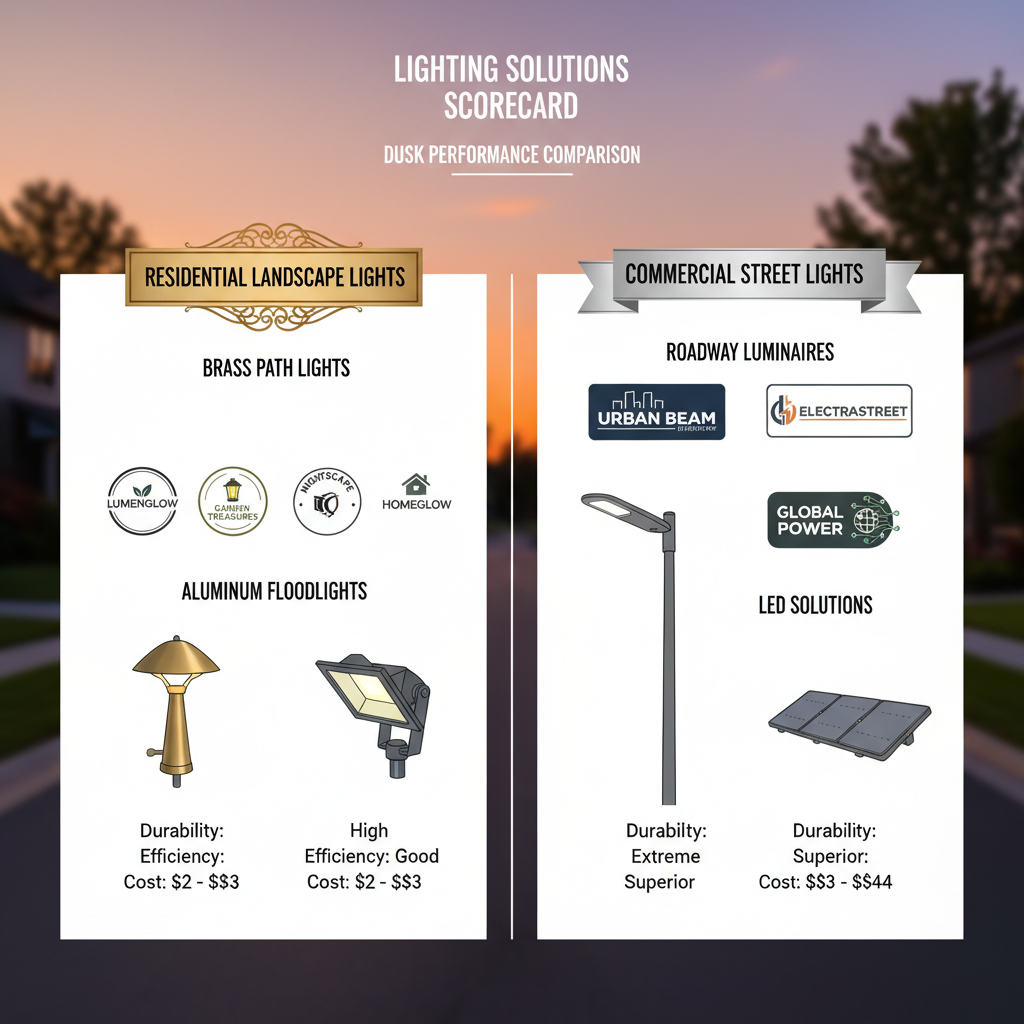
The outdoor LED brands that usually last longest are those with brass or high-grade aluminum bodies, sealed optics, proven drivers, and 5-year-plus warranties. For residential landscape use, installers often trust FX Luminaire, VOLT, Kichler, WAC, and Unique Lighting. For commercial roads and sites, Acuity, Signify, Cree Lighting, Hubbell, and RAB lead.
What I look for first
I start with body material. Brass ages well in wet and coastal areas. Powder-coated cast aluminum can also work well if the finish and gasketing are good. Thin stamped metal and brittle plastic fail faster outdoors.
I also check the driver. Many outdoor LED failures are not LED chip failures. They are driver failures from heat, moisture, surge, or poor component quality. The U.S. Department of Energy has long noted that LED system life depends on thermal management and electronics, not only the diode package.1
| Brand group | Best fit | Typical strength | Common caution | My take |
|---|---|---|---|---|
| FX Luminaire | Premium landscape | Strong ecosystem, pro-grade build | Higher budget | Strong long-life choice |
| VOLT Lighting | Residential landscape | Brass fixtures, lifetime warranty on many lines | Consumer-direct range varies | Great value-to-durability balance |
| Kichler | Landscape and architectural | Broad catalog, solid finish quality | Some lines are style-first | Safe mainstream option |
| WAC | Architectural outdoor | Good optics, modern design | Price can rise fast | Good for design-led projects |
| Unique Lighting | Landscape | Contractor-friendly systems | Regional availability | Trusted by many installers |
| Trimlight | Permanent holiday | Installed systems, long coverage | Dealer network model | Strong managed solution |
| Gemstone | Permanent holiday | Long-term warranty, mature brand | Premium upfront cost | Good for homeowners wanting support |
| Acuity Brands | Street and area | Controls, scale, spec support | Complex catalog | Excellent for projects |
| Signify (Philips) | Street and city | Smart-city readiness, global support | Premium pricing | Top-tier commercial brand |
| Cree Lighting | Roadway and area | High efficacy, known optics | Product selection discipline needed | Strong municipal option |
I score brands on five simple points: ingress protection, material, driver reputation, warranty clarity, and spare parts support. I also check if fixtures are UL listed or carry equivalent approvals for the market.3
I do not treat a 50,000-hour claim as proof. That number often refers to LED lumen maintenance under lab conditions. Real outdoor life depends on heat, ambient weather, surge exposure, installation quality, and enclosure design.
2.7 Criteria to Compare Outdoor LED Manufacturers (Beyond Marketing Claims)
I hear buyers compare wattage and price only, then regret it when corrosion, water ingress, and poor support appear. I use seven criteria that expose real value.
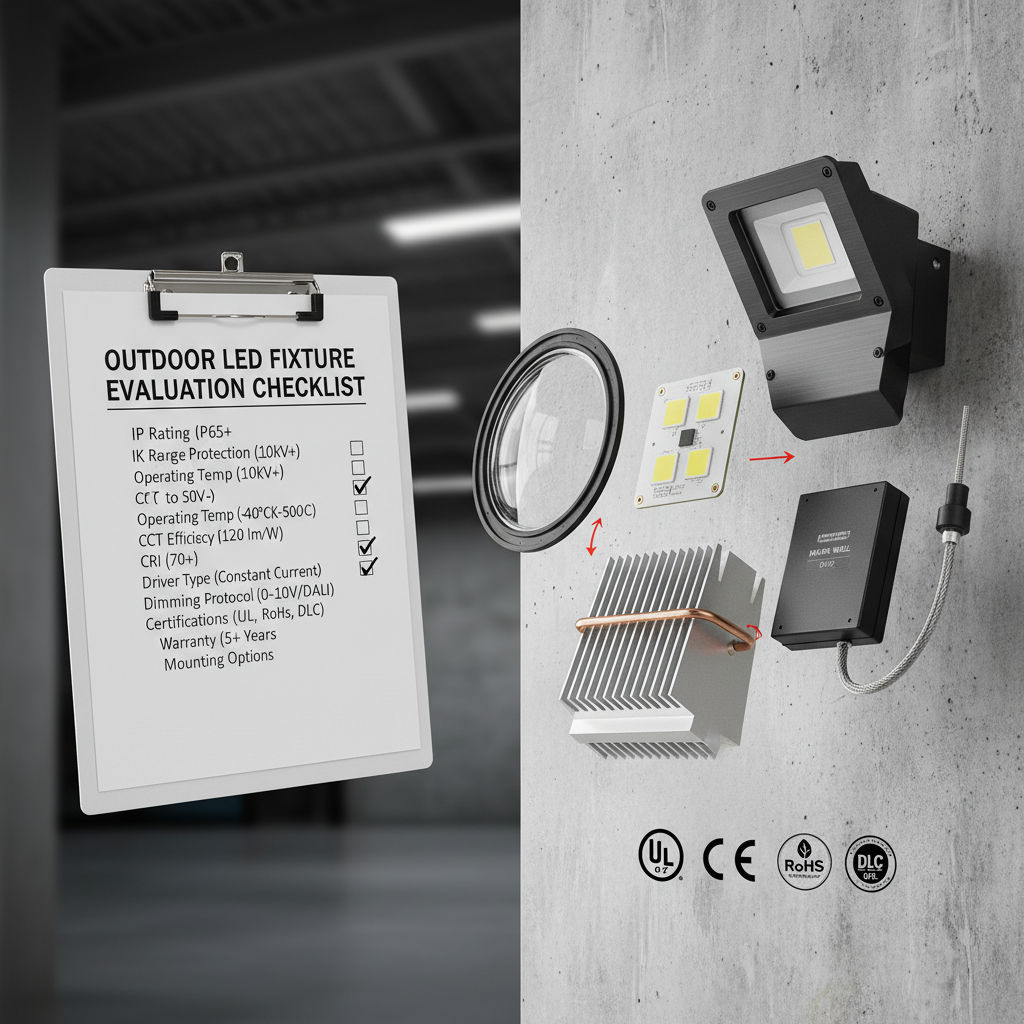
The best way to compare outdoor LED manufacturers is to check material quality, IP65 or higher protection, driver quality, surge protection, luminous efficacy, warranty terms, and certifications like DLC or safety listings. Marketing words matter less than test data, housing design, and support terms.24
The 7 checks I use in sourcing
First, I check the housing. Marine-grade coatings, brass, stainless fasteners, and thick gaskets matter. Second, I verify the IP rating. IP65 is a good minimum for many outdoor fixtures. IP66 or IP67 may fit harsher environments. IEC explains that IP codes show protection against solids and water ingress, not total lifetime quality by themselves.4
Third, I look at driver and surge protection. Outdoor power quality is not always clean. Street and area fixtures often need 6kV to 10kV surge protection or more. Fourth, I compare lumen output and efficacy. Higher efficacy can cut operating cost, but only if optics place light correctly.2
Fifth, I check optical quality. A good lens and beam pattern often beat raw wattage. Sixth, I review warranty language. I want clear coverage for fixture, finish, and driver. Seventh, I confirm certifications. Commercial buyers often ask for DLC and safety approvals because rebate and project specs may require them.5
| Criterion | What I verify | Good sign | Red flag |
|---|---|---|---|
| Housing material | Brass, die-cast aluminum, stainless screws | Thick body, corrosion-resistant finish | Thin metal, mixed cheap fasteners |
| Weather sealing | Gasket, cable entry, lens seal | IP65+ with test basis | “Waterproof” with no code |
| Driver | Brand, temperature range, serviceability | Stable driver and surge rating | No driver details |
| Optical performance | Beam angle, lens quality | Useful distribution and glare control | Only wattage listed |
| Efficiency | lm/W and system output | Strong luminous efficacy | Inflated package claims |
| Certification | Safety and performance marks | UL listed, DLC where needed | Fake or missing files |
| Warranty | Years and terms | 5-year+ written coverage | Vague “limited” promise |
I also check CRI, CCT, and color temperature if the project is residential or architectural. Warm 2700K to 3000K is common in landscape work. Street and area projects often use higher CCT for visibility and efficacy.
As a B2B manufacturer, we see another point buyers miss. Communication speed matters. A decent product with fast support often beats a famous brand with slow answers when a project deadline is close.
3.Brand-by-Brand Review: Who Shines in Landscape, Permanent Holiday, and Street Lighting?
I see buyers mix categories and compare brands that serve very different jobs. I split them by use case so the shortlist becomes clearer and safer.
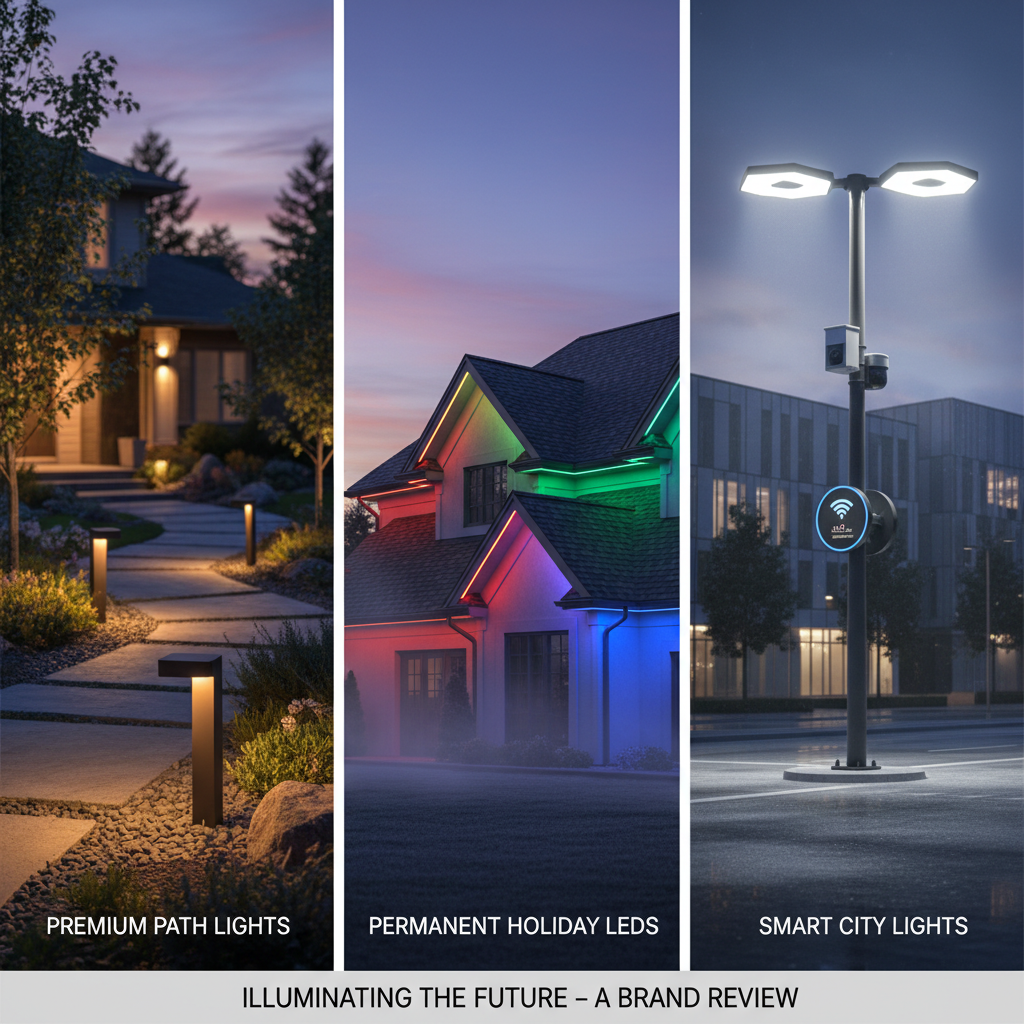
Landscape brands and permanent holiday brands solve different problems from street lighting brands. Kichler, FX Luminaire, WAC, VOLT, and Unique Lighting fit residential landscape needs. Trimlight and Gemstone are stronger in permanent holiday lighting. Acuity, Signify, Cree Lighting, Hubbell, RAB, and GE Current dominate commercial roads and area lighting.56
Landscape, holiday, and street are not the same market
In landscape lighting, installers often prefer fixture bodies that can survive irrigation, mulch, fertilizer, and sun. Brass path lights and directional spots remain popular because they age well. VOLT is often praised for brass options and accessible pricing. FX Luminaire and Unique Lighting are known in contractor circles for robust systems and design flexibility. Kichler and WAC are often chosen when style and finish options matter.
In permanent holiday lighting, the buyer wants a clean roofline look, app control, color scenes, and long support terms. Trimlight and Gemstone usually stand out because they offer installed systems, dealer support, and long warranty language. DIY brands like Govee attract budget-focused buyers but often carry shorter warranty coverage and lighter-duty installation expectations.
Street and area lighting is another level. Municipal and commercial projects usually want controls, dimming, surge resistance, optics for roadway classes, and DLC qualification. Signify, Acuity, Cree Lighting, GE Current, Hubbell, and RAB are strong because they support spec-driven projects and smart controls.56
| Category | Best-known brands | Why they stand out | Buyer note |
|---|---|---|---|
| Residential landscape | FX Luminaire, VOLT, Kichler, WAC, Unique Lighting | Durable housings, installer trust, design range | Check body material by series |
| Permanent holiday | Trimlight, Gemstone, JellyFish, Govee DIY | App control, roofline systems, color scenes | Warranty and install method matter most |
| Street and area | Acuity, Signify, Cree Lighting, Hubbell, RAB, GE Current | Controls, efficacy, spec compliance, scale | Best for projects and municipalities |
I group buyers into three buckets. Homeowners want low maintenance. Installers want fewer callbacks. Distributors want warranty stability and repeatable quality. The best brand is the one that reduces all three risks.
4.Real-World Failure Modes: What Installers and Case Studies Reveal About “Good” and “Bad” Brands
I see many failed fixtures blamed on LEDs, but the real cause is often water, heat, or bad drivers. Field failures tell the truth faster than brochures.
Good outdoor LED brands reduce common failures like water ingress, driver burnout, coating corrosion, and lens yellowing. Bad brands usually fail at seals, electronics, or finish quality first. Installers judge brands by callback rate more than by spec-sheet claims.14
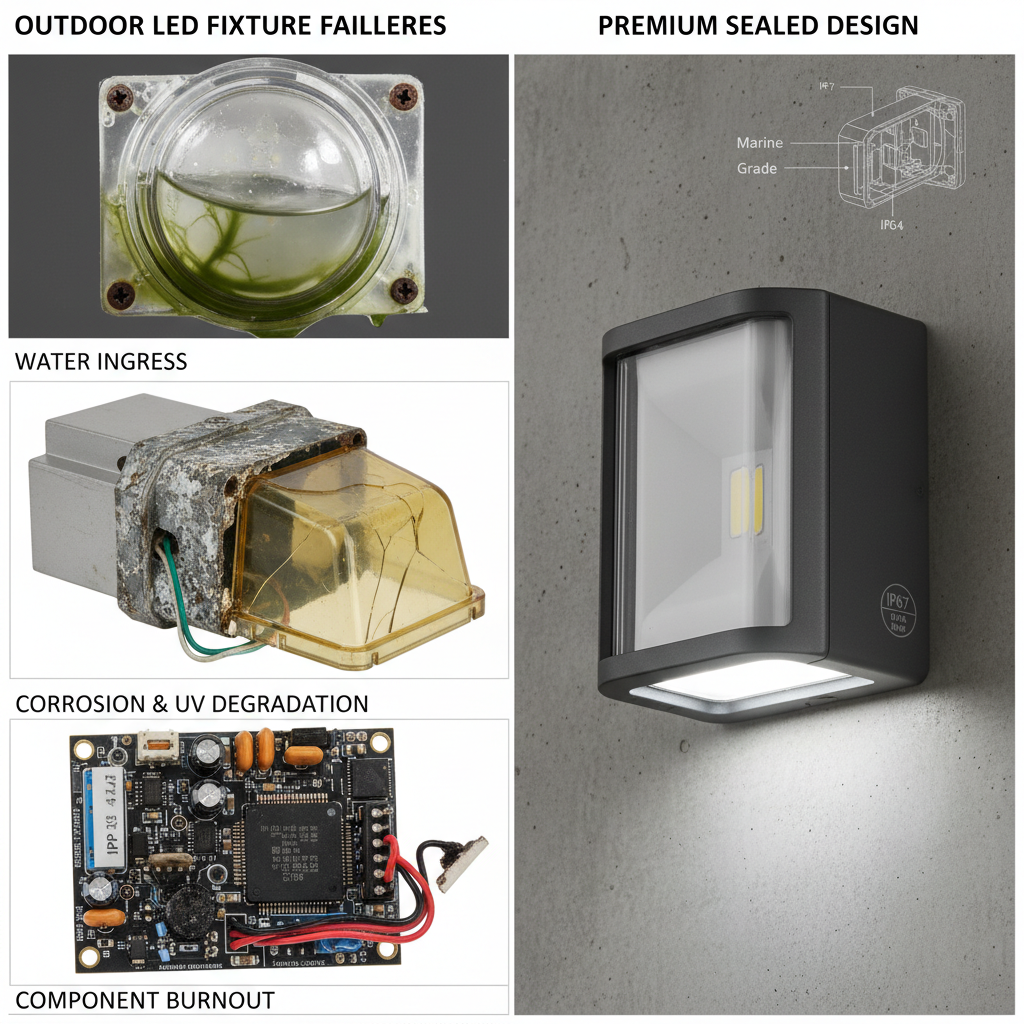
The failures I see most often
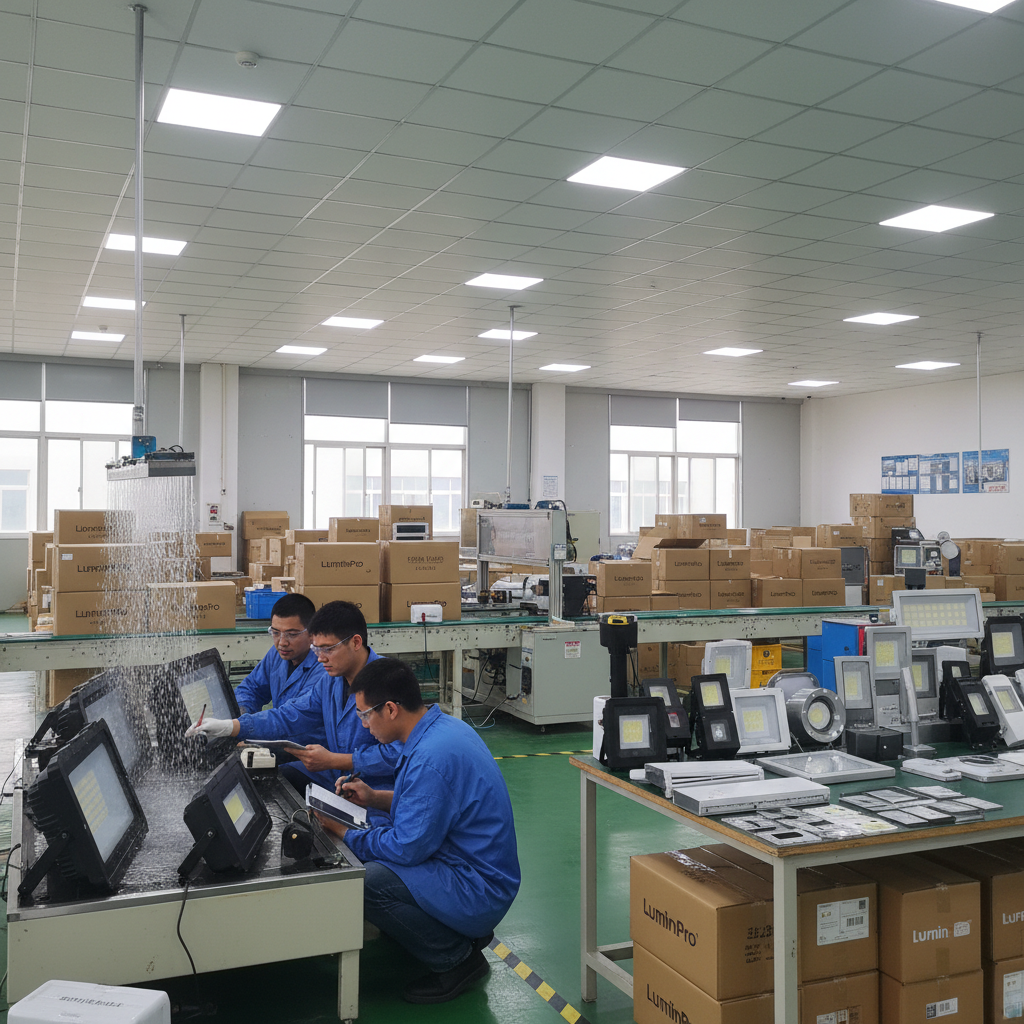
Water ingress is the first problem. A fixture may claim outdoor use, yet cable entries, lens seals, or screw points are weak. Once moisture enters, corrosion starts and the driver becomes unstable. IEC IP testing helps define water protection, but real use adds UV, dirt, and thermal cycling.4
Heat is the second problem. A compact decorative fixture may trap heat around the driver. The LED source can still be fine while output drops because the driver ages early. DOE research has shown that thermal management is a core driver of LED system reliability.1
The third issue is surge damage. Outdoor circuits face lightning-related events and unstable grids. Commercial fixtures should specify surge protection. Street projects often demand stronger SPD levels than garden lights.
The fourth issue is finish failure. Coastal air, road salt, and fertilizer attack cheap coatings fast. Brass and well-finished cast aluminum usually hold up better than thin painted metal.
| Failure mode | What causes it | What I check before buying | Best prevention |
|---|---|---|---|
| Water ingress | Weak gaskets, poor cable sealing | IP test data, enclosure details | IP65+ with proven sealing |
| Driver burnout | Heat, low-grade components | Driver brand, ambient rating | Better thermal design |
| Corrosion | Salt air, poor finish, mixed metals | Housing and fastener material | Brass or strong powder coat |
| Lens yellowing | UV exposure, cheap polymers | Lens material details | UV-stable optical materials |
| Color shift | Poor binning, heat stress | LED binning control | Better LEDs and heat sinking |
| Premature dimming | Dirt, thermal stress, bad driver | LM data and service access | Proper maintenance and quality parts |
I always ask installers one question: which brand gives the fewest callbacks after two rainy seasons? That answer is usually more valuable than a polished catalog.
5.faq:
I know buyers still have practical sourcing concerns after brand comparisons. I answer the common points that affect compliance, lead time, and long-term support.
For B2B buyers, the real questions are certification proof, warranty handling, MOQ, delivery speed, and customization support. Those details often decide whether a supplier is useful in real projects.

What I recommend buyers confirm before ordering
If I am buying for distribution or projects, I ask for certification files, test reports, warranty text, and packaging details before I approve samples. I also ask how defects are handled. A fast replacement policy saves real money.
I check delivery promises against production capacity. At Besenled, we operate as a direct factory with 5 production lines, so I understand why buyers ask this. They want stable lead time, not just a nice quote. For many importers and contractors, communication speed matters almost as much as product price.
I also ask about customization. Logo, CCT, beam angle, cable length, and packaging can matter for distributors who rebrand. For Jose-type buyers in Mexico or Latin America, private label value can be as important as base fixture cost.
1. What is the most reliable brand of outdoor LED lights?
I know buyers want one name, but reliability depends on use case. For landscape lighting, FX Luminaire, VOLT, Kichler, WAC, and Unique Lighting are commonly trusted. For commercial street and area use, Signify, Acuity, Cree Lighting, Hubbell, and RAB are strong picks because of controls, spec support, and project-grade build.
2. How long do outdoor LED lights from major brands last?
I treat 50,000 hours as a reference point, not a guarantee. Good outdoor fixtures often target 50,000 to 100,000 hours in controlled test conditions, but real life depends on heat, sealing, driver quality, and surge exposure.1 A strong warranty and proven field history matter as much as the hour claim.
3. What IP rating should I look for in outdoor LED fixtures?
I usually start at IP65 for many outdoor applications. Harsher environments may need IP66 or IP67, especially where spray, dust, or standing water risk is higher.4 I also check housing quality because a higher IP code alone does not guarantee long service life.
4. Are big-box store brands like Hampton Bay or Malibu good for long-term use?
I see these brands used for budget projects and quick upgrades. They can work for lighter-duty residential needs, but they are not my first choice for long-term installer-grade performance. Buyers who want fewer replacements often move toward brass fixtures, stronger warranties, and contractor-focused brands.
5. How do smart-city outdoor lighting brands differ from residential brands?
I see a big gap in controls, optics, and compliance. Smart-city brands focus on networked controls, dimming, energy monitoring, roadway optics, and DLC or utility program alignment. Residential brands focus more on appearance, beam effect, and simpler installation.56
6. How do permanent holiday lighting brands compare (Trimlight vs Gemstone vs Jellyfish vs DIY)?
I compare them by install model and support. Trimlight and Gemstone usually appeal to buyers who want installed systems and long-term support. JellyFish also sits in the permanent system space. DIY options like Govee usually win on upfront price, but not always on warranty length or long-term service expectations.
7. How much energy do outdoor LED brands really save vs old lights?
I usually see the biggest savings when LEDs replace halogen, metal halide, or high-pressure sodium systems. Energy savings can reach roughly 50% to 75% depending on the old technology, fixture design, and controls strategy.26 Smart dimming and occupancy schedules can push total system savings higher.
Frequently Asked Questions
Can you provide certification documents before bulk orders?
Yes. I recommend asking for UL, CE, RoHS, or project-specific files before sample approval. I also suggest matching the file numbers to the exact model you plan to buy.
What is a realistic MOQ for customized outdoor LED products?
It depends on the housing and driver setup. I often see lower MOQs for standard models and higher MOQs for custom branding, beam angles, or packaging.
How fast can a factory deliver project orders?
Lead time depends on stock, customization, and test requirements. At Besenled, we support fast factory scheduling, and many orders move in 3 to 15 days after details are confirmed.
How should I check quality before placing a container order?
I ask for samples, test photos, aging data, and packaging details. I also suggest checking finish quality, cable sealing, and driver labels during sample review.
Can outdoor fixtures be customized for distributors?
Yes. We often support logo, label, packaging, wattage, color temperature, and some structural details. I recommend confirming artwork and compliance scope before production.
Conclusion
I choose outdoor LED brands by material, sealing, driver quality, and warranty first. That approach reduces failures, protects margins, and makes repeat buying much safer.
Ready to Source? Let's Talk.
Want samples, catalogs, or a project quotation?
Contact Rain Cai: sales10@besenled.com | www.besenledlight.com
Sources
DOE Solid-State Lighting Research and Development: LEDs for Lighting — https://www.energy.gov/eere/ssl/led-lighting ↩ ↩ ↩ ↩ ↩
ENERGY STAR Light Bulbs — https://www.energystar.gov/products/light_bulbs ↩ ↩ ↩ ↩
UL Certification Marks — https://www.ul.com/resources/ul-certification-marks ↩
DesignLights Consortium — https://www.designlights.org/ ↩ ↩ ↩ ↩
LED Roadway Lighting — https://www.energy.gov/eere/ssl/led-roadway-lighting ↩ ↩ ↩ ↩