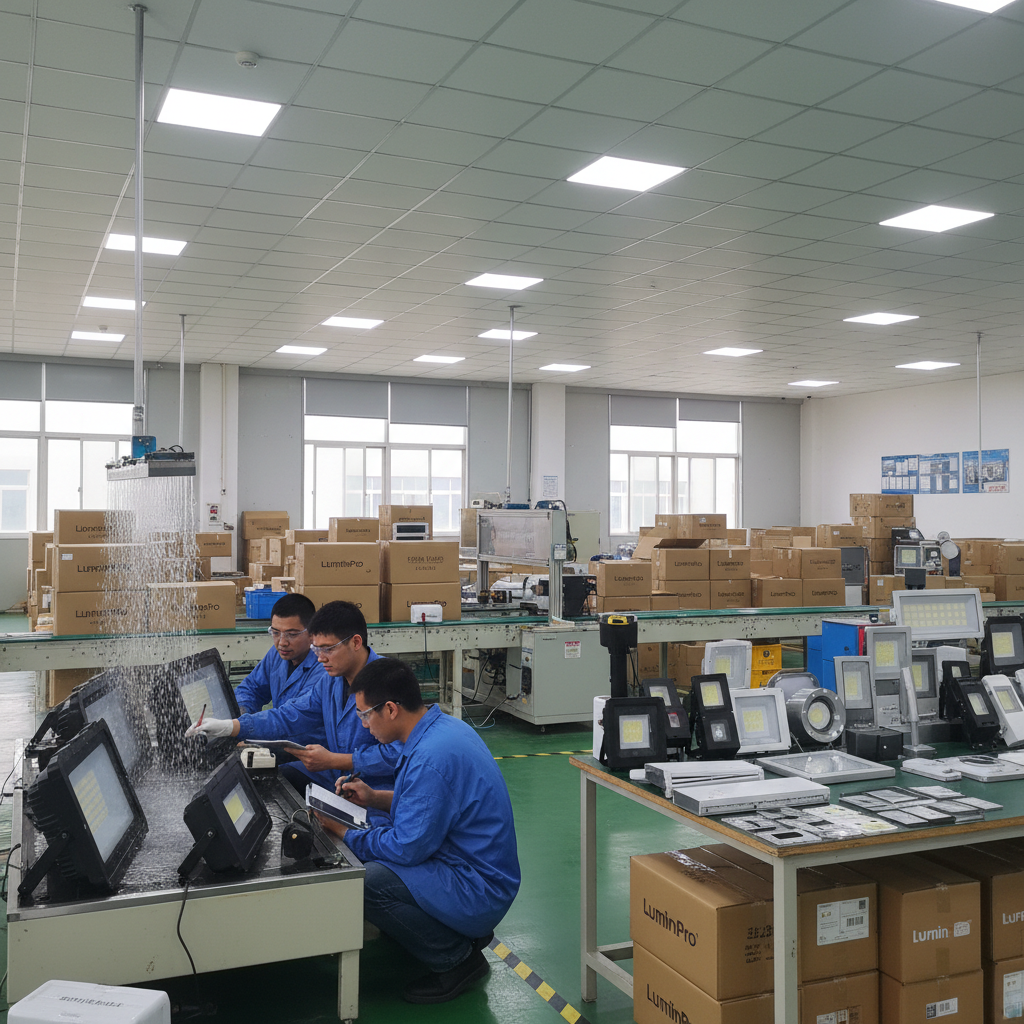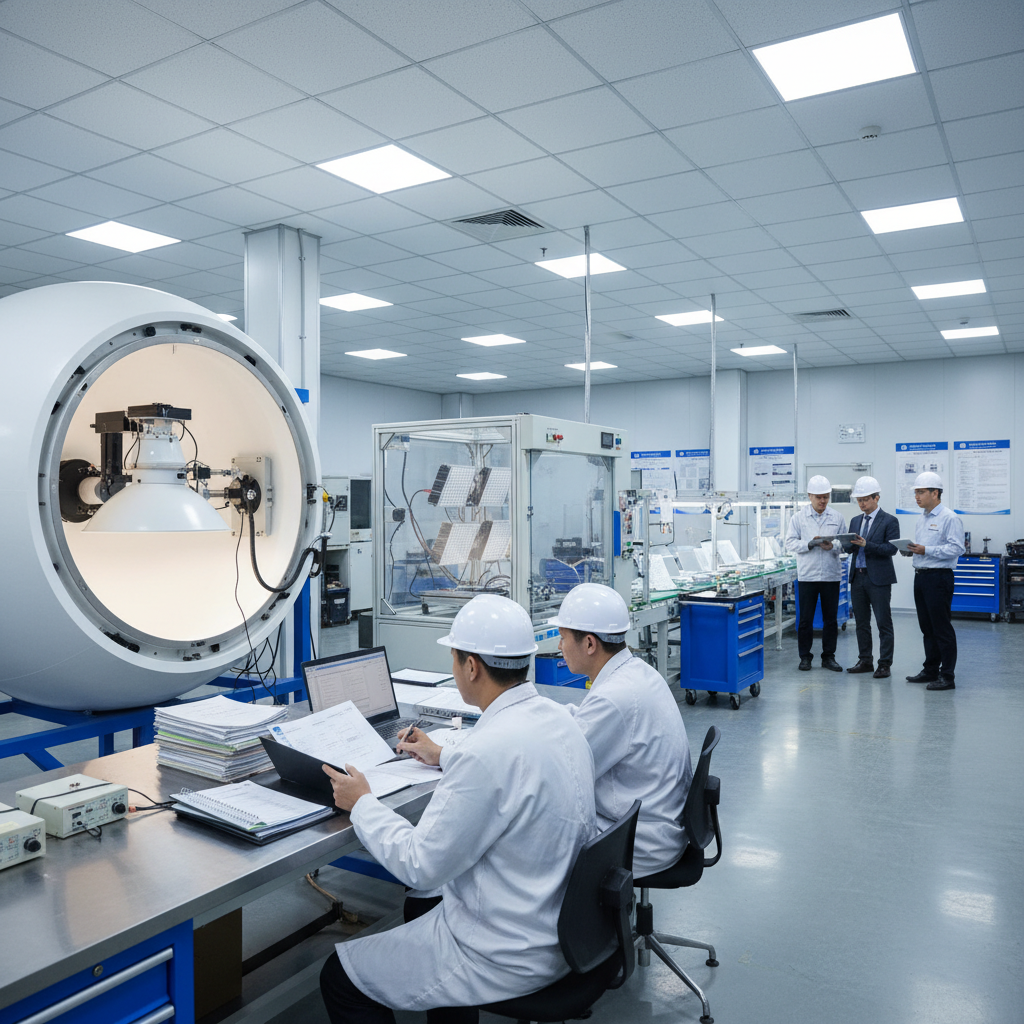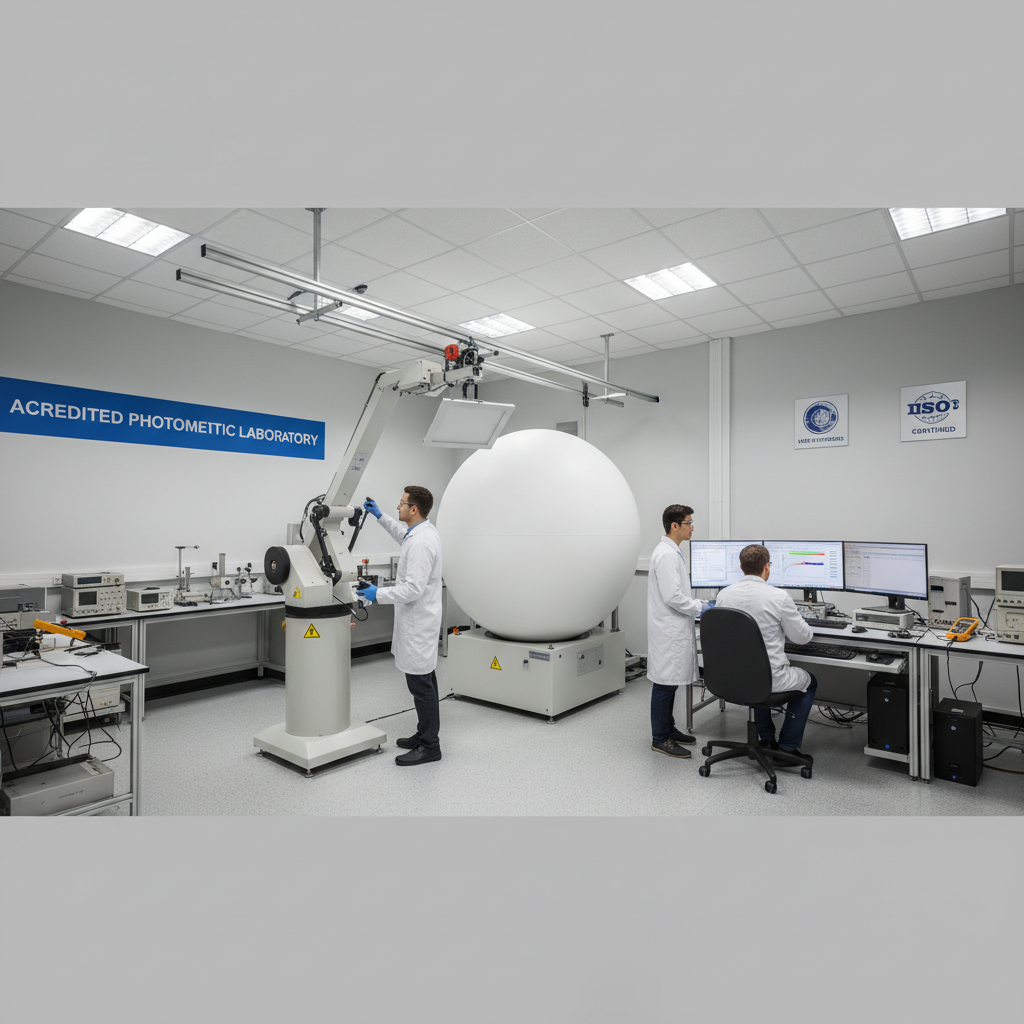

I see buyers lose money on cheap fixtures with weak warranties. I know the pain gets worse when failures hit projects, labor bills rise, and support goes silent.
A top LED light manufacturer should offer at least a 5-year warranty, clear driver and LED module coverage, and fast technical support. The best brands now offer 7-10 years, strong claim handling, and documented rated life, which lowers replacement, maintenance, and downtime costs.
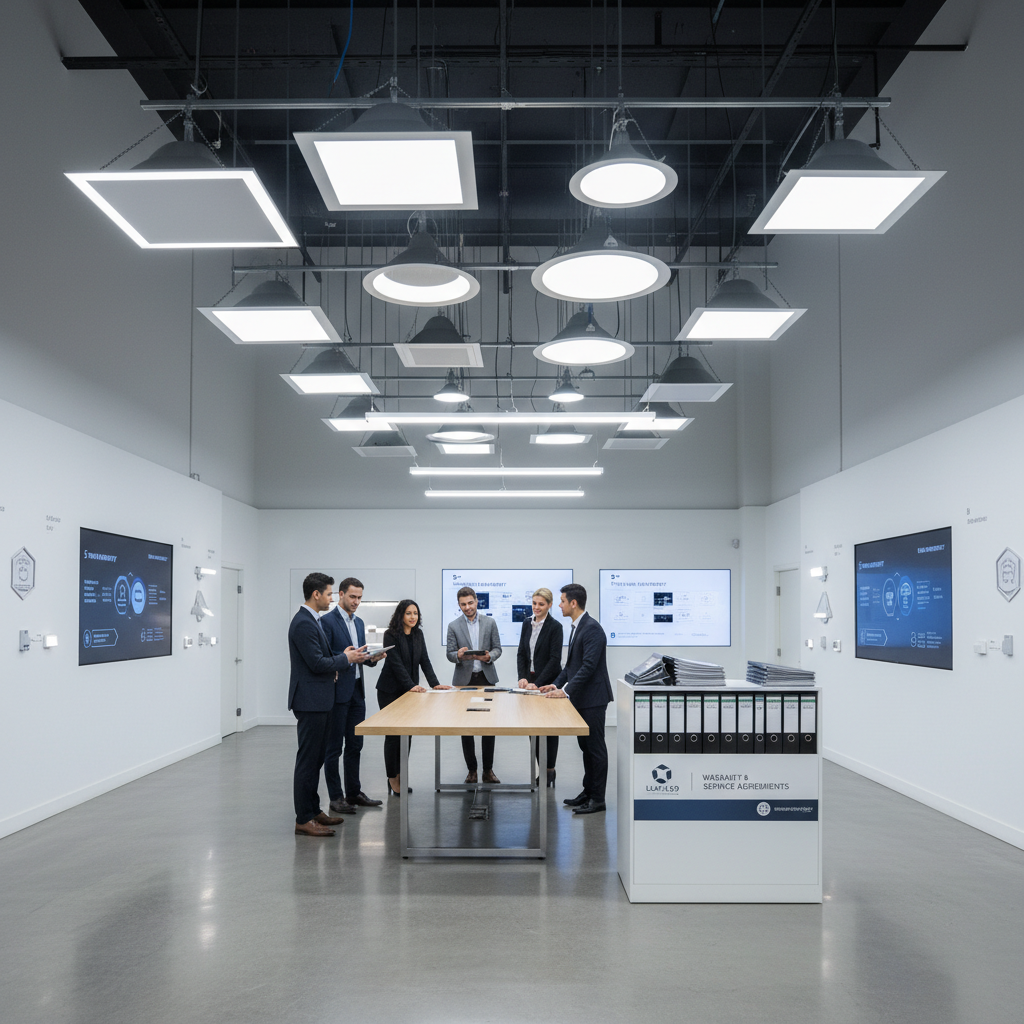
I compare warranties the way buyers should. I focus on real protection, service speed, and lifecycle cost, not just headline years on a brochure.
1. How Long Should a Quality LED Lighting Warranty Be in 2026?
I see many buyers accept short warranties to save upfront cost. I know that decision gets expensive when drivers fail early and replacements disrupt operations.
In 2026, a quality LED lighting warranty should be at least 5 years for commercial products. Premium manufacturers now offer 7-10 years on selected fixtures, especially for stable indoor applications with quality drivers, thermal design, and tested components.
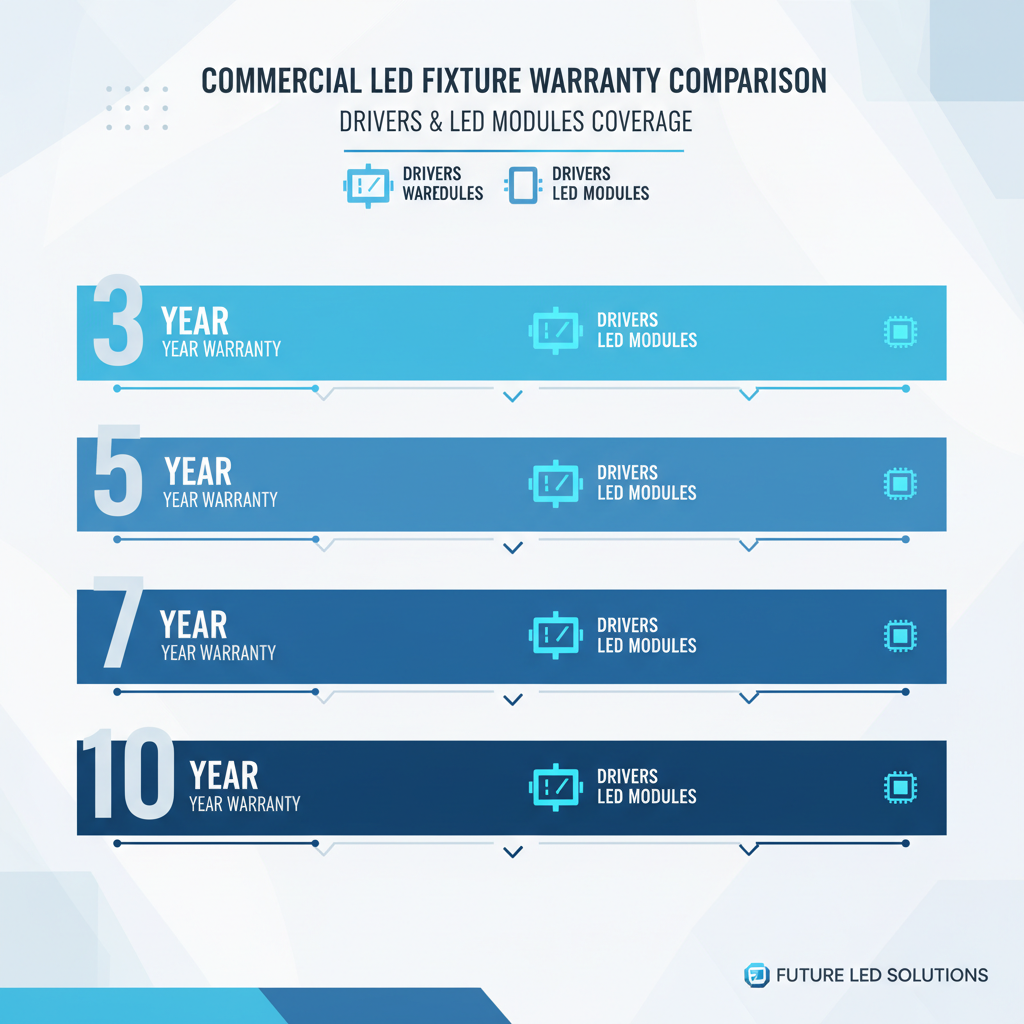
What I consider a strong warranty now
I treat 3 years as entry level in most commercial LED categories. I see 5 years as the current baseline for serious projects. I view 7-10 years as premium coverage when the product uses high-quality drivers, good heat management, and stable power conditions.
LED products can run for 50,000 to 100,000 hours under the right conditions.1 That does not mean every component will survive equally long. Drivers often fail before LED packages. Heat, surge events, poor ventilation, and installation errors can shorten life. That is why I always check whether the warranty covers the driver, LED board, housing, and power supply separately.
The U.S. Department of Energy has long noted that LED system life depends heavily on thermal management and driver reliability.1 IES also separates rated life testing from broad product performance claims.2 I use those facts when I review any warranty statement.
| Warranty term | What I think it signals | Best fit |
|---|---|---|
| 3 years | Basic market offer | Low-risk, price-driven orders |
| 5 years | Solid commercial standard | Offices, retail, schools, linear lights |
| 7 years | Strong confidence from manufacturer | Premium commercial and project supply |
| 10 years | High confidence with conditions | Stable indoor projects with strict specs |
I also check whether the fixture keeps useful light output over time. Rated life is often based on lumen maintenance, not total failure. The first time I mention lumen, I want buyers to remember that less light over time still affects project value. I also review luminous efficacy because efficient products usually run cooler and waste less power.
For most distributors and project buyers, I recommend a 5-year minimum. I prefer 7 years when labor access is costly, such as warehouses, parking areas, and high ceilings.
2. Top LED Light Manufacturers Known for Strong Warranties and Support
I meet buyers who focus only on brand names. I know the bigger risk is choosing a supplier with slow claims handling, weak documents, or no technical support.
The strongest LED manufacturers combine 5-10 year warranties with responsive support, clear claim steps, and proven certifications. I look for brands that document coverage, answer technical questions fast, and keep spare parts or replacement stock available.
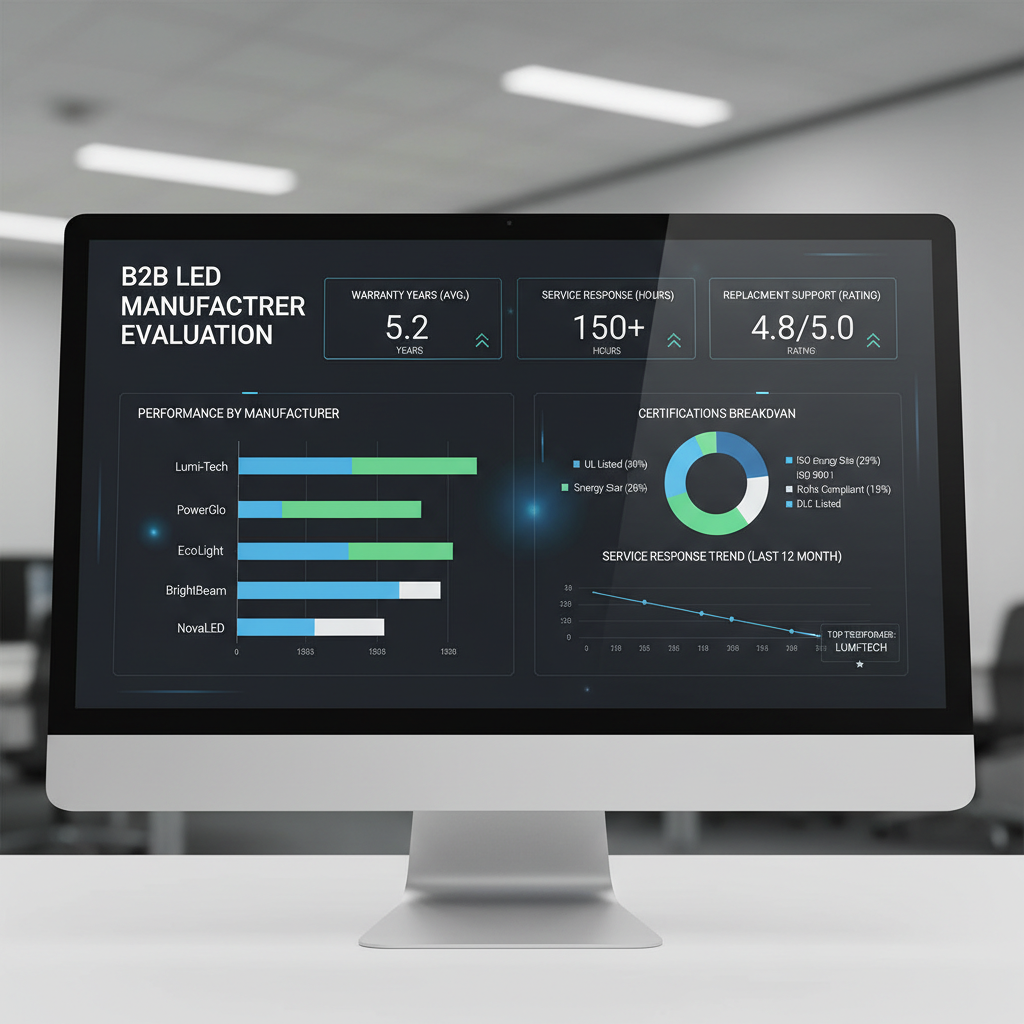
What I look for beyond the logo
I do not rank manufacturers by marketing alone. I rank them by how safe the buyer feels after delivery. A strong supplier should show test data, certification records, warranty terms, and real claim contacts.
I usually group manufacturers into three tiers:
| Manufacturer tier | Typical warranty | Support strength | My buying note |
|---|---|---|---|
| Global premium brands | 5-10 years | Strong local service networks | Higher price, lower project risk |
| Quality factory-direct OEM/ODM suppliers | 5-7 years | Good direct engineering support | Best value if documents are clear |
| Low-cost generic exporters | 1-3 years | Limited after-sales response | High risk for large projects |
For North America, I pay close attention to whether products are UL listed, and for rebate-sensitive projects I check DLC or ENERGY STAR where relevant.34 Those marks do not replace a warranty, but they reduce compliance risk and often signal a more serious quality process.
At Besenled, we position ourselves as a direct manufacturer, not a trader. I believe buyers value fast answers, customization, and stable quality more than fancy catalog language. Our factory in Zhongshan supports OEM and ODM work, customized logo programs, and short delivery windows for B2B clients. I find this especially useful for distributors like Jose in Mexico who rebrand products and need both reliable logistics and clear after-sales communication.
I also pay attention to support details that many buyers miss:
- Response time to technical questions
- Clear failure-photo and batch-trace process
- Spare driver availability
- Local or regional shipping support
- Installation guidance for voltage, dimming, and controls
A top manufacturer is not just the one with the longest promise. It is the one that can still solve a problem quickly six months after installation.
3. How to Compare LED Manufacturer Warranties: 7 Clauses You Must Read First
I see buyers skim warranty PDFs and trust the headline. I know hidden exclusions can erase most of the protection when a real failure happens.
I compare seven clauses first: warranty term, covered components, exclusions, labor coverage, claim process, environmental limits, and replacement method. These clauses show whether the warranty protects your project or only protects the seller.
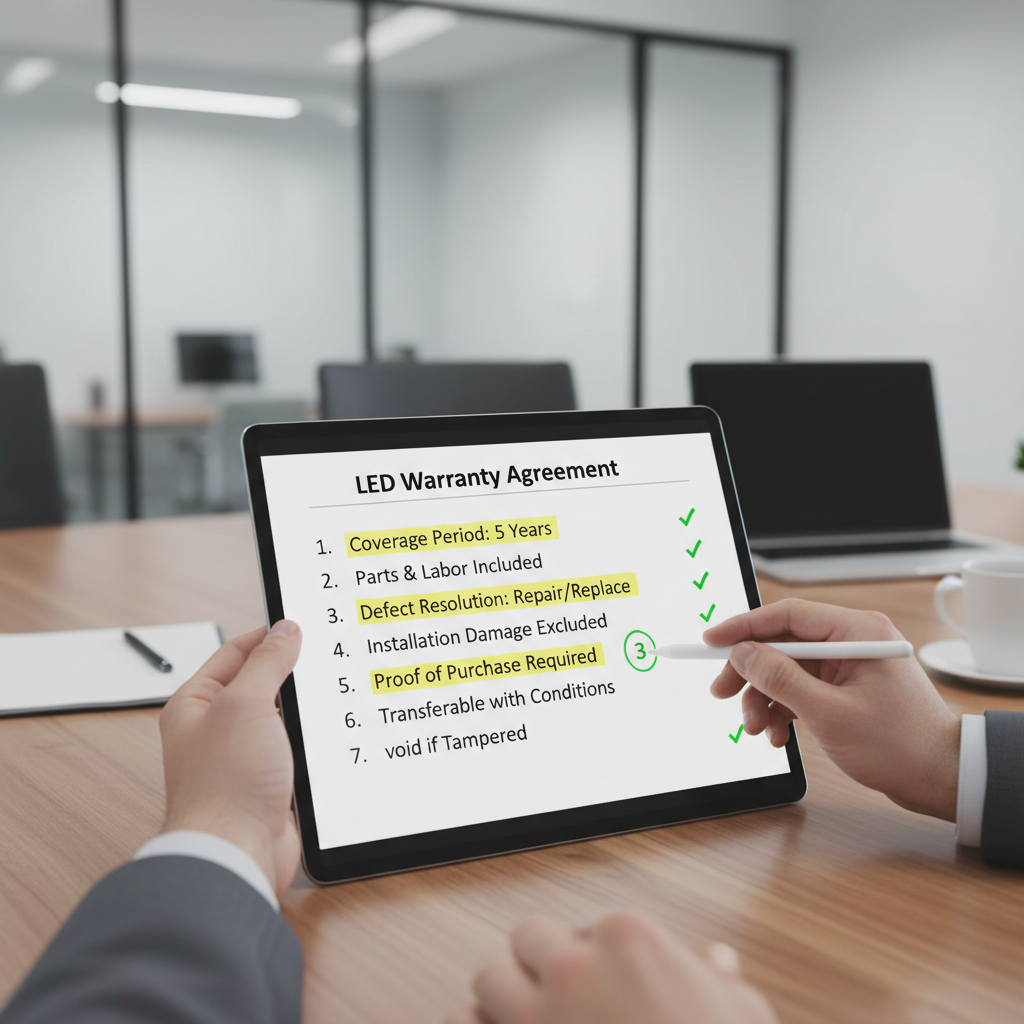
The 7 clauses I always read first
I start with the exact scope. Many warranties cover only manufacturing defects. Some exclude drivers after a shorter period. Some replace parts but not shipping. Some require operation within strict ambient temperatures.
| Clause | What I check | Why it matters |
|---|---|---|
| Warranty term | 3, 5, 7, or 10 years | Short terms shift future cost to buyer |
| Covered parts | LEDs, driver, housing, controls | Driver exclusion is a major risk |
| Exclusions | Surge, misuse, heat, moisture | Broad exclusions weaken protection |
| Labor coverage | Included or not | Labor can exceed fixture cost |
| Claim process | Photos, serials, return rules | Complex claims waste time |
| Environment limits | Temperature, humidity, voltage | Wrong conditions can void coverage |
| Remedy type | Repair, parts, credit, replacement | Credit-only remedies create delays |
I also read installation conditions. If the product needs surge protection, dimmer compatibility, or ventilation clearance, I want those requirements written clearly. NEMA and UL documents show how electrical environment and safety compliance affect product reliability and application suitability.53
I check optical and application details too. If a fixture is sold for outdoor use, I verify the first mention of IP65 or stronger ingress protection if the project needs it. If the project needs visual quality, I review CRI, color temperature, and CCT. If a workspace has cameras or task detail, I ask about flicker performance.
I always ask one direct question: “What exactly voids the warranty?” If the seller cannot answer in plain words, I slow the purchase. Good manufacturers can explain the claim process in minutes.
4. Real‑World ROI: Does Paying More for a Longer LED Warranty Actually Save Money?
I hear buyers say all LEDs are the same. I know maintenance labor, lift rental, and downtime can destroy that assumption fast.
Yes, paying more for a longer LED warranty often saves money when labor access is costly, operating hours are long, or downtime hurts revenue. The savings come from fewer failures, lower replacement labor, and better support over the product life cycle.

A simple cost example I use
I compare total cost, not unit price. Imagine a warehouse needs 200 high bay fixtures.
- Budget fixture price: $48 each
- Premium fixture price: $62 each
- Price gap: $14 each
- Extra upfront cost: $2,800
Now I estimate maintenance over five years.
| Cost item over 5 years | Budget fixture | Premium fixture |
|---|---|---|
| Fixture purchase | $9,600 | $12,400 |
| Failure rate estimate | 12% | 3% |
| Failed units | 24 | 6 |
| Labor per replacement | $45 | $45 |
| Lift/access cost per replacement | $30 | $30 |
| Total maintenance event cost | $1,800 | $450 |
| Replacement material exposure | Higher | Lower |
In this simple case, the cheaper fixture already gives back much of its price advantage through service cost alone. If downtime affects operations, the premium option can win clearly. DOE data continues to show that LEDs reduce maintenance compared with legacy technologies because of long life and energy savings.1 That benefit is strongest when product quality is real.
I also think about warranty support speed. If a supplier takes three weeks to answer a claim, the warranty is less valuable. If a supplier ships replacement drivers quickly and gives wiring help, the project saves money even if the product price is higher.
For distributors, a better warranty also protects brand reputation. Jose in Mexico does not only lose on replacements. He risks customer trust if rebranded products fail too soon. A good factory partner helps him keep repeat business and avoid price-only competition.
5.faq:
I know buyers still have practical sourcing questions. I see uncertainty grow when certifications, lead times, and customization are not explained clearly.
For B2B LED sourcing, I focus on documents, response speed, production control, and claim support. Those points matter as much as the fixture itself.
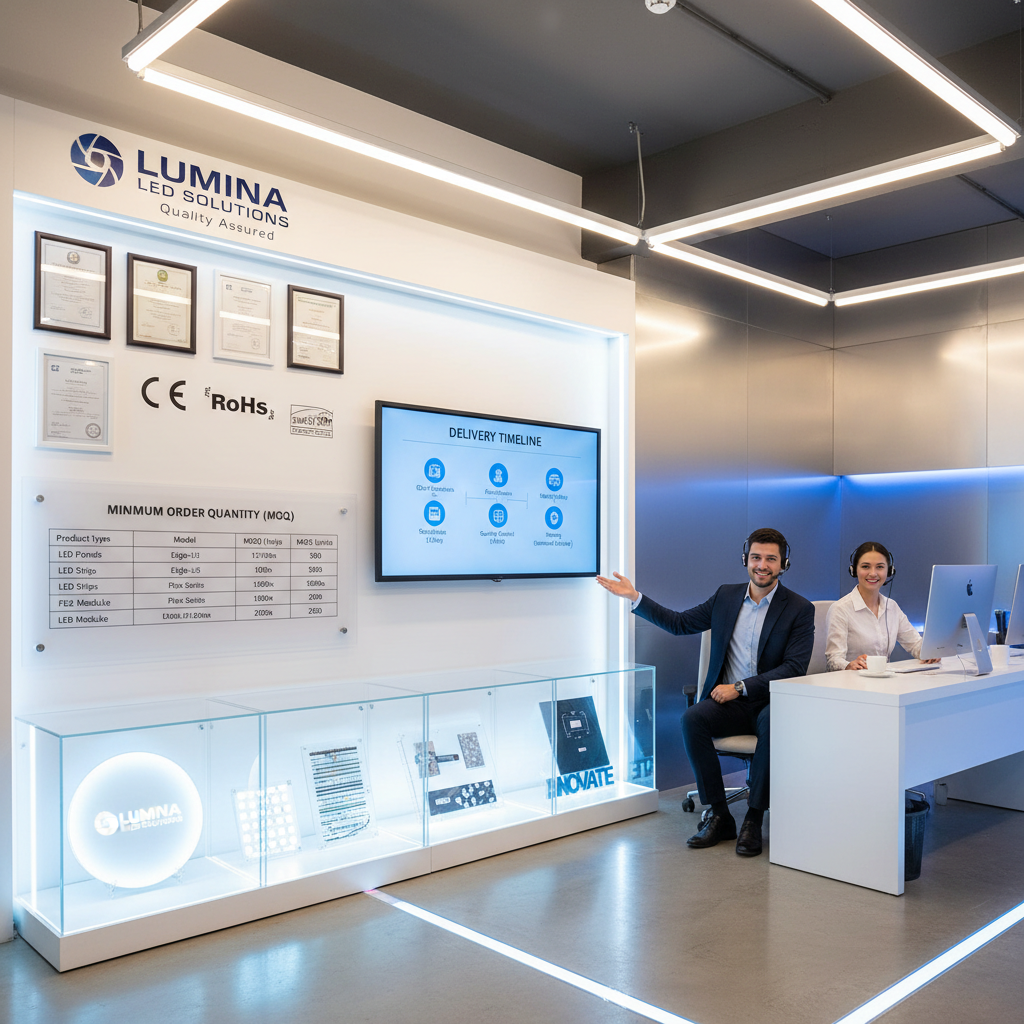
Common B2B concerns I answer early
When I speak with importers and project buyers, I usually answer the same operational questions before price becomes the final issue. That is normal. Good sourcing depends on process reliability.
| Buyer concern | What I recommend checking | Why I care |
|---|---|---|
| Certifications | UL, CE, RoHS, FCC, project-specific marks | Reduces customs and compliance risk |
| Delivery time | Production schedule and shipping plan | Prevents missed selling seasons |
| MOQ | Standard and custom MOQ levels | Affects cash flow and testing |
| Custom branding | Logo, label, carton, spec sheet support | Helps distributors build margin |
| Quality control | IQC, aging test, final inspection | Reduces failure rate |
| Support | Response time and claim process | Protects long-term partnership |
At Besenled, I would highlight our factory-based model, ISO9001 process control, and ability to support OEM and ODM projects for strip lights, linear lights, commercial fixtures, and solar products. I find that large buyers want consistency, while growing distributors want flexibility. Both groups need honest communication and predictable lead times.
I also recommend asking for sample testing, batch photos, and certification files before mass production. That one step filters weak suppliers quickly.
1. What is a good warranty for LED lights?
I see many brochures promise a lot and explain little. I know a good warranty must be long enough and specific enough to protect the buyer.
A good warranty for LED lights is at least 5 years for commercial use. I prefer coverage that clearly includes the LED module, driver, and power supply, plus a simple claim process and fast technical response.
What I want included
I want the warranty to state the term, covered parts, and remedy clearly. I also want written limits for temperature, voltage, and installation method. If those details are missing, the warranty is weak even if the term sounds long.
For project work, I also ask whether replacement parts are available locally or can ship fast. Good support matters as much as the warranty years.
2. How long do LED light fixtures last?
I hear buyers mix rated life with guaranteed life. I know those are related, but they are not the same thing.
Most quality LED fixtures last 50,000 to 100,000 hours in rated life terms, depending on design, driver quality, and heat control.12 In real projects, poor ventilation, unstable voltage, and harsh environments can shorten actual service life.
What affects real life
I look at driver design first. I also look at ambient temperature, surge protection, enclosure quality, and operating hours. A fixture in a cool office usually lasts longer than one in a hot factory ceiling.
That is why I compare both the data sheet and the warranty document before buying.
3. Do longer LED warranties always mean better quality?
I see buyers trust the biggest number on the page. I know some long warranties are full of exclusions.
No, longer warranties do not always mean better quality. I trust long warranties only when they are backed by clear test data, certification, realistic exclusions, and responsive after-sales support.
What proves the warranty is real
I want LM-style performance claims supported by credible testing, clear driver brand information, and consistent QC. I also ask how claims were handled on past orders. A real warranty is easy to explain and practical to use.
4. What voids an LED lighting warranty?
I see claim disputes start when installation conditions were never discussed. I know the buyer often discovers the exclusion only after failure.
Common actions that void an LED warranty include wrong input voltage, poor installation, water ingress beyond the rated enclosure, unauthorized modification, and use outside the stated temperature range. Missing surge protection can also void some warranties.
What I verify before installation
I ask for the installation guide, wiring diagram, and environmental limits in advance. I also confirm dimmer compatibility, control settings, and whether outdoor fixtures need extra sealing or surge devices.
That paperwork saves time and protects the claim later.
5. What is more important: rated life or warranty?
I hear this question often from distributors. I know both numbers matter because one predicts performance and the other defines commercial protection.
Rated life and warranty are both important, but I use the warranty as the practical buying tool. Rated life shows expected performance, while warranty shows how much risk the manufacturer is willing to share with me.
How I balance them
I prefer fixtures with at least 50,000-hour rated life and a minimum 5-year warranty. If labor access is expensive, I try to push both numbers higher.
A long rated life with a weak warranty leaves the buyer exposed.
6. Why are most LED warranties 3–5 years if the life is 50,000+ hours?
I see this confuse many first-time buyers. I know the gap looks suspicious until the difference between testing and commercial risk is explained.
Most LED warranties stay at 3-5 years because rated life is based on controlled assumptions, while warranty cost depends on real-world variables like heat, voltage, operating hours, and installation quality. Manufacturers limit warranty exposure because those conditions vary widely.
Why the gap exists
A fixture may test well in a lab but run in a dusty, hot, unstable electrical environment. The seller cannot control every site condition. That is why many brands set a shorter warranty than the projected life.
I accept that logic only when the exclusions are written clearly and fairly.
Frequently Asked Questions
Can you provide certification files before I place a bulk order?
Yes. I recommend asking for UL, CE, RoHS, FCC, or project-specific files before deposit. I do this early because it reduces customs, compliance, and trust risks.
What is your typical delivery time for B2B LED orders?
Standard lead time depends on product type, quantity, and customization. At Besenled, we usually aim for short production windows, often 3-15 days for many standard orders, then arrange export shipping based on destination.
Do you support OEM or private label projects?
Yes. We support logo printing, custom labels, packaging, and product adjustments for many B2B orders. I suggest confirming MOQ, artwork format, and approval timing before production starts.
How do you control product quality before shipment?
I look for incoming inspection, aging tests, electrical checks, and final QC. At Besenled, our factory process includes QC controls and production management designed for consistent export quality.
What is the best way to handle warranty claims on imported LED products?
I prefer a simple process with photos, batch details, and fast technical review. A good manufacturer should confirm responsibility quickly and offer replacement parts, full units, or credit based on the failure type.
Conclusion
I believe the best LED manufacturer is the one that combines a clear 5-10 year warranty, honest exclusions, and fast support that protects your profit after installation.

Ready to Source? Let's Talk.
Want samples, catalogs, or a project quotation?
Contact Rain Cai: sales10@besenled.com | www.besenledlight.com
Sources
U.S. Department of Energy, LED Lighting — https://www.energy.gov/eere/ssl/led-lighting ↩ ↩ ↩ ↩
IES Lighting Handbook / IES resources — https://www.ies.org/ ↩ ↩
UL Certification Marks — https://www.ul.com/resources/ul-certification-marks ↩ ↩
DesignLights Consortium — https://www.designlights.org/ ↩
NEMA Solid State Lighting Section — https://www.nema.org/membership/divisions/lighting-systems/solid-state-lighting ↩
Topic cluster context
Top LED light manufacturers with warranty and support services?
This guide supports the End-to-End Project Support hub. Product, protocol, certification, ranking and performance claims remain subject to the evidence and compatibility checks stated in the article governance record.