I know finding a real LED manufacturer near me feels slow and risky. Bad suppliers waste time, hide margins, and create project failures. I use a faster screening method.
To find wholesale LED light manufacturers near you, I start with Google Maps, local distributors, B2B platforms, trade shows, and manufacturer rep networks. I verify certifications, samples, warranty terms, lead times, and factory status before I buy.

I break the search into channels, filters, and proof checks. That helps me find suppliers fast and avoid expensive mistakes.
1. How to Find Wholesale LED Light Manufacturers Near You (Step‑by‑Step Playbook)
I see many buyers waste weeks on random searches. Poor filtering creates fake options, slow replies, and weak pricing. I use a simple process to narrow suppliers fast.
I find nearby wholesale LED suppliers by combining Google Maps, B2B marketplaces, trade shows, rep networks, and local installers. I shortlist suppliers that match my product, location, certification, and delivery needs.

Start with the channels that show real supply access
I search by product and use case first. I do not search only “LED lights.” I search “LED high bay supplier near me,” “LED strip light wholesaler near me,” or “parking lot light distributor near me.” That gives me more useful results.
I use five channels:
| Channel | Best use | What I check first | Speed |
|---|---|---|---|
| Google Maps | Local warehouse, distributor, rep office | Reviews, address, website, photos | Fast |
| Google Search | Manufacturer pages and local SEO pages | Factory claims, certifications, case studies | Fast |
| B2B marketplaces | Price discovery and factory access | Years active, audit info, MOQ, response speed | Fast |
| Trade shows | Serious supplier comparison | Sample quality, team knowledge, customization | Medium |
| Rep and installer networks | Real local project experience | Which brands they trust and stock | Medium |
I also ask local electricians, MEP contractors, and sign installers which LED brands they reorder. Repeat orders matter. Cheap products create callbacks. Installers remember that.
Commercial LED adoption keeps growing because LED systems can reduce lighting energy use by 50% to 80% compared with older technologies.1 Good products also target long operating life, often 50,000 hours or more in proper conditions.2
My shortlisting method
I build a list of 10 suppliers. I cut it to 3 in one day.
My filters are simple:
- Product match
- Market certifications
- Real business identity
- Lead time
- Sample availability
- Warranty clarity
- Technical documents
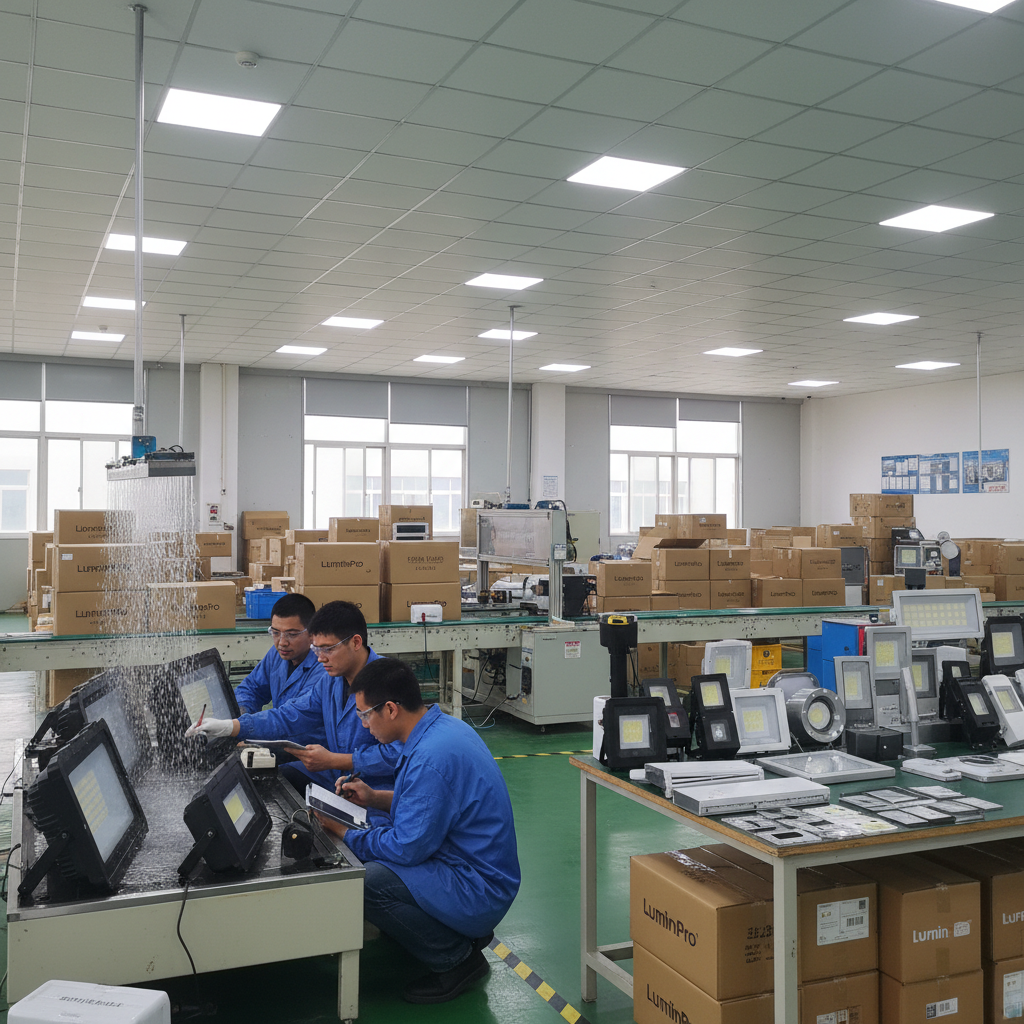
If I need local speed, I prefer regional stockists or distributors. If I need custom design, private label, or better pricing, I contact direct factories like Besenled in Zhongshan, China. A factory can support OEM, logo printing, packaging, and custom lengths or power options more easily than a local reseller.
For example, our team at Besenled supports LED strip light, linear light, commercial lighting, and solar light projects with 5 production lines and short delivery windows. That matters when I need stable supply, not just one urgent order.
2. What Makes a Reliable Wholesale LED Supplier? A 10‑Point Checklist
I know many suppliers look professional online. Weak quality systems stay hidden until products fail. I use a checklist before I compare price.
A reliable wholesale LED supplier shows proof of factory capability, certification, QC process, stable specifications, warranty terms, and responsive support. I trust documents, samples, and consistency more than low quotes.
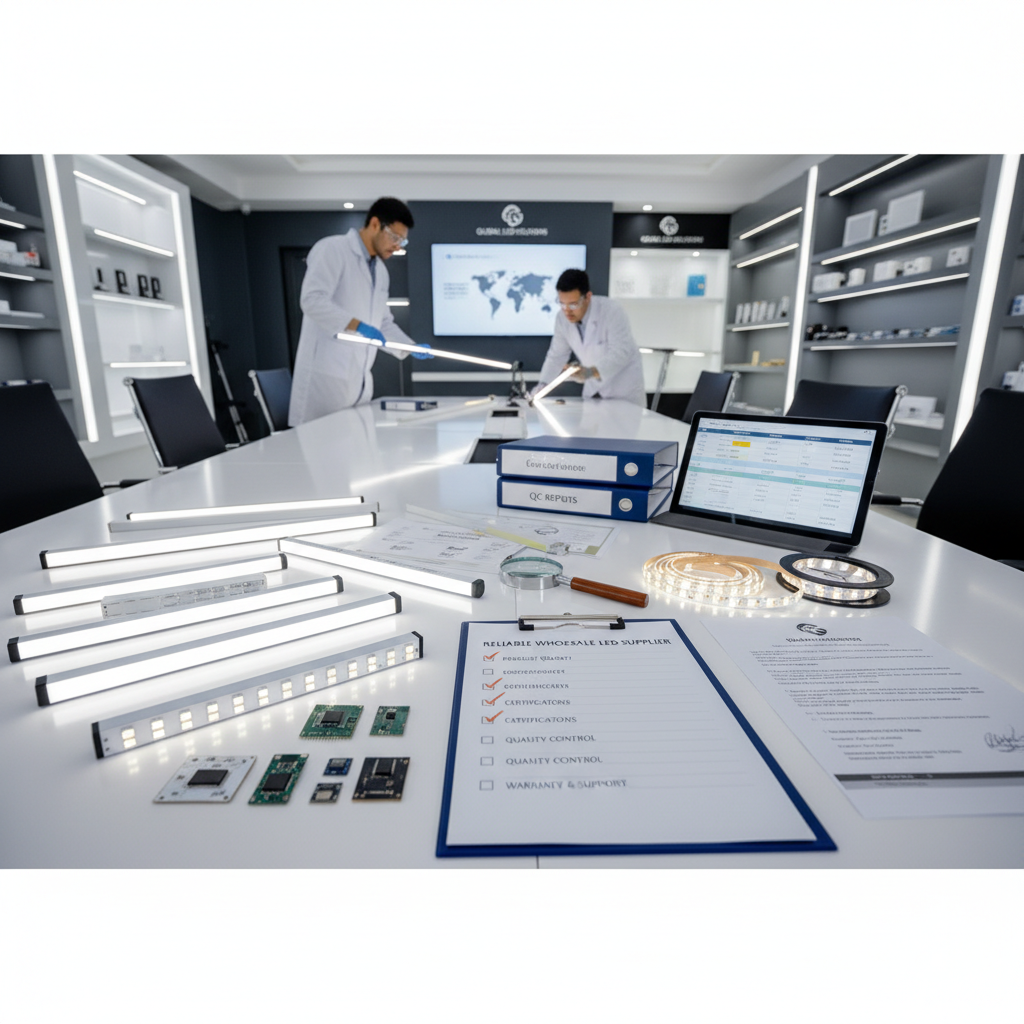
My 10-point supplier checklist
I ask for evidence on each item below. If a supplier avoids direct answers, I move on.
| Checkpoint | What I ask for | Why I care |
|---|---|---|
| 1. Factory status | Business license, factory video, production line photos | Confirms manufacturer vs trader |
| 2. Certifications | CE, RoHS, FCC, UL listed, DLC if needed | Reduces compliance risk |
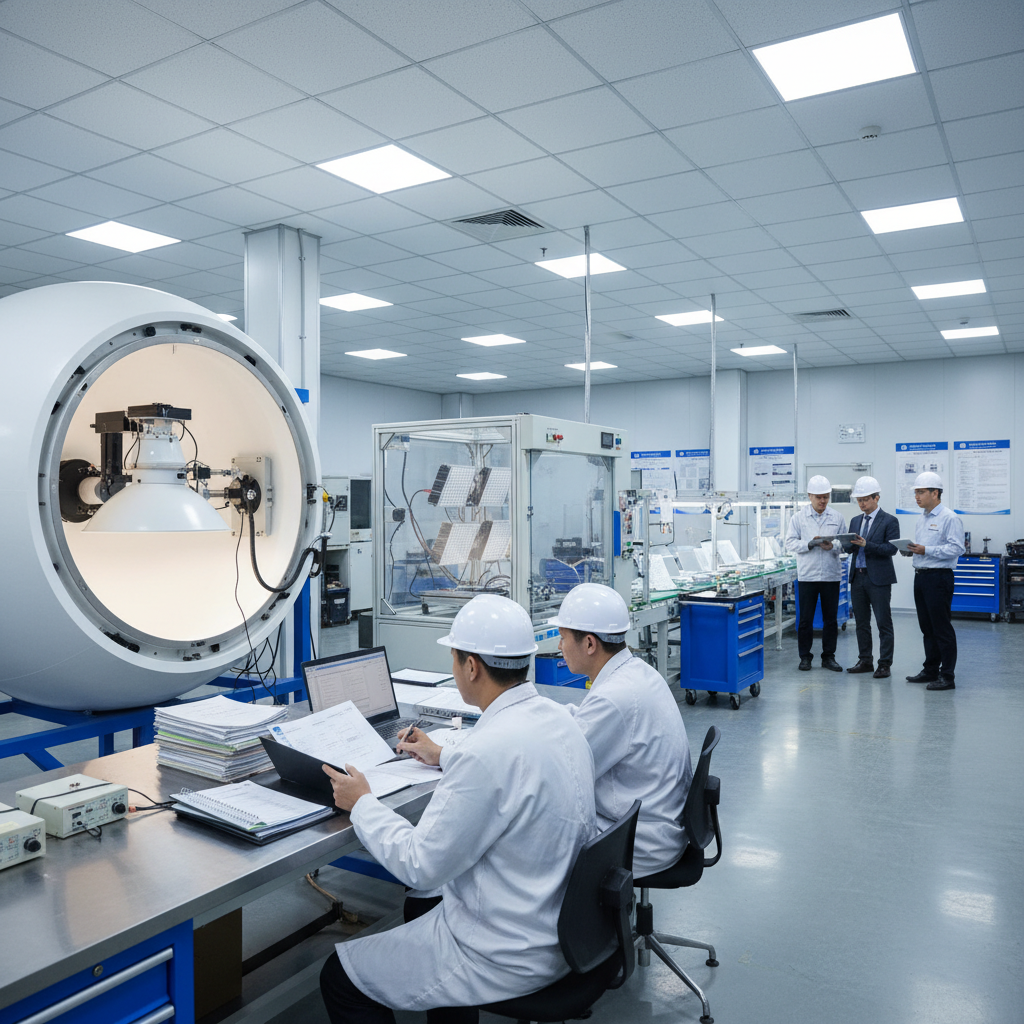
| 3. QC system | IQC, in-process QC, aging test records | Helps consistency |
| 4. Technical specs | Driver brand, chip brand, CRI, CCT, lumen output | Prevents vague product claims |
| 5. Efficiency | luminous efficacy in lm/W | Impacts operating cost |
| 6. IP protection | IP65 or higher for outdoor use | Matches environment |
| 7. Warranty | Written years, exclusions, claim process | Shows accountability |
| 8. Delivery ability | Lead time, stock level, packaging, shipping plan | Protects project schedule |
| 9. Customization | Logo, label, CCT, beam angle, length | Supports distributor margins |
| 10. Communication | Reply speed, technical accuracy, English clarity | Predicts future support |
I also compare the specification sheet to the certification scope. If the report covers one wattage but the supplier sells five wattages under the same report, I ask questions.
For commercial projects, I pay attention to ENERGY STAR and rebate-driven DLC requirements where relevant. In North America, those labels can affect project acceptance and incentive eligibility.34
I review lighting quality details too. color temperature, flicker, glare, driver quality, and thermal design affect real performance, not just headline watts.5 A low price is meaningless if the driver fails in summer heat.
3. Local vs Online Wholesale: Which Is Better for Your Project?
I often hear buyers treat local and online as opposites. That creates false choices. The right channel depends on speed, volume, and customization.
Local wholesale works best for urgent jobs, easier returns, and low-volume replenishment. Online factory sourcing works best for better pricing, OEM customization, and larger repeat orders.
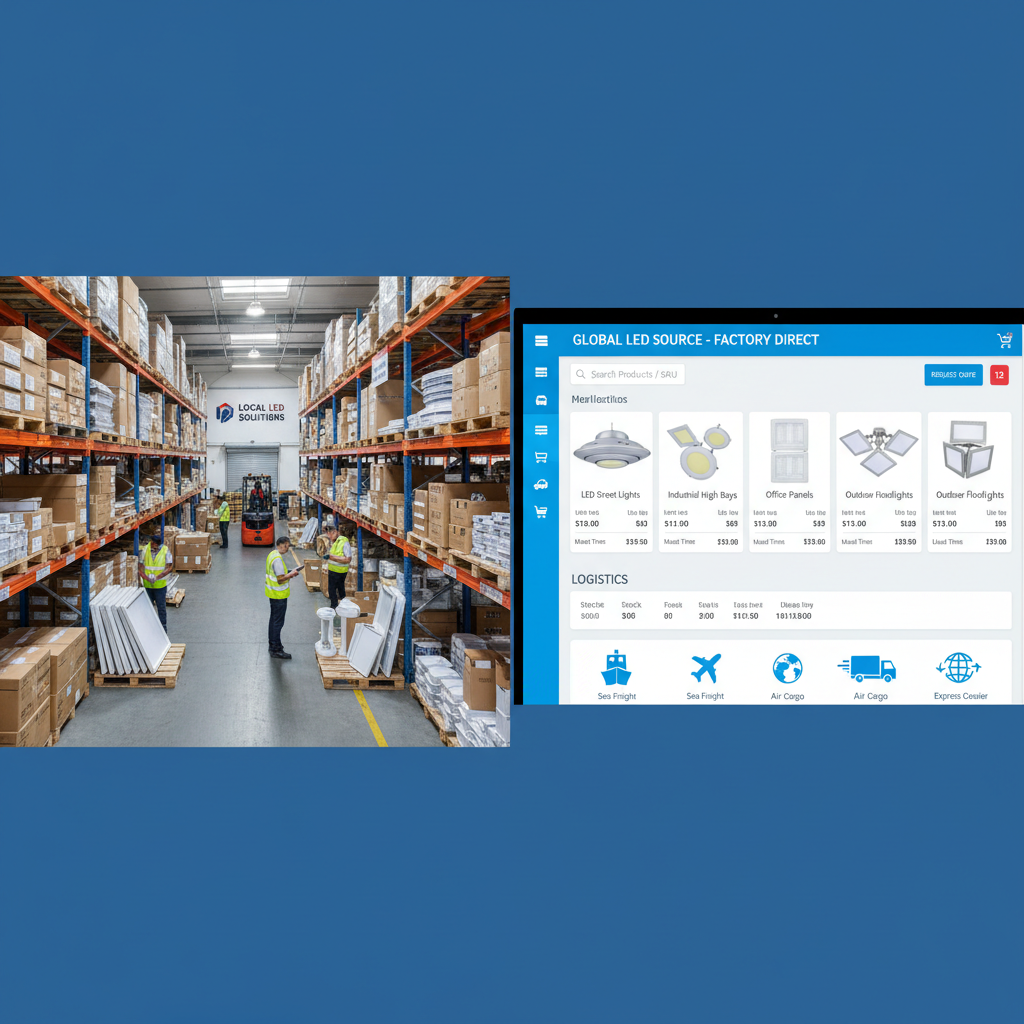
I choose based on total project cost, not only unit price
A local supplier gives me speed. That matters when a contractor needs fixtures in two days. A regional distributor may stock replacement drivers, standard strip lights, or parking lot lights. I pay more per unit, but I reduce downtime.
An online manufacturer gives me deeper control. I can request custom packaging, branded logo, special lengths, dimming options, and private label support. That is useful for importers and distributors building their own brand.
| Factor | Local wholesale | Online factory sourcing |
|---|---|---|
| Lead time | Short if stock exists | Longer, but more predictable for planned orders |
| Unit price | Higher | Lower on volume |
| MOQ | Lower | Medium to high |
| Customization | Limited | Strong |
| Technical support | Easier on-site access | Strong remote support if factory is good |
| Returns | Simpler | More process-heavy |
| Product range | Stock-based | Wider |
| Brand control | Limited | Better for OEM/ODM |
I also look at use case. For office retrofits, local supply may win. For chain stores, import distribution, or hotel projects, factory sourcing often wins. That is because repeat orders need stable specs and better landed cost.
The industrial and commercial LED market remains large and growing. That growth keeps attracting new suppliers, good and bad.6 I protect myself by testing one small order first. I check packaging, labels, installation manuals, and driver consistency before I scale.
4. Red Flags and Common Scams When Sourcing Wholesale LED Lights
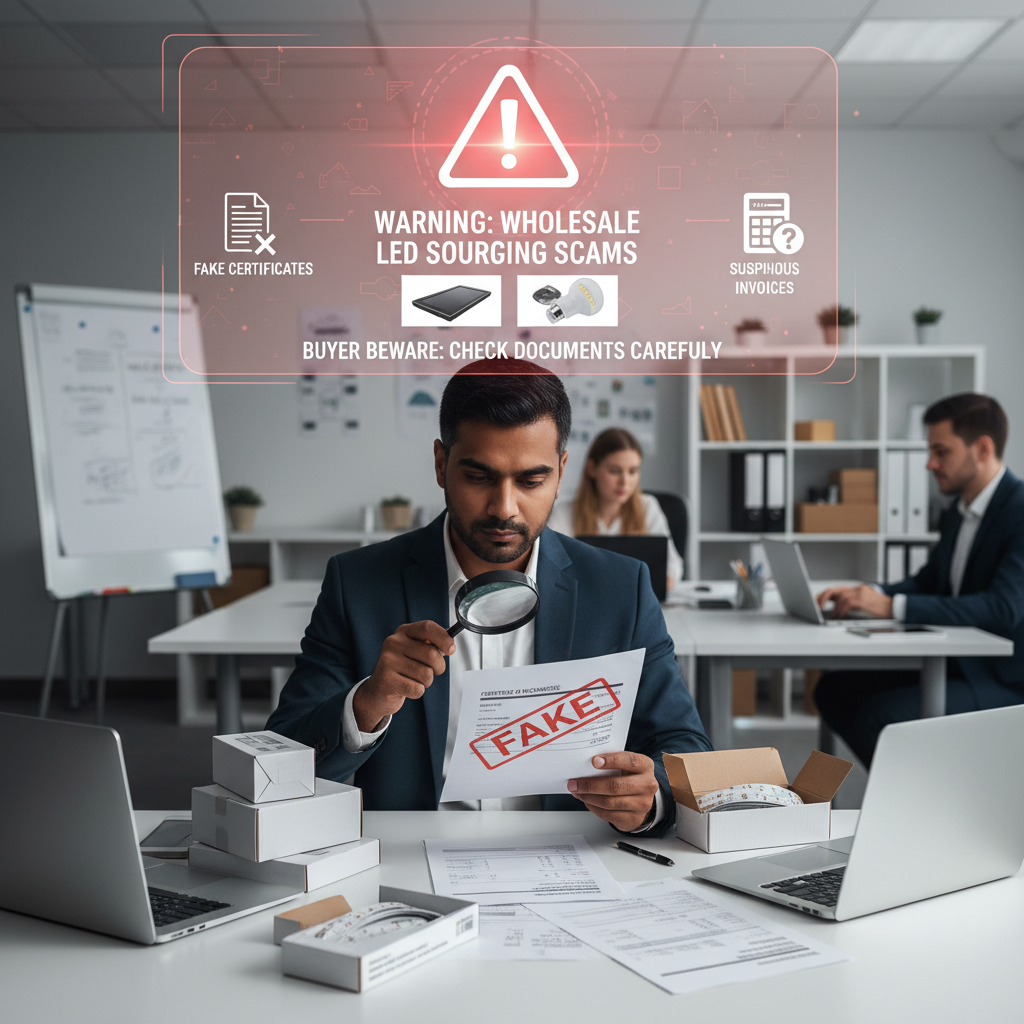
I know one bad supplier can erase my margin. Fake certificates, changing specs, and hidden costs appear after payment. I watch for warning signs early.
Common LED sourcing scams include fake certifications, copied photos, bait pricing, downgraded components, vague warranties, and changing bank details. I verify documents, test samples, and confirm company identity before deposit.
The warning signs I never ignore
I get cautious when a supplier does any of the following:
| Red flag | Why it matters | My action |
|---|---|---|
| Quote is far below market | May hide weak driver, lower chips, thin housing | Ask full BOM and sample |
| Certificate image only | Easy to fake | Verify certificate number |
| No real address | Hard to claim after-sales support | Request company registration |
| Bank account changes late | Fraud risk | Confirm by video and official email |
| Warranty is verbal only | No enforceable support | Ask written terms |
| Sample differs from bulk | Classic bait-and-switch | Approve golden sample |
| Vague specs | Hides low CRI, low lm/W, poor surge protection | Request datasheet |
I also watch for technical shortcuts. Cheap outdoor lights may claim IP65 but use poor seals. Cheap high bays may overstate luminous efficacy and understate junction heat. Cheap strips may show one driver in the sample and another in the shipment. These issues create color shift, early lumen loss, and driver failure.
I ask for aging test reports, surge specs, and driver brand. I compare actual weight and housing thickness. Better thermal design usually means longer life. LED products do not fail only because of LED chips. Drivers, heat, moisture, and poor assembly matter a lot.57
5:People Also Ask :
I know buyers want quick answers, not theory. Search intent here is practical. I answer the core sourcing questions first.
People asking this topic usually want nearby supply channels, supplier definitions, compliance basics, and trust checks. I focus on buying decisions, not generic LED education.
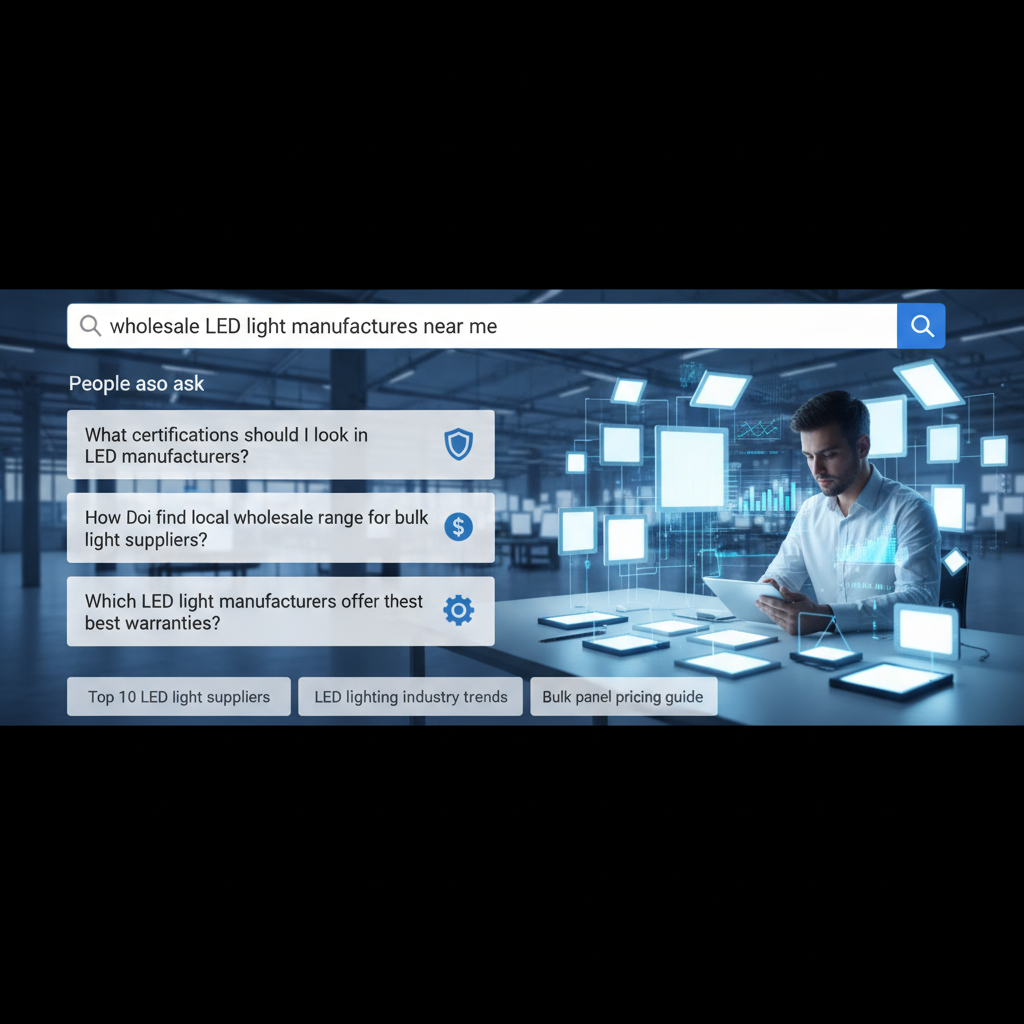
The main buyer questions behind this search
When I review this keyword, I see four real needs.
| Buyer intent | What they really mean | Best answer path |
|---|---|---|
| Near me | Fast shipping or local access | Use Maps, reps, distributors |
| Wholesale | Better margins | Compare factory vs distributor |
| Manufacturer | Real source, not reseller | Verify factory evidence |
| Reliable | Lower risk | Use checklist and sample test |
I also remind buyers that “near me” does not always mean same city. It often means reachable inventory, regional support, or reliable shipping into the project country. For many distributors, a China factory with fast export handling is more useful than a local reseller with thin stock and higher markup.
How do I find wholesale LED light manufacturers near me?
I know generic searches return clutter. Broad results mix retailers, resellers, and unrelated products. I use location and product filters.
I search by product type, region, and application. I use Google Maps, installer referrals, trade shows, and B2B platforms, then verify stock, certifications, and shipping coverage.
My search string formula
I use terms like:
- LED strip light manufacturer near me
- commercial lighting wholesaler near me
- parking lot light distributor in Texas
- OEM LED linear light supplier USA warehouse
I also check if the supplier ships from local stock or imports on demand. That changes lead time and cost.
- What is the difference between a LED manufacturer, wholesaler, and distributor?
I see many buyers mix these roles. That creates wrong expectations on price, stock, and customization. I define each role before I negotiate.
A manufacturer makes the product. A wholesaler buys in volume and resells. A distributor often carries stock for a brand or region and supports local delivery and service.
Quick role comparison
| Role | Main strength | Limitation |
|---|---|---|
| Manufacturer | Best customization and volume pricing | Longer import process |
| Wholesaler | Flexible mixed purchasing | Less product control |
| Distributor | Local stock and support | Higher pricing |
I choose based on the job. For OEM and repeat imports, I go to the factory. For urgent local jobs, I use a distributor.
- Is it better to buy LED lights wholesale locally or online?
I know there is no universal answer. A rushed job and a private-label program need different supply models. I compare total risk.
Local buying is better for urgent replacements and simple returns. Online factory buying is better for margin, customization, and long-term supply planning.
My decision rule
If I need stock this week, I buy local. If I need better cost, stable specs, and branding, I buy from a qualified factory.
- What certifications should wholesale LED lighting have?
I know certification problems can stop customs clearance or project approval. I match certificates to the market before I place orders.
Common LED certifications include CE, RoHS, and FCC for many export needs. North American projects may require UL listed or ETL. Commercial rebate projects often ask for DLC.
What I verify
I verify the certificate number, product model, issuing body, and whether the listing matches the exact wattage and series.48
- How can I tell if a wholesale LED supplier is trustworthy?
I know polished websites can be misleading. Trust comes from proof, process, and consistency. I test all three.
I judge trust by factory evidence, response quality, sample consistency, valid certifications, clear warranty terms, and stable payment details.
My trust signals
I prefer suppliers who answer technical questions directly, provide videos of production lines, and send complete datasheets without delay.
- What questions should I ask a potential LED lighting supplier?
I know the first call reveals a lot. Weak suppliers avoid specifics. Good suppliers answer with data.
I ask about MOQ, lead time, driver brand, chip brand, surge protection, color temperature, CRI, warranty, packaging, and customization.
My practical question list
I also ask if they can handle branded logo, custom labels, and replacement support for future orders.
- What is a reasonable warranty for commercial LED lights?
I know warranty language can sound strong but mean little. I read the exclusions before I trust the number.
A reasonable commercial LED warranty is usually 3 to 5 years. I want written claim steps, response time, and clear coverage for driver and fixture.
What I look for in the warranty
I ask if labor is excluded, whether replacement is prorated, and how failed units are documented.
- How many hours do LED warehouse or parking lot lights really last?
I know catalog life claims can confuse buyers. Rated life is not the same as guaranteed life. I focus on test conditions.
Quality warehouse and parking lot LEDs are often rated 50,000 to 100,000 hours to L70. Real life depends on heat, driver design, surge protection, and operating hours.25
What changes real field life
High ambient heat, unstable power, poor heat sinking, and moisture can reduce life sharply.
- What are common problems with cheap wholesale LED lights?
I know cheap LED products fail in predictable ways. The first savings often become future service cost. I compare total ownership cost.
Common problems include low output, color inconsistency, poor flicker control, short driver life, weak waterproofing, and false certification claims.
The failures I see most
I often see dimming problems, color shift, dead drivers, and weak packaging that damages goods in transit.
- When does it not make sense to buy LED lights wholesale?
I know wholesale is not always the right move. Some jobs are too small or too urgent. I stay practical.
It may not make sense to buy wholesale when volume is low, storage is limited, specifications are uncertain, or local replacement speed matters more than unit price.
My rule of thumb
If I cannot forecast repeat demand or manage inventory, I buy smaller local lots first.
Frequently Asked Questions
What certifications should I request for commercial LED projects?
I request certifications based on the destination market and project type. I commonly ask for CE, RoHS, FCC, and for many North American jobs, UL listed or ETL. I also check DLC if rebates or utility programs matter.
How long should wholesale LED delivery take?
I expect lead time to depend on stock, customization, and shipping method. For a factory order, production may take days to weeks, and international shipping adds transit time. I always ask for a written production schedule before deposit.
What MOQ is normal for a factory order?
MOQ varies by product and customization level. Standard models may allow low trial quantities, while custom logo, label, or packaging usually needs higher MOQ. I start with a sample order when possible.
How do I confirm LED product quality before a large order?
I ask for samples, datasheets, test reports, and packing photos. I compare sample performance with the promised specification, then approve a golden sample before mass production.
Can a supplier customize my brand and packaging?
Yes, many direct manufacturers can support OEM or ODM work. I confirm logo method, packaging design, label content, carton markings, and artwork approval before I place the full order.
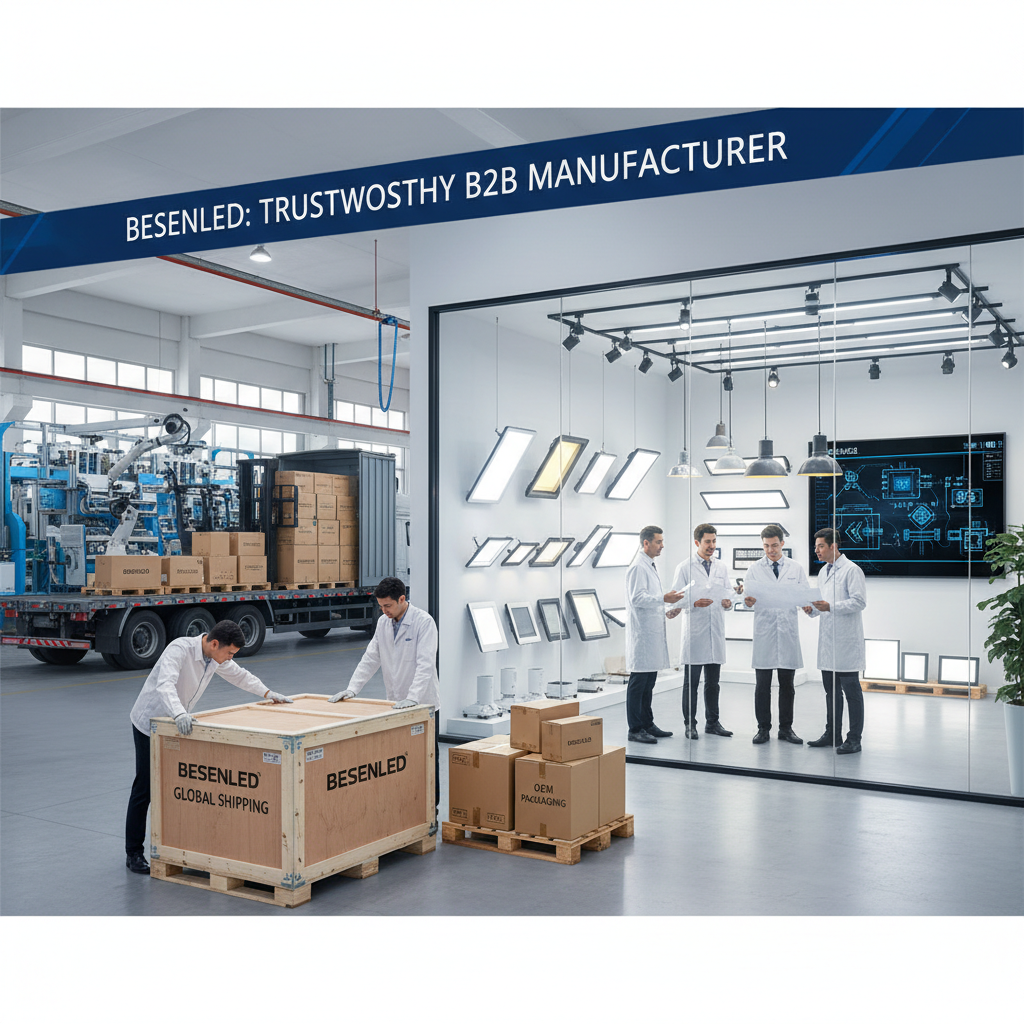
Conclusion
I find the best LED supplier by mixing local search with hard verification. The right partner proves quality, compliance, delivery, and support before asking for scale.
Ready to Source? Let's Talk.
Want samples, catalogs, or a project quotation?
Contact Rain Cai: sales10@besenled.com | www.besenledlight.com
Sources
DOE SSL Program Energy Savings Forecast of Solid-State Lighting in General Illumination Applications — https://www.energy.gov/eere/ssl/articles/energy-savings-forecast-solid-state-lighting-general-illumination-applications ↩
LED Basics — https://www.energy.gov/eere/ssl/led-basics ↩ ↩
ENERGY STAR Light Bulbs — https://www.energystar.gov/products/light_bulbs ↩
UL Certification Marks — https://www.ul.com/resources/ul-certification-marks ↩ ↩
LED Lighting Flicker — https://www.energy.gov/eere/ssl/led-lighting-flicker ↩ ↩ ↩
DesignLights Consortium — https://www.designlights.org/ ↩
Solid-State Lighting Glossary — https://www.lrc.rpi.edu/programs/solidstate/glossary.asp ↩
IEC Standards and Conformity Assessment — https://www.iec.ch/homepage ↩
Topic cluster context
Where to find wholesale LED light manufacturers near me?
This guide supports the End-to-End Project Support hub. Product, protocol, certification, ranking and performance claims remain subject to the evidence and compatibility checks stated in the article governance record.