
Choosing the right flood light wattage can transform your nights outdoors into something magical. But where do you start?
The ideal wattage for outdoor flood lights depends on the size of the area to be illuminated and the specific lighting needs. For general outdoor use, 100W–200W is sufficient for smaller to medium areas, while larger spaces such as parking lots or sports fields require 300W–1000W flood lights. Energy-efficient LED flood lights are the best choice to ensure adequate illumination while minimizing electricity consumption.
Thinking back to when I was setting up the lights for my backyard, I remember agonizing over wattage choices. It's not just about power; factors like mounting height and energy efficiency make all the difference. Let's explore these elements to find the perfect lighting solution together.
50W-150W lights are ideal for residential use.True
Residential settings typically require lower wattage for adequate lighting.
Industrial spaces require 50W-150W flood lights.False
Industrial spaces need higher wattage, usually between 300W-1000W.
How Does Mounting Height Affect Light Coverage?
Ever wondered why the same light can feel so different in various spaces? Let me take you on a journey through the world of mounting heights and light coverage, revealing how the right setup can transform any environment.
Mounting height affects light coverage by changing the spread and intensity of illumination. Raising the height increases the area covered but can reduce brightness, while lowering it enhances brightness in a smaller area.

The Relationship Between Mounting Height and Light Spread
I remember the first time I tried adjusting the lights in my backyard. I was amazed at how just a small change in height could make such a big difference. Mounting height truly plays a pivotal role in determining how much space a light fixture can illuminate. When you increase the height, the beam angle widens, which is fantastic for covering larger areas. But beware! This might dim the intensity at ground level, leading to unexpected dark spots. Lowering the height, on the other hand, intensifies brightness by narrowing the focus—perfect for those cozy nooks that need a little extra glow.
Practical Applications and Considerations
When I was setting up lights for a community event in a large open space, I realized how crucial it was to balance mounting height with wattage. It’s like finding the sweet spot in a recipe—too much or too little can throw everything off. For instance, mounting a 100W LED at 10 meters might cover around 200 square meters, spreading light gently over a wide area. But bring it down to 5 meters, and suddenly you have a spotlight effect over a smaller zone.
| Mounting Height | Coverage Area (Approx.) | Recommended Wattage |
|---|---|---|
| 3-5 meters | 50-100 square meters | 50W-150W |
| 6-10 meters | 150-300 square meters | 150W-300W |
| 10+ meters | 300+ square meters | 300W-1000W |
Impact on Energy Efficiency and Cost
Choosing the right mounting height isn’t just about aesthetics or coverage—it’s also about efficiency and cost. During my projects, I’ve learned that higher installations often mean you need more powerful lights to maintain brightness levels, which can hit your energy bills hard. Thankfully, energy-efficient solutions1 like LED technology come to the rescue. For example, opting for a 150W LED at a higher mount can replace a traditional 300W fixture, offering savings without compromising performance. It’s all about finding that perfect balance of fixture type, intended use, and even environmental factors like weather.
Special Considerations for Outdoor Lighting
I’ve always found outdoor lighting to be an art form in itself. Whether it's about creating the right ambiance in a garden or ensuring safety in a parking lot, understanding mounting height is crucial. Lower-mounted lights with wide beam angles can cast a beautiful, soft glow over gardens while higher-mounted floodlights offer better visibility in parking areas. Adjusting mounting height is key to minimizing light pollution2 and enhancing architectural features. Getting this balance right means you’re not only lighting up spaces but also adding charm and security.
Higher mounting increases light coverage area.True
As mounting height increases, the beam angle widens, covering more space.
Lower mounting always reduces light intensity.False
Lowering focuses the beam, increasing brightness in a smaller area.
Why Choose LED Flood Lights Over Traditional Lighting?
LED flood lights are like the unsung heroes of the lighting world, offering benefits that outshine traditional options. Curious about how they can transform your spaces?
LED flood lights consume less energy, have a longer lifespan, and require less maintenance than traditional lighting. They provide bright, even illumination with reduced heat output, making them ideal for various applications.

Energy Efficiency and Cost Savings
I remember when I first switched to LED flood lights, I was astounded by how quickly my electricity bills dropped. It's like they were whispering, "I've got your back!" LEDs consume up to 80% less electricity compared to incandescent or halogen bulbs. Picture this: a 100W LED flood light shining as brightly as a 250W halogen bulb. That's not just a light bulb moment; it's significant energy savings3 over time.
| Type of Light | Wattage Needed for Similar Brightness |
|---|---|
| LED | 100W |
| Halogen | 250W |
| Incandescent | 300W |
This switch not only slashes electricity bills but also helps me do my bit for the planet by reducing carbon emissions. I like to think of it as my small contribution to a greener future.
Longevity and Durability
I've always been one to climb ladders with a prayer on my lips, hoping not to change bulbs frequently. With LED flood lights, those days are long gone. They boast a lifespan of up to 50,000 hours—far surpassing the typical 1,000 to 5,000 hours of traditional lighting. This longevity translates into lower maintenance costs4 because there's no constant need to replace them. Trust me, it’s a blessing when you’re dealing with high-mount installations!
Plus, LEDs are like the superheroes of the lighting world, enduring harsh weather with ease thanks to their robust build and reliable performance.
Light Quality and Flexibility
What I love most about LEDs is their superior light quality. There’s minimal flicker, and they reach full brightness faster than I can say "lights on!" The color rendering index (CRI) is typically higher too, meaning colors look more true-to-life under LED illumination.
The versatility of LED lighting is another reason I’m such a fan. Whether it’s adjusting beam angles or dimming to set the mood, these lights are adaptable for everything from security needs to architectural highlights. Discover how LED flexibility5 can enhance your outdoor spaces.
Environmental Impact
When it comes to the environment, LEDs win hands down. Unlike traditional bulbs that may contain hazardous materials like mercury, LEDs are eco-friendly. They produce less heat and are recyclable, which further reduces their environmental footprint.
By consuming less energy, LEDs also decrease overall demand for power generation often reliant on fossil fuels. Given all these advantages, it’s no wonder many industries—and I—are opting for LED flood lights over traditional solutions. Whether it's lighting up commercial spaces or giving residential landscapes that extra glow, LEDs provide an unbeatable mix of efficiency, performance, and sustainability.
LED flood lights consume 80% less electricity.True
LEDs use up to 80% less power than traditional bulbs, saving energy.
Traditional bulbs last longer than LED flood lights.False
LEDs last up to 50,000 hours, far longer than traditional bulbs' lifespan.
How do you choose the right wattage for security lighting?
Have you ever stood in your driveway at night, squinting into the darkness, wishing for better lighting?
To select the right wattage for security lighting, consider area size, desired brightness, and energy efficiency. Generally, 50W-150W is best for small areas, while 150W-300W is suitable for larger spaces.
Understanding Wattage Needs
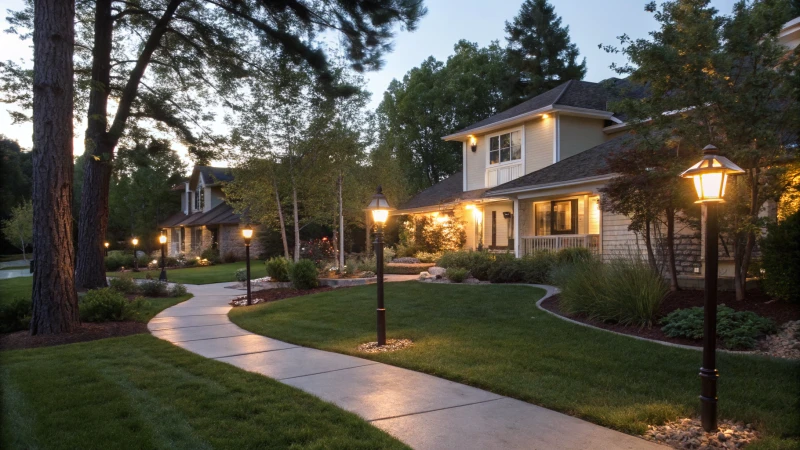
Let me take you back to when I first decided to revamp my backyard lighting. I recall standing outside, trying to figure out just how bright I wanted it to be—not too glaring but definitely enough to keep the critters at bay and guests feeling secure. For small areas like gardens or driveways, I've found that 50W to 150W LED flood lights are just perfect. They cast a cozy glow that feels welcoming yet safe. On the other hand, when I helped a friend light up his sprawling lawn for a party, we opted for 150W to 300W, ensuring every corner was well-lit without overdoing it.
Evaluating Mounting Height
I’ve learned that where you position these lights can make a world of difference. My first attempt at installing them too high resulted in odd shadows—less than ideal for safety! If you’re placing your lights above 6 meters, you might need a bit more wattage to keep things well-lit. A 100W flood light works wonders at lower heights but loses its punch when elevated. Trust me, adjusting the wattage according to your installation height makes all the difference.
| Mounting Height | Recommended Wattage |
|---|---|
| 3-4 meters | 50W-100W |
| 5-6 meters | 100W-150W |
| Above 6 meters | 150W-300W |
Determining Lighting Purpose
Think about what you want from your lighting. For my friend who runs a café with a charming outdoor seating area, we went with lights that had both form and function—enough wattage for security, but not so much that it drowned out the ambiance. If it’s purely for security, I recommend going higher with 150W to 300W to ensure visibility, especially in commercial settings.
Considering Energy Efficiency
Let’s not forget about those energy bills! Switching from halogen to LED was a game-changer for me. It’s amazing how a 100W LED can shine as brightly as a 250W halogen bulb, all while being kind to the planet—and my wallet.
Application-Specific Recommendations
Different spaces have unique needs:
- Parking Lots and Streets: Utilize 150W-300W flood lights for sufficient safety and visibility.
- Sports Fields: Opt for 400W-1000W LED lights to ensure bright, even lighting across expansive fields.
For more tailored solutions, feel free to explore our lighting solutions page6. You'll find options that suit every need and project type.
50W LED lights are ideal for large commercial spaces.False
For large commercial spaces, 150W to 300W is recommended.
A 100W LED can replace a 250W halogen bulb.True
100W LEDs offer the same brightness as 250W halogens, saving energy.
How Do Different Wattages Affect Costs?
Navigating the maze of lighting costs can be daunting, but understanding wattages is a bright start.
Different wattages have distinct cost implications based on energy consumption and efficiency. Generally, higher wattages consume more energy, raising electricity bills. However, LEDs are more efficient, offering significant savings over traditional incandescent or halogen bulbs.

Understanding Wattage and Energy Consumption
When I first started paying attention to my electricity bills, the term 'wattage' seemed like a foreign language. But then, I learned that wattage essentially tells you how much energy a bulb guzzles up. So, naturally, a 100W bulb ends up using more power compared to a 50W one, which directly hits your electricity bill7.
| Wattage | Energy Use (kWh) per Hour | Annual Cost* |
|---|---|---|
| 50W | 0.05 kWh | $7.30 |
| 100W | 0.10 kWh | $14.60 |
*Assuming $0.10 per kWh and 4 hours daily use.
LED Versus Incandescent
Switching to LED lighting was a revelation for me. I recall replacing my old 60W incandescent bulbs with 10W LEDs and was pleasantly surprised by the drop in my electricity bill. Plus, the LEDs lasted far longer, saving me the hassle of frequent replacements.
Consider this comparison:
- 60W Incandescent:
- Annual Cost: $43.80
- Lifespan: ~1,200 hours
- 10W LED:
- Annual Cost: $7.30
- Lifespan: ~25,000 hours
Impact of Mounting Height and Coverage
I once tried to illuminate my backyard with a floodlight mounted too high, only to realize that I needed a higher wattage to cover the area adequately. Mounting height really does impact how much light you need. For instance, a 100W flood light8 might work perfectly at a lower height but not as well higher up.
Tailored Solutions for Commercial Spaces
Working on commercial projects, I've learned that high-wattage flood lights, ranging from 300W to 1000W, are crucial for places like parking lots or sports fields. These lights need to be powerful enough for visibility and safety. But opting for LED solutions can help balance efficiency with performance, significantly reducing overall costs9 compared to traditional lighting.
Incorporating smart control systems with LED lights in commercial settings can further enhance energy savings by optimizing usage based on demand—cutting down on waste and expenses.
Higher wattage bulbs increase electricity costs.True
Higher wattage means more energy use, raising electricity bills.
LEDs are less efficient than incandescent bulbs.False
LEDs use lower wattage for the same brightness, saving energy.
Conclusion
The ideal wattage for outdoor flood lights varies by area size: 50W-150W for residential, 150W-300W for commercial, and 300W-1000W for industrial spaces, emphasizing energy efficiency and mounting height.
Learn about energy-efficient lighting options that maintain brightness without increasing power consumption. ↩
Explore how mounting height impacts light intensity and discover optimal setups for different applications. ↩
Learn about the energy-saving potential of LEDs compared to halogen lights and how this translates into cost savings. ↩
Discover why LED flood lights require less maintenance and how this can reduce operational costs. ↩
Explore the customizable features of LED lighting that enhance its application in various outdoor settings. ↩
Learn more about customized lighting solutions tailored to various applications like parking lots and sports fields. ↩
Learn about the direct impact of wattage on your electricity bill and find ways to reduce costs. ↩
Discover how wattage affects the coverage area of flood lights for optimal illumination. ↩
Explore the financial benefits of using LED lights in commercial spaces and how they reduce overall costs. ↩