I see buyers lose margin when low-grade LED fixtures fail early. I fix this by comparing quality with numbers, not claims.
The best way to compare LED light manufacturers is to score measurable quality points: certification validity, test data, component brands, failure rate, lumen maintenance, and warranty support. Buyers should compare two or three factories using the same checklist, then verify reports before ordering.
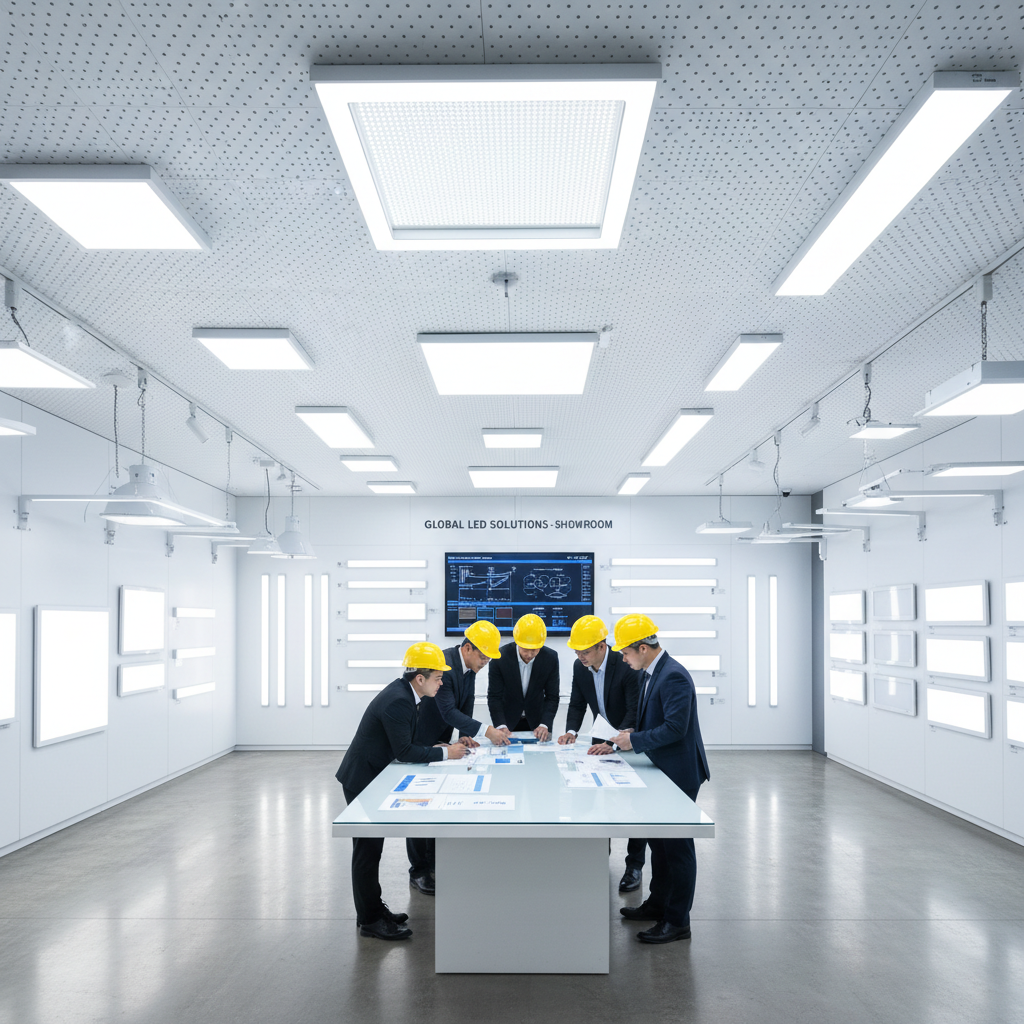
I use a simple system when I audit LED suppliers. It helps me spot real factories, weak products, and hidden risks fast.
Comparison of LED Light Manufacturers by Product Quality (Commercial Buyer’s Guide)
I know cheap quotes look attractive. I also know failures, claims, and returns erase that savings fast. I compare factories by proof.
Product quality in LED manufacturing means verified performance over time, not a bright sample on day one. I judge quality by test reports, component control, certification, thermal design, consistency, and after-sales response.

What “product quality” really means in LED buying
I see many buyers use price and brightness as the first filter. That is too narrow. A fixture can look bright in a sample room and still fail in a hot warehouse after six months. I define product quality with metrics I can verify.
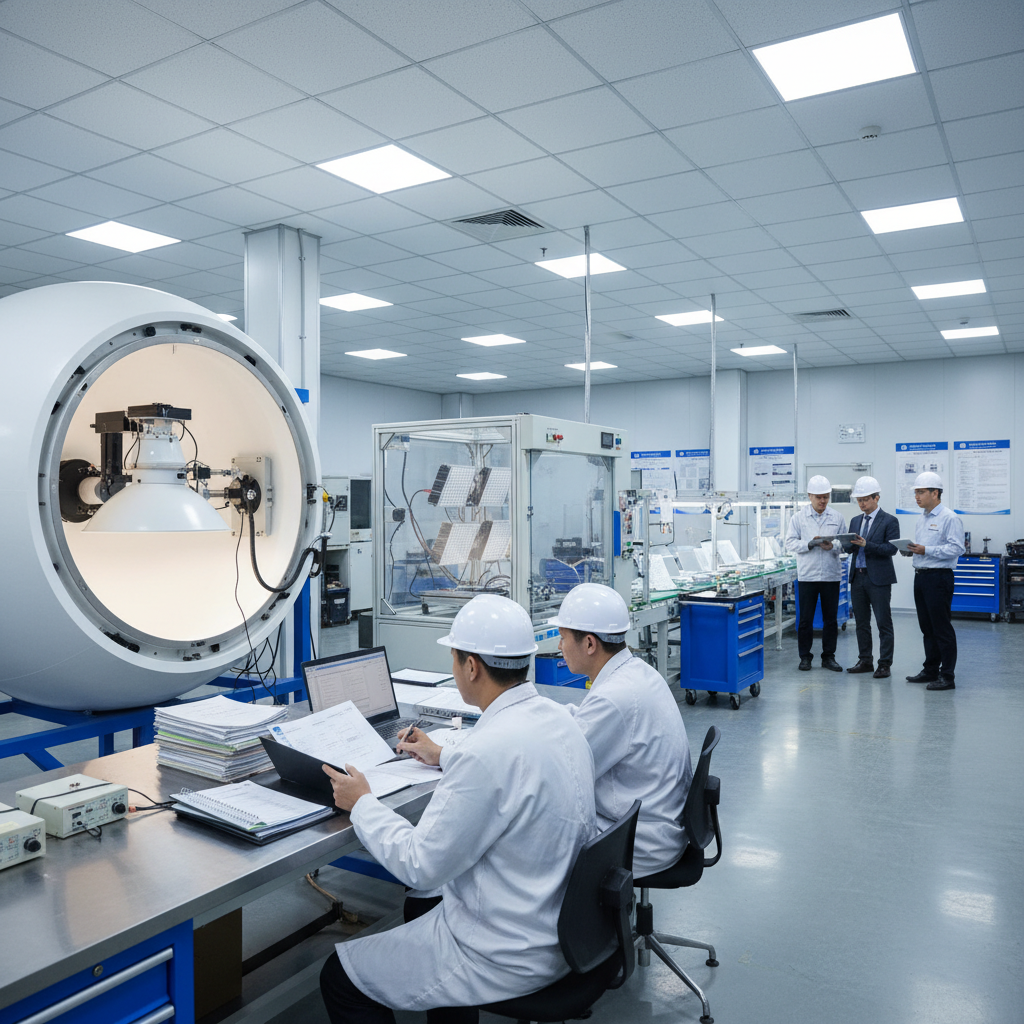
The first metric is compliance. I check whether a fixture is UL listed, CE, RoHS, or matched to local market needs. The second metric is photometric truth. I look at lumen output, CRI, color temperature, and luminous efficacy. The third metric is durability. I ask for LM-79, LM-80, TM-21, surge data, driver data, and operating temperature limits.12
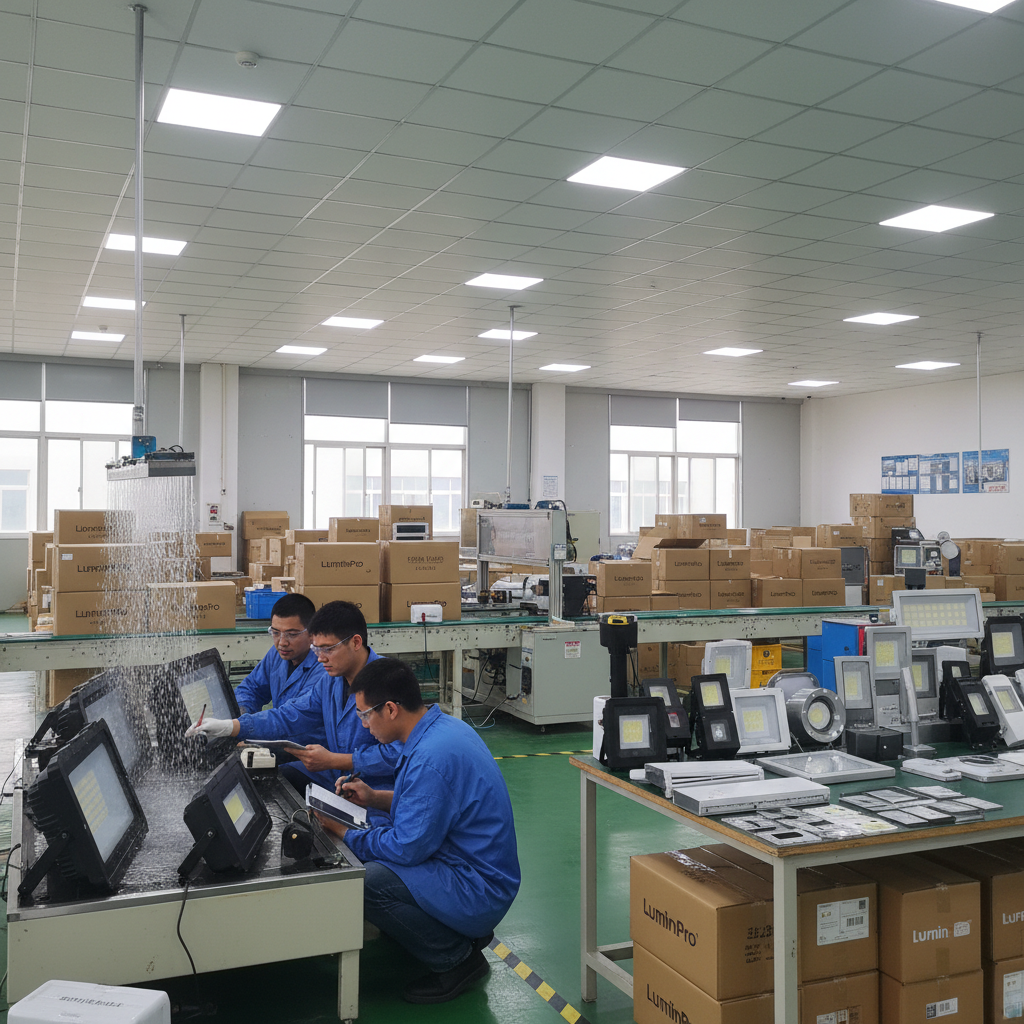
I also check factory control. An ISO9001 system, incoming inspection, burn-in, aging tests, and traceable batch records matter. I want to know chip brand, driver brand, PCB thickness, housing material, and gasket quality. I ask what happens if one container has a defect. Good manufacturers answer with process. Weak suppliers answer with promises.
| Quality point | What I check | Why it matters | Risk if missing |
|---|---|---|---|
| Certifications | UL, CE, RoHS, market-specific approvals | Reduces compliance and customs risk | Seizure, rejection, liability |
| Test reports | LM-79, LM-80, TM-21, IP, surge | Confirms real performance | Inflated specs |
| Components | Driver, LED package, PCB, housing | Drives lifespan and consistency | Early failures |
| Thermal design | Heat sink size, temperature rise | Protects driver and LEDs | Fast lumen loss |
| Warranty | Terms, exclusions, claim process | Shows supplier confidence | High post-sale cost |
| QC system | IQC, aging, final inspection | Controls batch consistency | Mixed quality |
I compare total ownership cost, not unit cost. A lower quote can become the most expensive option when labor, replacement freight, downtime, and reputation damage hit the project.
How to Judge LED Manufacturer Quality in 5 Minutes: A Practical Checklist
I know buyers get flooded with catalogs and claims. I cut through that noise with a five-minute checklist that exposes weak suppliers quickly.
I judge LED manufacturer quality fast by checking five things: certifications, test reports, key component brands, warranty terms, and real factory evidence. If one area is vague, I slow down.

My 5-minute scoring matrix
I use this short method when I compare two or three factories. It is simple enough for busy buyers and strict enough to remove weak options. I score each supplier from 1 to 5 in each area. A score below 18 out of 25 needs deeper review.
| Criteria | 1 point | 3 points | 5 points |
|---|---|---|---|
| Certification proof | Unclear or expired | Partial proof | Valid and verifiable |
| Test data | Marketing sheet only | Some lab data | Full reports from recognized labs |
| Components | No brand disclosure | Mixed brands | Named driver and LED suppliers |
| QC and factory proof | No process shown | Basic inspection | Full IQC, aging, final QC, traceability |
| Warranty support | Vague promise | Standard warranty | Clear terms, fast claim handling, parts support |
I ask for the certificate number and verify it. I ask for actual PDF reports, not screenshots. I check if wattage, CCT, output, and model numbers match the offered product. I ask who makes the driver. A good manufacturer answers with brand and specification, not “high quality driver.”
Downloadable buyer checklist
I suggest buyers create a one-page spreadsheet with these columns:
| Supplier | Certification verified | LM-79/LM-80/TM-21 | Driver brand | LED brand | Warranty | Lead time | Score |
|---|---|---|---|---|---|---|---|
| Factory A | Yes | Full | Inventronics | Seoul | 5 years | 15 days | 23 |
| Factory B | Partial | LM-79 only | Unknown | Unknown | 3 years | 12 days | 14 |
| Factory C | Yes | Full | Mean Well | Nichia | 5 years | 18 days | 24 |
I also ask for one factory video, one production line video, and one aging test video. Real factories show processes easily. Trading companies often avoid this.
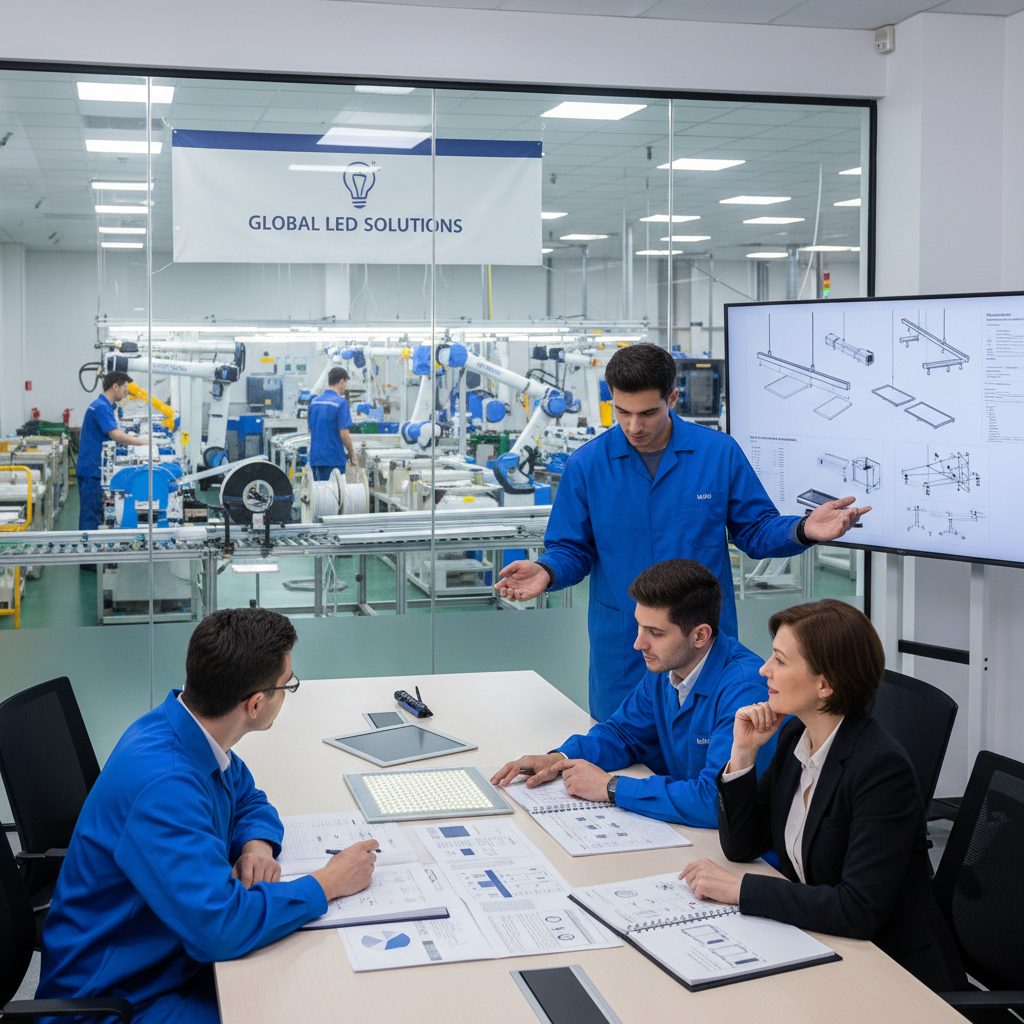
At Besenled, we are a direct factory in Zhongshan with 5 production lines, ISO9001 process control, and OEM or ODM support. I find serious buyers value fast proof more than polished sales language.
Core Quality Factors That Separate Top LED Manufacturers From Cheap Alternatives
I see many products look similar outside. I also see huge quality gaps inside. The hidden parts decide whether a project succeeds.
Top LED manufacturers separate themselves through component quality, thermal management, driver reliability, optical consistency, and process control. Cheap alternatives cut cost in the driver, PCB, housing, and testing.
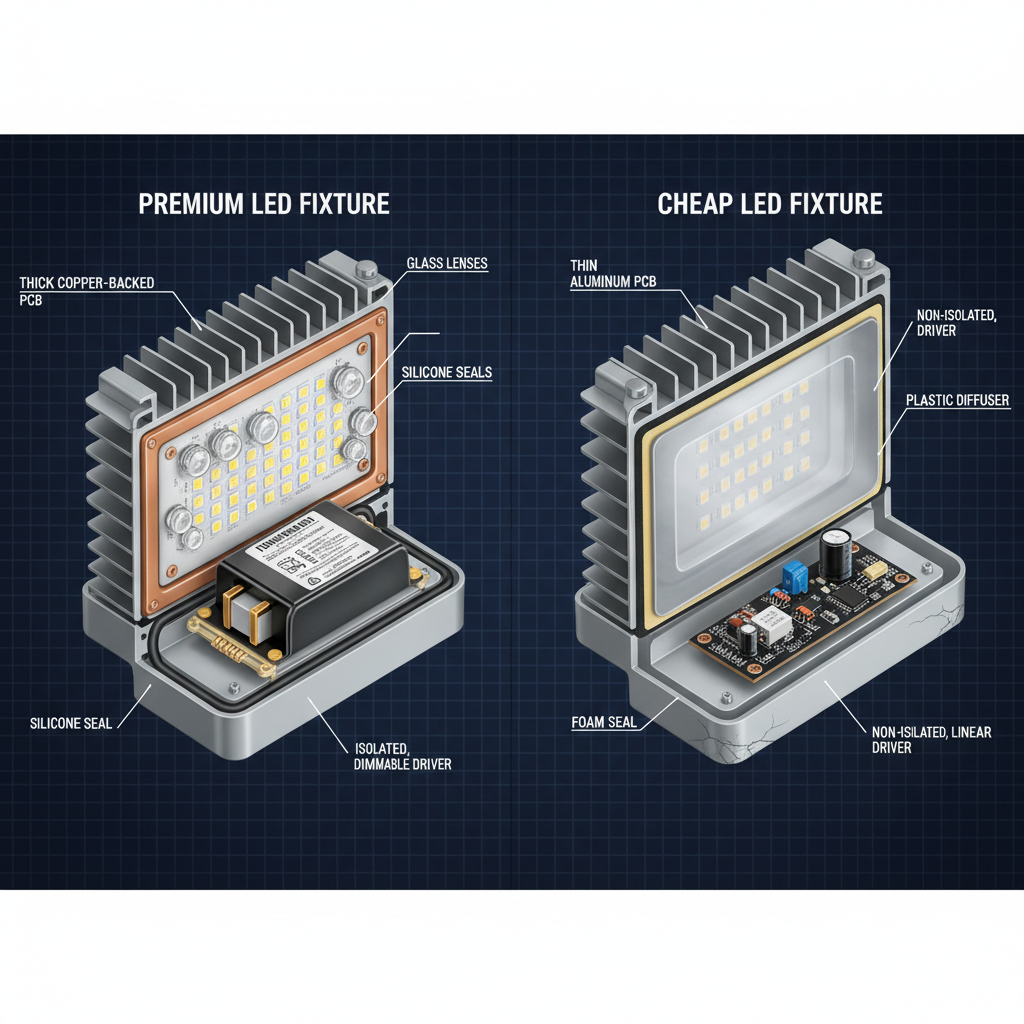
The parts that fail first
I usually focus on the driver first. In many commercial fixtures, the driver fails before the LED chips. Heat, voltage spikes, weak capacitors, and poor surge protection are common causes. Under-specified drivers save a few dollars at the factory and create major replacement cost in the field. DOE material on LED systems has long shown that lifetime claims depend on the whole system, not only the LED package.3
The second weak point is thermal design. If the heat sink is too small or airflow is poor, LED junction temperature rises. That speeds lumen depreciation and color shift. A product advertised for 50,000 hours may never reach that in a hot plant or enclosed canopy.
The third weak point is optical and material consistency. Poor diffusers yellow. Thin housings warp. Low-grade gaskets fail moisture tests. Outdoor fixtures without true IP65 or better sealing often suffer corrosion or water entry.
| Factor | Premium manufacturer approach | Cheap alternative approach |
|---|---|---|
| Driver | Reputable brand, surge protection, proper thermal margin | Unknown driver, low margin parts |
| LED package | Stable binning, known supplier | Mixed binning, inconsistent source |
| PCB | Thick aluminum PCB, strong heat transfer | Thin board, poor thermal path |
| Housing | Better alloy and finish | Thin metal or brittle plastic |
| Optics | UV-stable lens and diffuser | Yellowing lens, uneven beam |
| QC | Aging, batch traceability, electrical tests | Spot checks only |
Why component disclosure matters
I trust suppliers more when they disclose driver and LED brands. I do not require one famous brand every time. I require consistency and honest matching to the application. In warehouses, parking lots, retail, and office projects, reliability matters more than brochure language.
I also review flicker, dimming behavior, and color consistency. Poor drivers can create visible flicker, camera banding, or control issues.4 That problem shows up often in low-cost office panels and linear lights.
What the Data Says: Failure Rates, Lifespan, and Energy Performance Across LED Products
I hear 50,000-hour claims every week. I know field results can differ a lot from datasheets. Real data gives buyers a safer baseline.
The data shows LED performance depends on system design, operating temperature, and component quality. Reported life claims are not equal to zero failures. Good commercial fixtures can last many years, but weak drivers and heat often shorten real service life.23
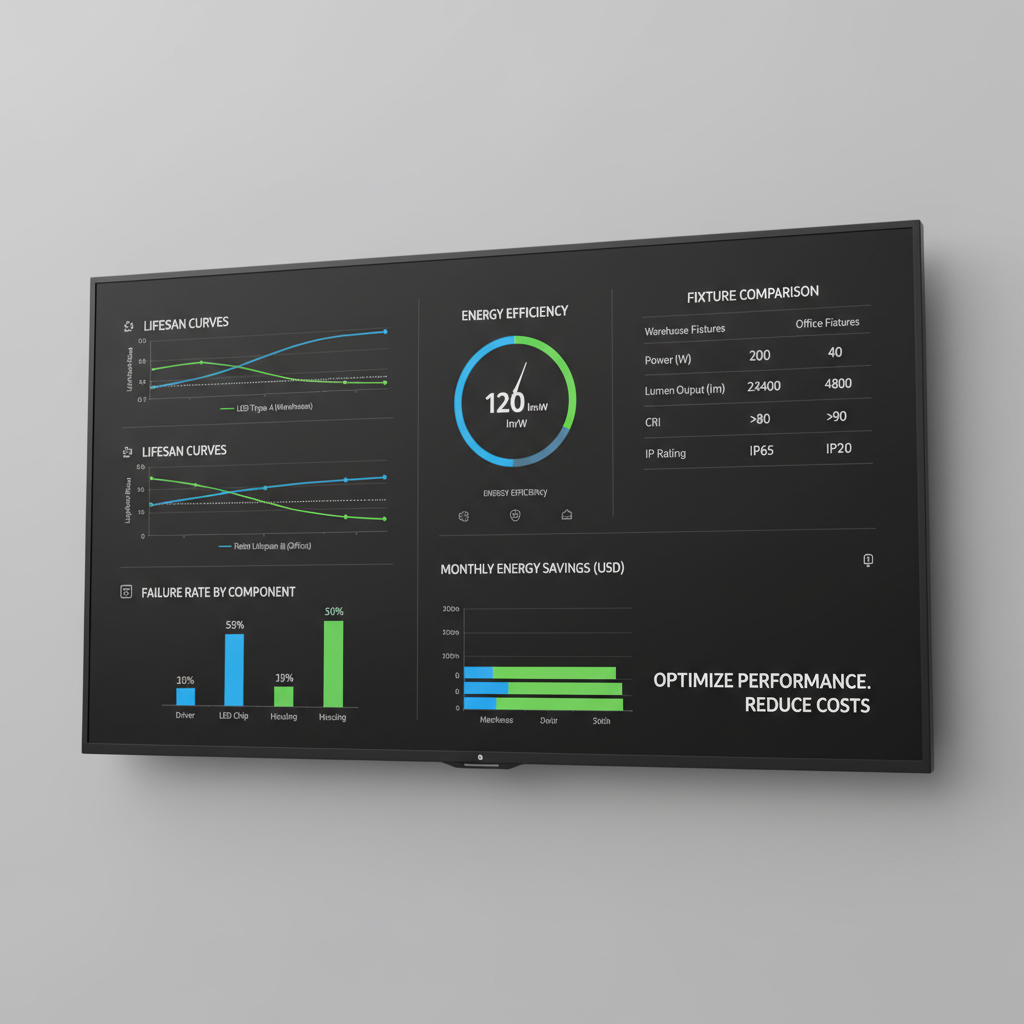
What published sources and field experience show
I use DOE, ENERGY STAR, DLC, and lab guidance as the base layer. LM-80 measures LED package lumen maintenance. TM-21 projects long-term lumen maintenance from LM-80 data.12 That helps estimate when a product reaches L70, meaning output drops to 70% of initial light. Buyers often mistake that for full fixture life. It is not the same thing as driver survival.
DOE publications have noted that LED products often fail from electronics or thermal stress before the LED packages reach their projected end of life.3 In my field view, that is exactly what happens in poorly designed high bays and outdoor flood lights. A fixture can keep some light output while the driver becomes the single point of failure.
Commercial buyers should also compare energy performance by real delivered luminous efficacy, not ideal chip efficiency. A fixture rated at 140 lm/W at system level is more meaningful than a vague claim based on chip potential alone. ENERGY STAR and DLC programs have pushed more transparent performance thresholds and testing methods.56
| Metric | What it means | Strong commercial range | Buyer warning sign |
|---|---|---|---|
| System efficacy | Real fixture lm/W | 120–160 lm/W | No test basis |
| Lumen maintenance | Output over time | LM-80 + TM-21 support | “50,000h” only |
| Driver reliability | Electronic survival | Reputable driver, surge spec | Brand hidden |
| Failure rate | % failing in field | Low single digits over warranty | No claim data |
| Warranty | Supplier risk sharing | 3–5 years clear terms | Heavy exclusions |
What I expect in commercial projects
In normal indoor commercial use, I expect a good fixture to deliver stable output for many years if heat is controlled and power quality is decent. In hot warehouses, coastal outdoor zones, or unstable grids, I demand stronger surge protection, thermal margin, and sealing. I also ask for spare parts support. That reduces downtime and protects distributor reputation.
5:faq:
I know buyers still have practical doubts after reviewing data. I answer the same questions in almost every project discussion.
The most common LED quality questions are about supplier selection, certifications, life claims, chip brands, DLC Premium, fixture lifespan, and warehouse-grade differences. Clear answers help buyers avoid costly mistakes.
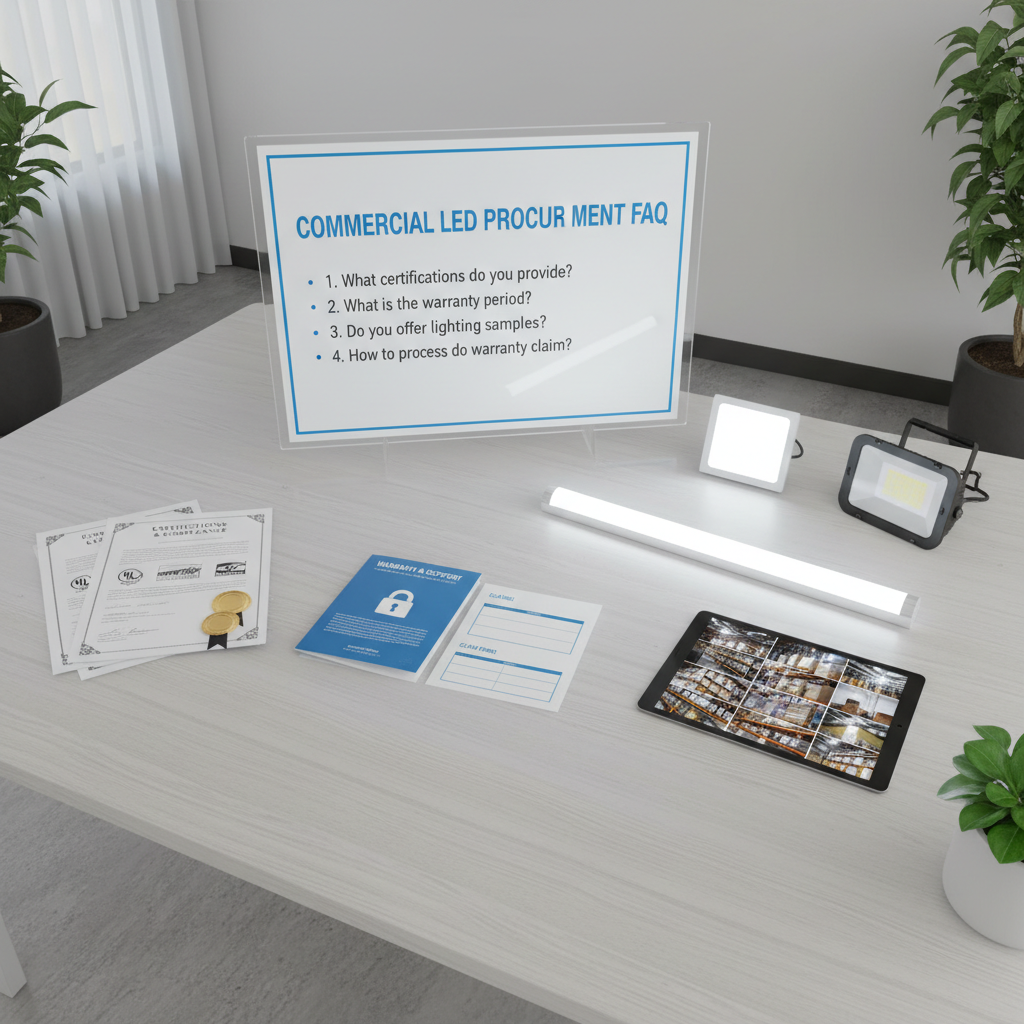
Quick answers buyers actually need
I keep these answers practical because buyers need decisions, not theory.
1. How do I choose the best LED light manufacturer?
I choose the best manufacturer by checking certification validity, test reports, driver and LED brands, QC process, and warranty support. I also verify the factory is real and can handle repeat orders.
2. What certifications should LED lights have?
I match certifications to the target market and product type. Common requirements include CE, RoHS, and UL listed marks. Many rebate and project buyers also ask for DLC or ENERGY STAR, depending on the fixture category.56
3. Why do some LED lights fail early even though they claim 50,000 hours?
I usually find driver failure, heat buildup, weak surge protection, or poor sealing behind early failure. The 50,000-hour claim often refers to lumen maintenance assumptions, not guaranteed full system survival.23
4. Are brand‑name LED chips always better?
I do not assume that automatically. Good chip brands help, but system design, current control, optics, and thermal management matter just as much.
5. Is DLC Premium worth it?
I think it is worth serious attention for many North American commercial projects. It can support rebate access and signal stronger efficacy performance, but I still review the full fixture design and warranty.6
6. How long should a commercial LED fixture really last?
I expect 5 to 10 years in many commercial conditions when the fixture is well designed and correctly installed. Harsh heat, moisture, and unstable voltage can shorten that range.
7. What is the difference between a cheap LED and a premium LED for warehouses?
I usually see the difference in driver life, heat control, glare management, CRI, beam consistency, and warranty response. Premium warehouse lights cost more upfront and often cost less over the project life.
Frequently Asked Questions
What certifications should I verify before placing a bulk LED order?
I verify market-specific compliance first. For many projects, I check UL, CE, RoHS, and sometimes DLC or ENERGY STAR. I also match the certificate model number to the exact product I am buying.
Can a supplier offer good quality without famous component brands?
I believe it is possible if the factory has stable sourcing, valid test reports, and strong QC. I still ask for full disclosure and sample testing before I approve a large order.
What MOQ should I expect from a factory manufacturer?
I usually see flexible MOQ on standard models and higher MOQ on custom designs. OEM logo, custom housing, or special drivers often need a larger batch to control cost.
How important is delivery speed when comparing manufacturers?
I treat delivery speed as part of quality. A reliable factory should communicate clearly, confirm production status, and ship on time. Late delivery can hurt distributors as much as product defects.
Can I customize LED fixtures without increasing quality risk?
I can if the factory manages engineering changes carefully. I ask for approved drawings, sample confirmation, BOM control, and final inspection records before mass production.
Conclusion
I compare LED manufacturers by proof, not promises. The safest supplier shows verified data, stable components, real QC, and clear warranty support.
Ready to Source? Let's Talk.
Want samples, catalogs, or a project quotation?
Contact Rain Cai: sales10@besenled.com | www.besenledlight.com
Sources
IES LM-80 Approved Method Overview — https://www.ies.org/standards/technical-memoranda/ ↩ ↩
ENERGY STAR Lamps Specification and Lumen Maintenance References — https://www.energystar.gov/products/light_bulbs ↩ ↩ ↩ ↩
DOE Solid-State Lighting Research and Development: LED Product Performance — https://www.energy.gov/eere/ssl/solid-state-lighting ↩ ↩ ↩ ↩
DOE LED Lighting Flicker Information — https://www.energy.gov/eere/ssl/led-lighting-flicker ↩
UL Certification Marks Resource — https://www.ul.com/resources/ul-certification-marks ↩ ↩
DesignLights Consortium Technical Requirements — https://www.designlights.org/ ↩ ↩ ↩
Topic cluster context
Comparison of LED light manufacturers by product quality?
This guide supports the Certification & Trust hub. Product, protocol, certification, ranking and performance claims remain subject to the evidence and compatibility checks stated in the article governance record.