
Choosing the right magnetic track lighting can transform any space with style and functionality. But how do you navigate the sea of options to find the perfect fit?
To choose the best magnetic track lighting, focus on load capacity, track length, voltage options, fixture compatibility, and energy efficiency. Opt for systems that offer high load capacities, expandable tracks, suitable voltage, and LED fixtures for optimal performance and cost savings.
I remember the first time I stood in a brightly lit showroom, surrounded by endless rows of lighting fixtures. It felt overwhelming! But as I started exploring each aspect—load capacity, track flexibility, and energy efficiency—it became clear that a little knowledge goes a long way in finding the perfect lighting solution.
Let’s break down these key factors so you can make an informed choice for your space. Start with load capacity; ensuring your system can handle the wattage of all fixtures prevents overloading. Then, consider track length and flexibility—modular systems are great for adaptable layouts. Voltage options are next; low-voltage is energy-efficient, while line-voltage suits larger setups.
Compatibility is crucial too; verify that your fixtures match the track system. Finally, energy efficiency isn't just a trend; opting for LED fixtures can significantly cut costs over time. By focusing on these elements, you’ll illuminate your space effectively and efficiently.
Magnetic track lighting is only suitable for commercial spaces.False
Magnetic track lighting is versatile for both residential and commercial use.
LED fixtures enhance energy efficiency in track lighting systems.True
LED fixtures are more energy-efficient than traditional bulbs, reducing costs.
How Does Load Capacity Impact Magnetic Track Lighting Choices?
Ever find yourself lost in the world of lighting options, wondering how to make the perfect choice? Let's dive into the fascinating world of magnetic track lighting and why understanding load capacity is your guiding light.
Load capacity determines how many fixtures a magnetic track system can safely support. It impacts the system's efficiency and longevity by preventing overloads, which could lead to electrical issues or reduced performance.

Understanding Load Capacity
Load capacity in magnetic track lighting is like the backbone of your setup. It's the maximum electrical load the track can support, ensuring your lights shine bright without risk of overload. I remember the first time I installed a system in a client's spacious office, and how crucial it was to get this right to avoid dimming or flickering issues.
When choosing a system, always check the wattage rating per circuit. For commercial spaces, tracks rated for at least 600W1 per circuit are ideal. Overloading not only threatens efficiency but also the safety of your space.
Fixture Compatibility and Selection
The load capacity directly affects which fixtures you can use. In my experience, low-capacity tracks can limit creativity—like that one project where I had to rethink the entire lighting layout because I hadn't calculated the total wattage correctly!
Using energy-efficient fixtures, like LEDs, is a game-changer. They consume less power, which means you can add more fixtures to your track without going over capacity.
Voltage Considerations
The voltage of your magnetic tracks plays a significant role too. Low-voltage tracks (12V or 24V) are great for energy efficiency but need transformers. In contrast, line-voltage systems2 (120V or 240V) are easier to install and can handle higher loads.
Choosing the right voltage is crucial for performance. I've found low-voltage systems perfect for feature lighting, while line-voltage systems are better for larger setups needing more power.
Practical Tips for Installation
For a seamless installation experience:
- Measure your space accurately to select appropriate track lengths.
- Opt for systems allowing modular expansion with connectors.
- Choose tracks supporting up to 10 meters or more for larger spaces.
I learned early on that a well-planned system not only meets current needs but also future-proofs your setup against frequent overhauls, ensuring long-term reliability and flexibility.
Table: Comparing Load Capacity Requirements
| Use Case | Recommended Load Capacity |
|---|---|
| Residential | Up to 300W per circuit |
| Commercial | At least 600W per circuit |
| Industrial | 1000W+ per circuit |
Load capacity affects the number of fixtures supported.True
Load capacity determines how many fixtures can be safely installed.
Low-voltage tracks support higher loads than line-voltage.False
Line-voltage systems handle higher loads, suitable for larger setups.
What Track Length and Flexibility Options Are Best for My Space?
Have you ever stood in a space and wondered how to make every inch count?
Choosing the best track length and flexibility for your space means tailoring options to fit your unique needs. Modular systems offer customization for both small and expansive areas, allowing you to expand or adapt as required.

Understanding Track Length Requirements
Remember the time when I was tasked with reimagining our community center's athletic facilities? It was all about making every corner count. For larger spaces, like a professional sports facility, sticking to standard sizes3 such as 400 meters can ensure that athletes get the practice they need. But, if it's a community project, sometimes smaller tracks do the trick, bringing a sense of belonging and utility to the area.
The same principles apply to lighting. Think about those long evenings spent trying to perfect the ambiance of a room. Longer tracks can accommodate more fixtures, ensuring even light distribution—an absolute must for creating that perfect environment. So, take out that measuring tape because precise dimensions are your best friend here.
The Role of Flexibility in Track Systems
Flexibility is like having a magic wand that transforms spaces into what you need them to be. Imagine hosting a sports event one day and a yoga retreat the next. Modular track systems allow just that—they can adapt to various sporting needs seamlessly.
In lighting, I once faced a project where the room's purpose changed with each season. A flexible lighting system with connectors made it possible to reconfigure layouts with ease. This adaptability is key, especially in commercial settings where space usage evolves over time.
Balancing Flexibility with Functionality
There was a moment during one of my projects when I realized that too much complexity could lead to chaos. It's vital to strike a balance. Go for designs that are straightforward but allow for adjustments without sacrificing performance. Magnetic tracks in lighting are like those nifty puzzle pieces that snap into place—easy to reposition but always delivering consistent power and load management.
Sample Table: Comparison of Track Lengths
| Track Type | Standard Length | Flexibility Options |
|---|---|---|
| Athletic Track | 400 meters | Modular sections |
| Indoor Lighting | Up to 10 meters | Connectors for extension |
Choosing the right track system boils down to understanding what your space truly needs. Whether it's for athletics or lighting, grasping how length and flexibility interplay will guide you to make informed decisions. Delve into track systems4 that promise optimal functionality and adaptability over time, ensuring that whatever your project demands, you're ready to meet it head-on.
Standard athletic track length is 400 meters.True
Standard athletic tracks are typically 400 meters, catering to professional needs.
Magnetic tracks compromise power supply and load management.False
Magnetic tracks allow repositioning without compromising power supply and load management.
Should I Choose Low-Voltage or Line-Voltage Systems for My Needs?
Choosing between low-voltage and line-voltage systems might seem like navigating a maze, but with the right guidance, it becomes a clear path.
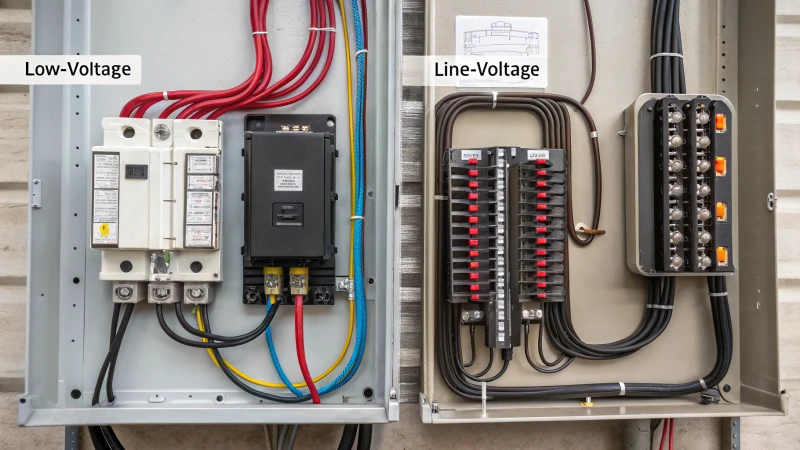
I choose low-voltage systems when I want energy efficiency and flexibility, perfect for those cozy accent lights. Line-voltage systems, on the other hand, are my go-to for robust applications, offering simplicity and higher load capacities.
Understanding Voltage Systems
When I first faced the decision between low-voltage and line-voltage systems, I was baffled. But breaking it down helped. Low-voltage systems, usually operating at 12V or 24V, use transformers to convert the standard line voltage. These systems became my favorite for their energy efficiency5 and the creative freedom they offer in design.
Line-voltage systems, working directly on the standard 120V or 240V supply, took me by surprise with their simplicity. Without needing additional transformers, they turned out to be the ideal choice for larger installations where I needed straightforward setups.
Comparing Applications
| Low-Voltage Systems | Line-Voltage Systems |
|---|---|
| Suitable for accent and feature lighting | Ideal for general lighting in commercial spaces |
| Requires transformers | Direct connection to power supply |
| More energy-efficient | Higher load capacities |
I remember evaluating different environments where these systems would go. In commercial spaces6 requiring multiple fixtures, line-voltage was a clear winner for me due to its efficiency in handling higher loads.
Installation Complexity
My experience with installation taught me that low-voltage setups often involve more components like transformers and extra wiring. This can bump up the complexity and cost, but the trade-off is the incredible flexibility in design layouts7 you can achieve—something I found truly rewarding for those unique lighting solutions.
On the flip side, line-voltage systems offer a straightforward installation process. While they lack the nuanced control of low-voltage setups, they shine in scenarios where simplicity and power are the main priorities.
Energy Efficiency Considerations
I can't stress enough how low-voltage systems with LED fixtures have helped me cut down energy consumption significantly. This makes them an attractive option if lowering operational costs over time is on your radar. While line-voltage systems provide power, they may not always reach the same level of energy efficiency unless paired with LED solutions8.
In reflecting on my long-term goals, focusing on reducing energy consumption led me to favor low-voltage systems, despite their initial complexity.
Low-voltage systems operate at 12V or 24V.True
Low-voltage systems use transformers to convert standard line voltage to 12V or 24V.
Line-voltage systems require transformers for operation.False
Line-voltage systems connect directly to the power supply without needing transformers.
How Can Fixture Compatibility Affect My Lighting System?
Ever tried setting up a new lamp only to find it flickers incessantly? Yeah, me too!
Fixture compatibility significantly influences your lighting system by affecting efficiency, longevity, and safety. By correctly pairing fixtures with bulbs and other components, you ensure optimal performance and avoid malfunctions.

Understanding Fixture Compatibility
I remember the first time I set out to revamp the lighting in my space. Enthusiastically, I picked the trendiest fixtures and bulbs, only to realize later that not all fit like a glove. Fixture compatibility is about ensuring your lighting components mesh well together. It affects how well your chosen bulbs, like LEDs9 or fluorescents, work with the rest of your setup.
Key Factors in Fixture Compatibility
- Bulb Type: One weekend, I spent hours trying different bulbs in a fixture, unaware that it wasn’t designed for LEDs. Lesson learned: always check if your fixture supports the bulb type you plan to use.
- Wattage Limits: I've had that scare where a bulb gets way too hot, making me rethink ignoring those wattage stickers.
- Voltage Matching: Like mismatched puzzle pieces, fixtures must match your power supply voltage. Otherwise, it’s a recipe for disaster.
| Aspect | LED Compatibility | Fluorescent Compatibility |
|---|---|---|
| Efficiency | High energy efficiency | Moderate energy efficiency |
| Lifespan | Longer lifespan | Shorter lifespan |
| Installation | Requires compatible drivers | Needs ballast |
Effects on Lighting Performance
I found out the hard way that proper compatibility means everything. Without it, you risk flickering lights or inconsistent brightness—problems I’ve tackled many times over cups of coffee and online forums.
- Energy Efficiency: When I finally got the right combination, my electricity bill was kinder. Compatible fixtures ensure maximum savings.
- Durability: A system that works well together lasts longer, which saves both time and money on replacements.
Troubleshooting Compatibility Issues
If you’ve ever had lights that act up for no reason, like me, it might be time to dive into compatibility checks:
- Double-check if your bulb and fixture types align.
- Ensure voltage and wattage compatibility.
- Look for missing pieces like transformers or ballasts.
Exploring Smart Lighting Systems
I’m a huge fan of smart lighting—it’s like having a personal assistant for my lights. These systems offer features that make fixture compatibility easier to manage.
- Smart Controls10: They let me control everything remotely, which is a game-changer for efficiency.
- Energy Monitoring: Keeping tabs on energy usage helps me optimize my system.
Choosing the Right Components
From personal experience, selecting the right components means:
- Ensuring fixtures and controls get along well.
- Picking systems that offer modular upgrades—ideal for when I want to expand my setup without starting from scratch.
focusing on fixture compatibility not only boosts efficiency but also stretches the life of my lighting setup. It’s an investment in both performance and peace of mind.
LEDs require compatible drivers for installation.True
LEDs need specific drivers to operate correctly and efficiently.
Fluorescent bulbs do not need a ballast.False
Fluorescent bulbs require a ballast to regulate current flow.
Conclusion
Selecting magnetic track lighting involves considering load capacity, track length, voltage options, fixture compatibility, and energy efficiency to ensure optimal performance and adaptability for your space.
Discover why commercial spaces benefit from higher wattage ratings to accommodate multiple fixtures safely. ↩
Learn about the benefits of using line-voltage systems in larger, high-power lighting applications. ↩
Explores standard dimensions for athletic tracks, helping readers choose appropriate sizes for their facilities. ↩
Offers insights into versatile track systems, aiding readers in selecting adaptable solutions for diverse applications. ↩
Explore how low-voltage lighting enhances energy efficiency and design flexibility. ↩
Discover why line-voltage systems are ideal for commercial lighting applications. ↩
Gain insights into creative possibilities offered by low-voltage systems. ↩
Learn how LED solutions can optimize energy efficiency in lighting systems. ↩
Learn how LED bulbs work with different fixtures for optimal performance. ↩
Explore how smart controls can optimize lighting efficiency and functionality. ↩