Featured image:

leading paragraph:
Are you confused by the different lighting options available for your clients? Choosing the wrong system wastes money and delays projects. I will explain the three main track lighting types clearly.
snippet paragraph:
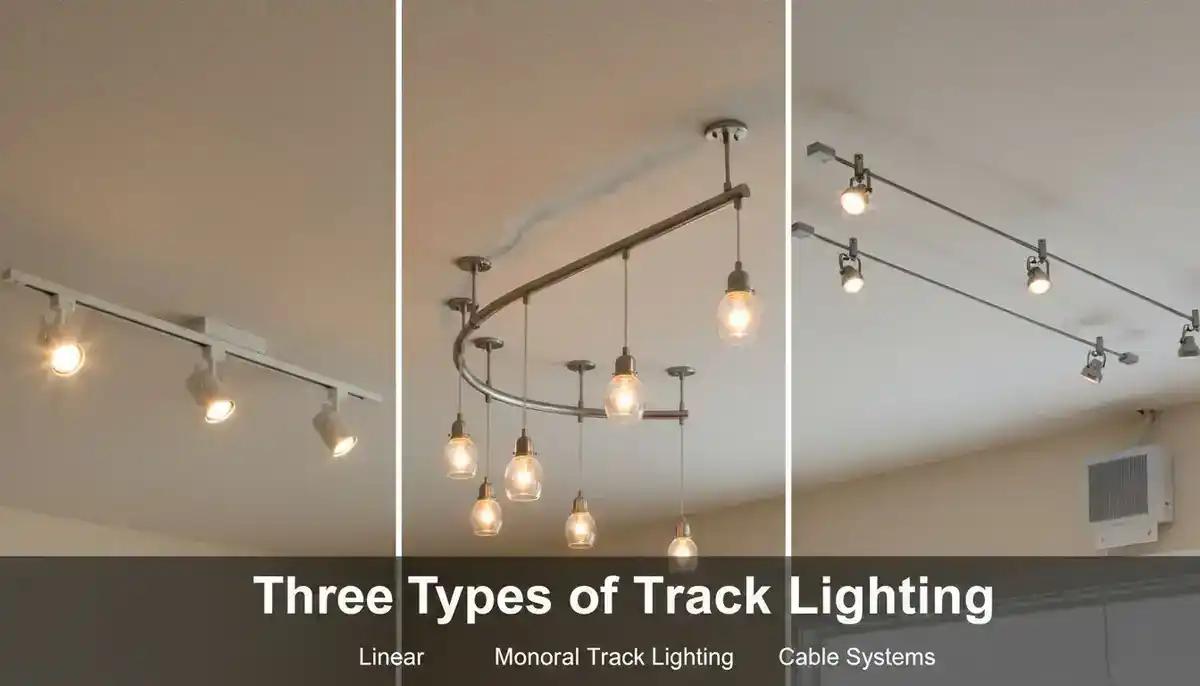
The three main types of track lighting are Standard Linear Track1 (rigid, line-voltage), Monorail Lighting (flexible, low-voltage), and Cable Lighting (tensioned wires, low-voltage). Linear track fits standard ceilings, while monorail and cable systems offer flexibility for curved or vaulted spaces where direct wiring is difficult.

Transition Paragraph:
Many distributors in Mexico ask me about these differences because their clients have specific design needs. You need to know which system fits your client's ceiling and budget to avoid returns. Let’s look at the details so you can stock the right products and keep your customers happy.
Generate Claims
Linear track lighting is always low voltage.False
Standard linear track is typically line voltage (120V or 220V), connecting directly to household power without a transformer.
Cable lighting is the best option for high, vaulted ceilings.True
Cable lighting uses tensioned wires that can span open spaces, making it ideal for ceilings where mounting a track is impossible.
LOOP START
Linear Track vs. Rail vs. Cable: Which Fits Your Ceiling, Power, and Design?
leading paragraph:
Your clients want style, but installation limits often exist in older buildings. Ignoring ceiling types causes installation failures. Here is how to match the system to the architecture.
snippet paragraph:
Linear track is best for flat, standard ceilings with existing junction boxes. Monorail suits curved designs and allows custom shapes. Cable Lighting2 is the ideal solution for high, vaulted, or exposed beam ceilings where running electrical conduit is impossible or ugly.

Dive deeper Paragraph:
When I talk to buyers like you, the biggest confusion is often about the physical installation. You must understand the structure to sell the right product.
Standard Linear Track is the most common. It is a rigid metal bar. It usually runs on line voltage (120V or 220V). This means you do not need a separate transformer. It is cheap and easy to install on flat drywall. However, it looks very industrial and cannot bend.
Monorail (Rail) Lighting is different. It is flexible. You can bend it by hand to make curves or circles. It usually runs on low voltage (12V or 24V). This means you must hide a transformer somewhere. It looks very elegant and modern. It stands off from the ceiling, so it works well on uneven surfaces.
Cable Lighting uses two conductive wires pulled tight between two walls. It is perfect for "floating" light in a room with high ceilings or exposed beams. Like monorail, it is low voltage.
Here is a quick comparison for your purchasing decisions:
| Feature | Linear Track | Monorail | Cable Lighting |
|---|---|---|---|
| Voltage | Line (120V/220V) | Low (12V/24V) | Low (12V/24V) |
| Flexibility | Rigid (Straight) | Bendable (Curved) | Straight (Tensioned) |
| Installation | Easy (Surface) | Medium (Standoffs) | Hard (Anchors) |
| Best For | Retail, Flat Ceilings | Art Galleries, Curves | Lofts, Vaulted Ceilings |
At Besenled, we see that commercial projects prefer Linear Track for cost, while high-end residential projects in Mexico often ask for Monorail.
Generate Claims
Monorail lighting requires a transformer.True
Since monorail systems typically operate on low voltage (12V or 24V), a transformer is necessary to step down the power.
You can bend standard linear track to fit a curved wall.False
Standard linear track is rigid metal and cannot be bent; you must use connectors to turn corners at 90-degree angles.
LOOP END
LOOP START
H, J, and L Track Standards: The Quick Compatibility Test Before You Buy?
leading paragraph:
Buying replacement heads is risky if you do not know the system. If the connector does not fit, you lose money on dead stock. You must identify the track standard immediately.
snippet paragraph:
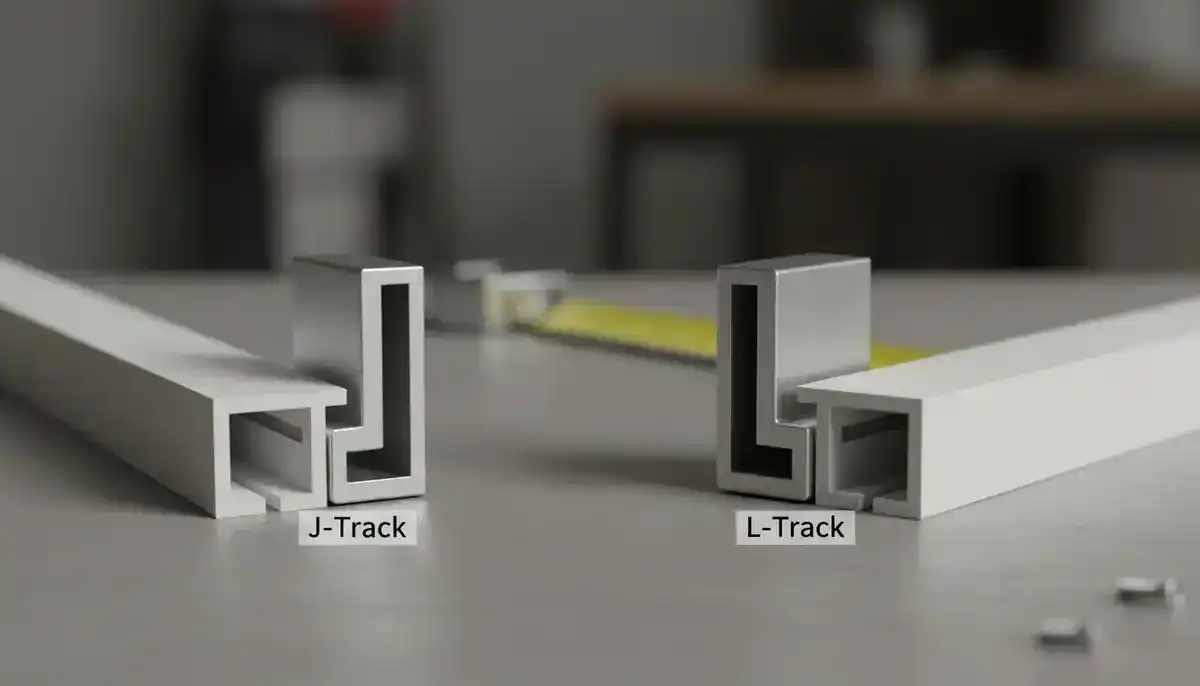
The three standards are H-Type (3 wires, Halo), J-Type (2 wires, Juno), and L-Type (2 wires, Lightolier). They are not interchangeable. You can identify them by measuring the tip of the connector or counting the contact points inside the track rail.

Dive deeper Paragraph:
In the lighting business, compatibility is the biggest headache. I have seen many distributors import a container of track heads, only to find they do not fit the tracks installed in their country. This is a disaster for cash flow.
You need to know the "Big Three" standards. These apply mostly to Linear Track.
- H-Type (Halo): This is very popular. It has three contact points. The tip of the connector has three flat tabs. If you look inside the track, you will see three copper strips.
- J-Type (Juno): This has two contact points. The tip of the connector is wide, about 1 inch. The contact strip inside the track is usually hidden on one side.
- L-Type (Lightolier): This also has two contact points, but the shape is different. The connector tip is narrower than the J-Type.
Can you mix them? No. Never try to force a J-Type head into an H-Type Track3. It will break or cause an electrical short.
When you order from my factory, I always ask you to confirm the system used in your market. In North America and parts of Latin America, H-Type is very common. However, you must check your local projects. We can customize the adapter for you. This ensures your brand has a reputation for reliability.
Generate Claims
H-Type track lighting has three wires.True
H-Type (Halo) systems utilize a three-wire configuration with a separate ground circuit.
J-Type and L-Type heads are interchangeable.False
Even though both have two contacts, the physical shape and size of the connector tips are different and cannot fit into each other's tracks.
LOOP END
LOOP START
Specs That Matter: Voltage, Wattage, Beam Angle, CRI, and Controls?
leading paragraph:
A light that looks bad ruins your reputation as a supplier. Clients blame you for poor color or dim spaces. You need to master the technical specifications today.
snippet paragraph:
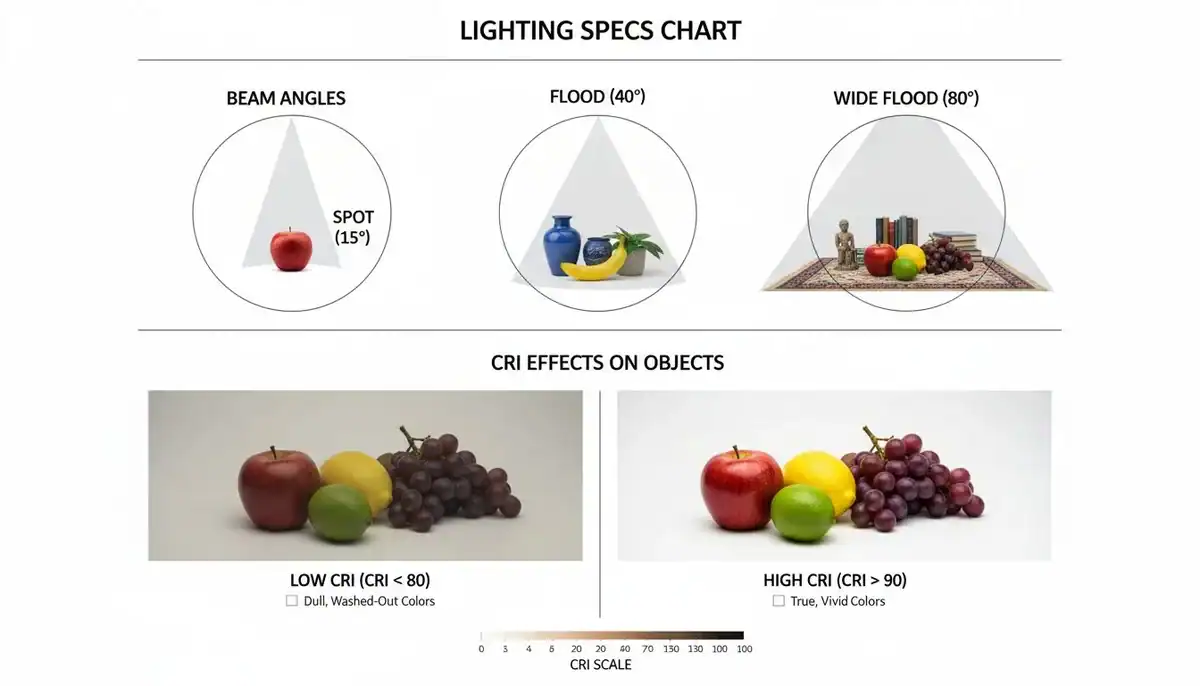
Voltage determines if you need a transformer. Wattage dictates brightness and energy use. CRI (Color Rendering Index) measures color accuracy; aim for 90+ for retail. Beam Angle4 controls the spread of light, from narrow spots to wide floods.
Dive deeper Paragraph:
As a business owner, you know that "quality" is not just about the material. It is about the light effect. When you rebrand products in Mexico, your customers expect professional results. Here are the specs you must check on my data sheets.
CRI (Color Rendering Index): This is critical. If you sell to clothing stores or art galleries, you need CRI >90. If the CRI is low (like 70), red colors will look brown. Your client will return the product. At Besenled, we focus on high CRI chips.
Beam Angle: This changes the look of the room.
- 15° - 24° (Spot): Good for highlighting a specific object, like a vase or a mannequin.
- 36° - 60° (Flood): Good for general lighting in a living room or office.
Kelvin (Color Temperature):
- 3000K (Warm White): Best for homes and hotels. It feels cozy.
- 4000K (Natural White): Best for offices and retail shops. It looks clean.
- 6000K (Cool White): Often too blue for high-end spaces, but good for jewelry.
Dimming Controls: Modern clients want to dim their lights. You must ensure the driver inside the track head is compatible with Triac, 0-10V, or DALI dimmers. If they do not match, the lights will flicker.
| Spec | Recommendation for Retail | Recommendation for Home |
|---|---|---|
| CRI | >90 | >80 |
| Beam Angle | 24° (Focus) | 36° (General) |
| Color (CCT) | 4000K | 3000K |
Generate Claims
A higher CRI means the light is brighter.False
CRI measures color accuracy, not brightness. Lumens measure brightness.
Beam angle determines how wide the light spreads.True
A narrow beam angle creates a spotlight effect, while a wide beam angle creates a floodlight effect.
LOOP END
LOOP START
Layout and Load Planning: How Many Heads, What Transformer, Which Connectors?
leading paragraph:
Overloading a circuit causes failure and fire risks. Your client's lights will flicker or turn off. You must calculate the load correctly to ensure safety and performance.
snippet paragraph:
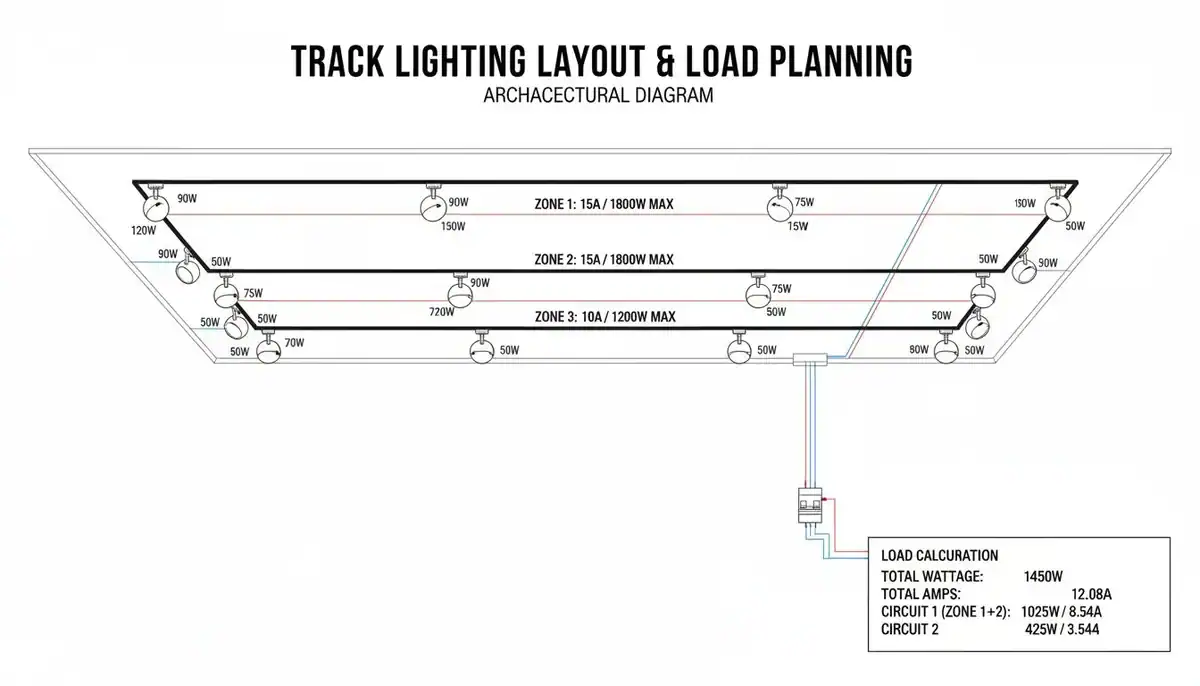
Calculate the total wattage of all heads and ensure it stays under the transformer's maximum capacity (usually 80% load is safe). For layout, space heads 12 to 24 inches apart. Use flexible connectors for corners and dead-end caps to close the circuit safely.
Dive deeper Paragraph:
Planning the layout is where many mistakes happen. If you sell a system to an electrician, you should be able to give them basic advice. This adds value to your service.
1. The 80% Rule:
Never load a transformer or circuit to 100%. If you have a 300W transformer for a monorail system, do not use 300W of lights. Keep it under 240W (80%). This prevents overheating and extends the life of the LED drivers.
2. Voltage Drop5:
This is a big issue for Low Voltage systems (Monorail and Cable). If the rail is very long (over 5 meters), the lights at the end might be dimmer than the lights at the start. You need to use a thicker cable or feed power from the middle of the track, not the end.
3. Spacing:
How many heads fit on a track? Physically, you can put many. But visually, it looks bad if they are too close. I recommend spacing them 30cm to 60cm apart.
4. Connectors:
Do not forget to order accessories. You need:
- Live End Feed: To bring power in.
- L-Connector: To turn a 90-degree corner.
- I-Connector: To join two tracks together.
- Dead End Cap: To cover the open end of the track for safety.
When you import from Besenled, we can package these accessories in kits with your logo. This makes it easy for your customers to buy everything in one box.
Generate Claims
You should load a transformer to 100% capacity for maximum efficiency.False
You should leave a safety margin (usually 20%) to prevent overheating and ensure longevity.
Voltage drop causes lights at the end of a long run to appear dimmer.True
Resistance in the wire reduces voltage over distance, which is more noticeable in low-voltage systems.
LOOP END
LOOP START
FAQ: What Common Questions Will Your Customers Ask?
leading paragraph:
Customers ask the same questions daily. Not knowing the answer looks unprofessional. Here are the quick answers to help you close the sale faster.
snippet paragraph:
The most common questions cover installation difficulty, mixing components, and beam angles. Linear track is the easiest to install. You cannot mix H, J, and L parts. For vaulted ceilings, cable lighting is the best choice due to its suspension method.
Dive deeper Paragraph:
To help you sell more effectively, I have compiled the answers to the questions you listed. You can use this as a "cheat sheet" for your sales team.
Which type is easiest to install?
Linear track is the easiest. It screws directly into the ceiling and connects to a standard junction box. No remote transformers are needed.
Can I mix H, J, and L components?
No. They are physically different. Mixing them is dangerous and will damage the product.
How many heads can I put on a monorail?
It depends on the transformer wattage. Formula: Total Wattage / Wattage per Head = Number of Heads. Always keep a 20% safety margin.
What beam angle should I pick?
For general room lighting, pick 36° or wider. For highlighting art or products, pick 24° or narrower.
What CRI and Kelvin should I use?
For high-end retail or art, use CRI 90+ and 3000K or 4000K. For a warehouse, CRI 80 and 5000K is fine.
Is cable lighting good for vaulted ceilings?
Yes, it is the best option. The cables can span across the empty space without needing support in the middle.
At Besenled, we test all these scenarios. We ensure our products meet these standards so you do not face quality complaints.
Generate Claims
Linear track is generally the easiest system to install.True
It mounts directly to the surface and usually does not require hiding a separate transformer.
You can use any beam angle for any application with good results.False
Using a narrow spot for general lighting creates dark shadows, while using a flood for highlighting fails to draw attention.
LOOP END
Conclusion
Track lighting success depends on choosing the right type (Linear, Monorail, Cable) and standard (H/J/L). Besenled provides compatible, high-quality customized solutions to help you dominate your market. Contact me today.
References
- Understanding Standard Linear Track lighting helps you choose the right system for flat ceilings. ↩
- Learn how Cable Lighting can effectively illuminate high and vaulted spaces. ↩
- Discover the characteristics of H-Type Track lighting for better compatibility. ↩
- Explore how beam angle influences the effectiveness of your lighting solutions. ↩
- Understanding voltage drop is crucial for ensuring consistent lighting performance. ↩