Are you thinking about switching to commercial LED lighting? This choice changes everything for your business!
Commercial LED lighting offers numerous benefits, including up to 75% energy savings, longer lifespans, and reduced maintenance costs. With superior lighting quality and environmental advantages, LEDs improve workplace visibility and contribute to sustainability efforts. Smart LED systems provide flexible, energy-efficient solutions, and businesses can benefit from tax incentives and rebates for energy-efficient upgrades.
Initially, I felt surprised by how LED lighting might change my workspace. This blog post explores the fantastic benefits of using LED lighting. LED lights offer really great savings. They help in creating a more lively and effective place for your team. Picture brighter rooms that probably lower expenses. They also improve productivity and really support well-being!
Commercial LED lighting improves energy efficiency significantly.True
LED lighting consumes less energy than traditional options, leading to lower electricity bills.
Switching to LED lighting increases maintenance costs for businesses.False
In fact, LED lights have a longer lifespan, reducing maintenance needs and costs over time.
How Does LED Lighting Improve Energy Efficiency?
Ever thought about a simple light bulb's power to change your room, save money and help the planet? I want to tell you my story about LED lighting. LEDs really change how we use energy efficiently.
LED lighting uses up to 75% less energy than incandescent bulbs. It lasts a very long time, up to 100,000 hours. This results in lower operational costs. The environmental impact also decreases. LED lighting is really energy-efficient.
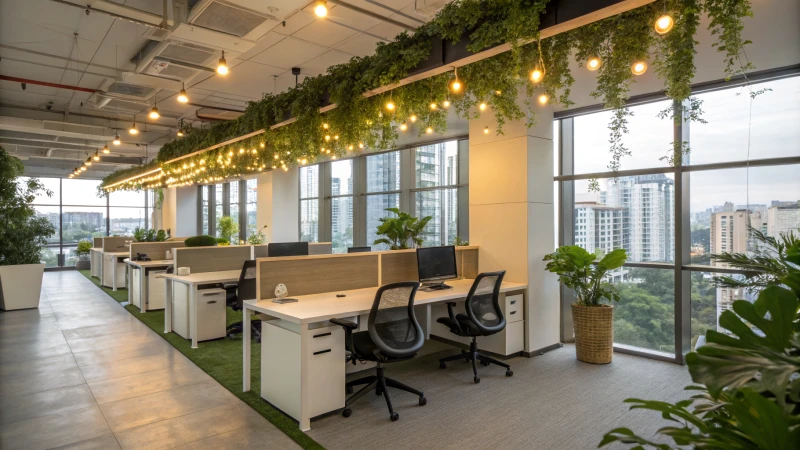
Understanding Energy Efficiency in LED Lighting
At first, I doubted LED lighting. How could a light bulb really change things? But when I learned more, it felt like a light bulb lit up in my head! Compared to traditional incandescent and fluorescent lights, LEDs save a lot of energy. They use up to 75% less energy than incandescent bulbs and about 50% less than fluorescent ones. Saving energy means reducing consumption and building a more sustainable future.
Running a business is challenging. Imagine if each light you switch on not only brightens your space but also lowers your electricity bill significantly. Businesses could save around $100,000 each year by using LEDs in offices or retail spaces. Such savings probably change everything.
Longevity and Reduced Maintenance
One surprising fact is the lifespan of LED lights. They can last between 50,000 to 100,000 hours. In contrast, old incandescent bulbs only work for about 1,000 to 10,000 hours. I remember replacing burnt-out bulbs in my office many times – what a hassle! With LEDs, replacements happen less often and maintenance costs drop.
| Type of Bulb | Lifespan (Hours) | Cost per Replacement | Maintenance Frequency |
|---|---|---|---|
| Incandescent | 1,000 | $1.00 | Every 1 year |
| Fluorescent | 10,000 | $2.00 | Every 2 years |
| LED | 50,000 - 100,000 | $10.00 | Every 10-20 years |
Just take a look at how switching to LEDs could help businesses lower replacement costs by up to 70%! It's like finding extra money you didn't know you had!
Quality of Light
LEDs are not just efficient; they offer excellent light quality. With a Color Rendering Index (CRI) rating of 80-90, they reveal clearer visuals and truer colors compared to fluorescent lights, which score between 60-70. Good lighting is crucial, especially in places like hospitals or design studios where color accuracy is very important.
Environmental Impact
Sustainability matters a lot to me. The environmental benefits of LEDs amazed me. Traditional bulbs contain hazardous materials like mercury. LEDs, on the other hand, are free of toxins and completely 100% recyclable. Switching to LEDs can cut a building's energy use and carbon emissions by up to 80%! Every switch helps reduce greenhouse gas emissions significantly—every single one!
Smart Integration
In this tech-savvy world, why not integrate smart technology with lighting? Modern commercial LED systems excite me! They can be managed through smart systems that allow users to adjust lighting based on occupancy or time of day—saving an additional 30-50% of energy! Customizing lighting reduces costs and creates a comfortable work environment.
Compliance and Incentives
Before big changes, checking for incentives is important. Many regions offer financial advantages for businesses that adopt energy-efficient solutions. Following local rules for energy efficiency allows businesses to receive rebates or tax incentives—making the switch very appealing.
For instance, in the U.S., businesses take advantage of tax deductions under the Energy Policy Act of 2005, covering up to 60% of project costs for energy-efficient upgrades. It's an opportunity worth exploring!
Exploring these aspects of LED lighting shows how beneficial it is for operations and the environment. Choosing a light bulb is a conscious decision for a brighter future.
LEDs can reduce energy consumption by up to 80%.True
Adopting LED lighting can significantly lower energy usage and carbon emissions, making it an effective solution for sustainability.
LED bulbs last longer than traditional incandescent bulbs.True
Compared to incandescent bulbs, which last about 1,000 hours, LEDs can last between 50,000 to 100,000 hours, reducing maintenance costs.
What Are the Long-Term Cost Savings of Switching to LEDs?
Have you ever thought about changing to LED lighting? I want to share my experience. This simple change leads to impressive long-term savings. You save money. Your business saves money. LED lighting also helps the environment.
LED lighting provides large savings over time. Energy use decreases by up to 75%. Maintenance becomes cheaper because LEDs last longer. They can shine for over 50,000 hours. Lighting quality gets better with LEDs. LEDs also help protect the environment. Tax breaks add another reason to switch.

Energy Efficiency and Cost Reduction
When I first switched to LED lighting, my energy bills immediately surprised me. LEDs use up to 75% less energy than incandescent bulbs and about 50% less than fluorescent lights! For businesses like mine, this can result in annual savings of up to $100,000 in energy costs. Imagine seeing these savings reflected in your company’s profits. It’s a small but important success that keeps adding up.
To illustrate these savings, consider the table below:
| Type of Lighting | Energy Consumption (kWh/year) | Annual Cost at $0.10/kWh | Savings with LEDs |
|---|---|---|---|
| Incandescent Bulbs | 1,500 | $150 | - |
| Fluorescent Lights | 750 | $75 | - |
| LEDs | 375 | $37.50 | $112.50 |
As demonstrated, switching to LEDs can save a business over $112.50 per bulb annually.
Longer Lifespan Equals Lower Maintenance Costs
LEDs last much longer—typically ranging from 50,000 to 100,000 hours, vastly outlasting traditional bulbs that last only 1,000 to 10,000 hours. I used to change bulbs often in my office; it was never-ending! Now, with LEDs, replacements are rare. My maintenance costs have really dropped by over 70% since the switch!
This longevity means fewer replacements and reduced maintenance costs for businesses as well. Consider the following table:
| Type of Bulb | Lifespan (Hours) | Replacement Frequency (Years) | Maintenance Cost Reduction |
|---|---|---|---|
| Incandescent Bulbs | 1,000 | Every year | - |
| Fluorescent Lights | 10,000 | Every 10 years | - |
| LEDs | 50,000-100,000 | Every 50-100 years | 70%+ |
Improved Lighting Quality
LEDs improve lighting quality significantly. The brightness and uniformity they provide are beautiful and reduce dark spots in workspaces while ensuring high color rendering—critical for industries needing visual accuracy such as retail or design.
With a Color Rendering Index (CRI) of 80-90, LEDs outperform fluorescent lights that score between 60-70. This improvement makes spaces more inviting and may even increase team productivity. If you are interested, learn more about lighting quality improvements1.
Environmental Benefits and Sustainability
Switching to LEDs helps the environment—a big win for sustainability! Unlike fluorescent lamps that contain harmful substances like mercury, LEDs are 100% recyclable, supporting sustainability goals while cutting down our carbon footprint.
Companies using LEDs can lower energy use and carbon emissions by up to 80%, positively impacting greenhouse gas emissions associated with buildings—responsible for nearly 40% of total emissions. Check out more on this topic at sustainability in lighting2.
Smart Integration and Flexibility
Modern LED lighting fits seamlessly with smart control systems. I have seen the smart lighting difference for myself—it adjusts based on occupancy and time of day—saving an extra 30-50% in energy costs! This allows for very optimal work conditions.
Explore more on smart lighting at smart lighting systems3.
Compliance with Regulations and Incentives
Switching to LED lights aligns with regulations while offering great incentives! My business now meets local rules and enjoys extraordinary rebates and tax incentives.
The Energy Policy Act of 2005 provides tax deductions of up to 60% for energy-efficient projects, which is a significant benefit for budget planning!
For more details visit incentives for businesses4.
LEDs can save businesses over $112.50 per bulb annually.True
Switching to LEDs reduces energy costs significantly, resulting in substantial annual savings for businesses, as shown in the provided cost analysis.
LED lights last 50,000-100,000 hours on average.True
Compared to traditional bulbs, LEDs have a much longer lifespan, reducing replacement frequency and maintenance costs substantially for businesses.
How Can Smart Lighting Integration Enhance Business Operations?
Have you ever entered a room that felt perfect? That's the wonder of smart lighting. Come with me as we discover how these systems change our ways of doing business. Operations run smoother with smart lighting. They become more efficient than ever.
Smart lighting helps business operations by saving energy and lowering maintenance expenses. It provides better light quality and supports sustainability goals. Flexible control options adapt to workspace needs. Smart lighting is very efficient.
%[Modern office space with advanced lighting]
In my journey as a business owner, I saw how the right lighting can improve a workspace. It’s not just about bringing light; it’s about creating an environment that helps productivity and well-being. Let's explore how smart lighting can really change business operations.
Energy Efficiency and Cost Savings
One reason I support smart lighting systems is their great energy efficiency. When I switched to commercial LED lighting in my office, I was amazed by the change. These LEDs use up to 75% less energy than old incandescent bulbs. I remember getting my first energy bill after installation; the savings were so big that I thought I’d miscalculated. According to the U.S. Department of Energy, businesses might save up to $100,000 annually by adopting this switch in regular office or retail spaces.
| Lighting Type | Energy Consumption | Cost Savings |
|---|---|---|
| Incandescent Bulbs | High | Low |
| Fluorescent Lights | Moderate | Moderate |
| LEDs | Low | High |
Longer Lifespan and Reduced Maintenance Costs
The long life of LED lights changes the game. With a lifespan of 50,000 to 100,000 hours, I often forgot what it was like to change a light bulb! This means fewer replacements and a huge drop in maintenance costs. For a large office, the cut could be as much as 70%. Imagine not having to plan regular maintenance checks. It's a relief.
Improved Lighting Quality
I’ll never forget entering a room lit by smart LED lighting for the first time after the switch. The brightness was even, with no harsh shadows - just a welcoming glow that made everyone feel more relaxed. Smart lighting not only betters visual quality but also has a high Color Rendering Index (CRI) of 80-90, compared to just 60-70 for fluorescents. This is crucial for places like hospitals and showrooms where clarity is vital.
Environmental Benefits and Sustainability
Caring about sustainability led me to choose smart lighting systems. LEDs have no hazardous materials and are fully recyclable. Switching to LED lighting can cut energy use and carbon emissions by up to 80%, making a real impact in our fight against climate change.
Smart Integration and Flexibility
Modern LED systems excite me because they can integrate with IoT technologies. This setup allows for dynamic adjustments based on occupancy or the time of day - lights can dim automatically in empty areas. This flexibility might lead to extra energy savings of 30-50%. In my office, such features optimize energy usage and enhance everybody's comfort.
Compliance with Regulations and Incentives
Dealing with regulations can be overwhelming, but many regions offer incentives for energy-efficient upgrades. For example, the Energy Policy Act of 2005 provides tax deductions of up to 60% for energy-efficient lighting retrofits. By adopting smart lighting, I’ve complied with building codes and gained significant financial benefits for my business.
In summary, integrating smart lighting into business operations is more than just an upgrade; it is a move towards efficiency, sustainability, and better workplace environments. Knowing that I’m contributing positively to both my team’s experience and the planet’s health feels priceless.
LEDs can save businesses up to $100,000 annually.True
Switching to LED lighting can significantly reduce energy costs, leading to substantial annual savings for businesses, as noted by the U.S. Department of Energy.
Smart lighting reduces maintenance costs by 70%.True
The longevity of LEDs allows businesses to cut down on replacements and maintenance expenses by up to 70%, making them more cost-effective.
What Environmental Benefits Do Commercial LEDs Offer?
Did you ever think about how switching a lightbulb could greatly help our planet? Let me explore the wonderful environmental benefits of commercial LEDs. They are really changing how we view sustainability.
Commercial LEDs provide many environmental benefits. They use very little energy. Their lifespan is much longer. They reduce waste. They offer high-quality lighting. They meet sustainability standards. LEDs are a smart choice. Businesses save money with them. They are eco-friendly too.

Changing to LED Lighting
Changing to LED lighting is not only practical; it shows a strong commitment to a greener future. I remember when my company transitioned. Initially, it seemed challenging. Energy savings were significant. The positive impact on the environment impressed us. It was probably one of the best decisions we ever took.
Energy Efficiency and Cost Savings
One of the most significant environmental benefits of commercial LEDs is their energy efficiency.
LEDs consume up to 75% less energy than traditional incandescent bulbs and about 50% less than fluorescent lights. This energy savings translates to not just lower electricity bills but also reduced carbon emissions, which is crucial for sustainability.
According to the U.S. Department of Energy, businesses can save an estimated $100,000 annually by switching to LED lighting in typical office or retail environments.
Longer Lifespan and Reduced Waste
Commercial LEDs boast a lifespan ranging from 50,000 to 100,000 hours, far exceeding the 1,000 to 10,000 hours of traditional bulbs.
This durability leads to fewer replacements, reducing waste and the resources needed for manufacturing and transportation.
For instance, a business that shifts to LEDs can expect to cut maintenance costs by up to 70%, contributing to less environmental strain from disposal of old bulbs and a decrease in landfill use.
Improved Lighting Quality
In addition to being eco-friendly, LEDs provide superior lighting quality. Their high Color Rendering Index (CRI) ranging from 80-90 ensures that colors appear vibrant and true-to-life.
This feature is especially vital for sectors such as retail and design where visual accuracy is paramount.
The improved visibility from LED lighting also enhances workplace safety, reducing accidents caused by poor illumination. Consider the following table comparing CRI values:
| Lighting Type | CRI Range |
|---|---|
| Incandescent Bulbs | 100 |
| LED Lights | 80-90 |
| Fluorescent Lights | 60-70 |
Environmental Sustainability
LEDs are made without hazardous materials like mercury, commonly found in fluorescent lamps. This makes them safer for the environment when disposed of. Additionally, they are 100% recyclable, further supporting sustainability initiatives.
Switching to LED lighting can reduce a building's energy consumption and carbon footprint by as much as 80%. This reduction plays a crucial role in combating climate change, as buildings are responsible for nearly 40% of total greenhouse gas emissions.
Smart Integration for Enhanced Control
Modern commercial LEDs can be integrated into smart control systems that adjust lighting based on occupancy or time of day.
This flexibility not only enhances energy savings but also elevates the comfort level within commercial spaces.
Studies show that smart lighting can reduce energy usage by an additional 30-50%. Businesses utilizing these systems enjoy tailored lighting solutions that meet specific needs while promoting sustainability.
Compliance and Incentives
Many governments and utility companies offer incentives for adopting energy-efficient solutions like commercial LEDs. This means that transitioning to LED lighting doesn’t just benefit the environment; it also provides financial benefits through rebates or tax deductions.
For example, the Energy Policy Act of 2005 allows businesses to claim tax incentives of up to 60% for energy-efficient retrofits, making LEDs not only a smart choice environmentally but also economically.
Commercial LEDs reduce energy consumption by up to 75%.True
LEDs are significantly more energy-efficient than incandescent bulbs, leading to substantial energy savings and lower carbon emissions.
LEDs contain hazardous materials like mercury.False
Unlike fluorescent lamps, LEDs are made without hazardous materials, making them safer for disposal and the environment.
Conclusion
Commercial LED lighting provides energy efficiency, cost savings, longer lifespan, better light quality, and environmental sustainability, making it an ideal choice for modern businesses.
- Learn how switching to LEDs can enhance your business's bottom line and reduce energy costs significantly. ↩
- Explore the environmental benefits of using LED lights and how they contribute to sustainability efforts. ↩
- Find out how smart lighting solutions can improve energy efficiency and save costs. ↩
- Discover what government incentives are available for businesses that switch to energy-efficient lighting solutions. ↩