

You worry about stocking the wrong products. Choosing a fading technology can hurt your profits. Here is the truth about what comes after LED lighting.
There is no single replacement for LED right now. Instead, we will see segmented adoption. MicroLEDs1 will lead in displays, while Perovskites offer high efficiency for flexible uses. However, standard LEDs remain the king of general illumination because of their low cost and established supply chains.
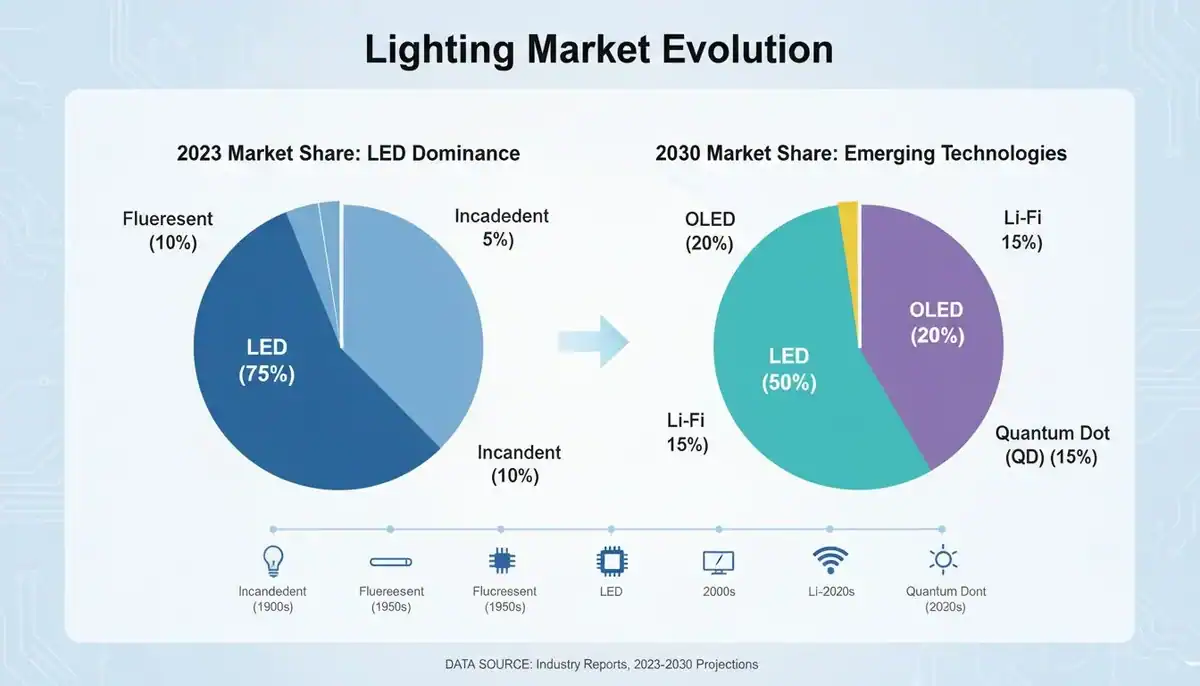
I talk to distributors like you every day. You want innovation, but you also need stability. You cannot afford to import a container of new lights that fail after three months. I have seen many trends come and go in my ten years of manufacturing. Let's look at the real data so you do not waste money on hype.
MicroLEDs are currently cheaper than standard LEDs for general lighting.False
MicroLEDs are significantly more expensive due to mass-transfer manufacturing challenges.
Standard LEDs will remain the dominant technology for general illumination for the next decade.True
Cost, reliability, and supply chain maturity favor standard LEDs over emerging tech for general use.
Will MicroLED replace OLED and LED in lighting?
High-tech buzzwords are confusing. Do you really need MicroLEDs for your warehouse or street lighting projects?
MicroLEDs are superior for brightness and life but are currently too expensive for general lighting. They will start in wearables and huge screens. Perovskites2 are promising for flexible designs but need to solve stability issues first.

Let's break this down. MicroLED is very exciting for companies like Apple or Samsung. They use it for screens. But for general lighting, it is a different story. In my factory, we focus on lumens per dollar. MicroLED cannot compete there yet.
The main problem is "mass transfer." To make a MicroLED panel, you must move millions of tiny chips perfectly. If one fails, the panel is bad. This makes it very expensive. For a street light or a linear light, you do not need microscopic pixels. You need raw power and heat management.
However, Perovskite LEDs (PeLEDs) are different. They are easy to print. They have great color purity. But they have a big problem with stability. They degrade quickly when exposed to air or moisture.
Here is a simple comparison for your purchasing decisions:
| Feature | Standard LED | MicroLED | Perovskite (PeLED) |
|---|---|---|---|
| Best Use | General Lighting | Displays / AR | Flexible / Decorative |
| Cost | Low | Very High | Potentially Low |
| Lifespan | 50,000+ Hours | 100,000+ Hours | Unstable (Currently) |
| Availability | Immediate | Limited | Research Phase |
For your business in Mexico, sticking with high-quality standard LEDs is still the smart move. You need products that work today, not prototypes for tomorrow.
MicroLED technology offers longer lifespans than OLED.True
MicroLEDs use inorganic materials which do not degrade as quickly as the organic compounds in OLEDs.
Perovskite LEDs are ready for mass production in street lighting.False
Perovskites still face significant stability and toxicity issues that prevent mass adoption in rugged environments.
Are perovskite LEDs ready for mainstream luminaires?
You cannot afford product returns. New tech often fails early, and your reputation depends on reliability.
No, they are not ready yet. While efficiency is high, blue-light stability and lead toxicity3 remain big hurdles. For now, standard LEDs offer the reliability and safety certifications required for import into markets like Mexico.
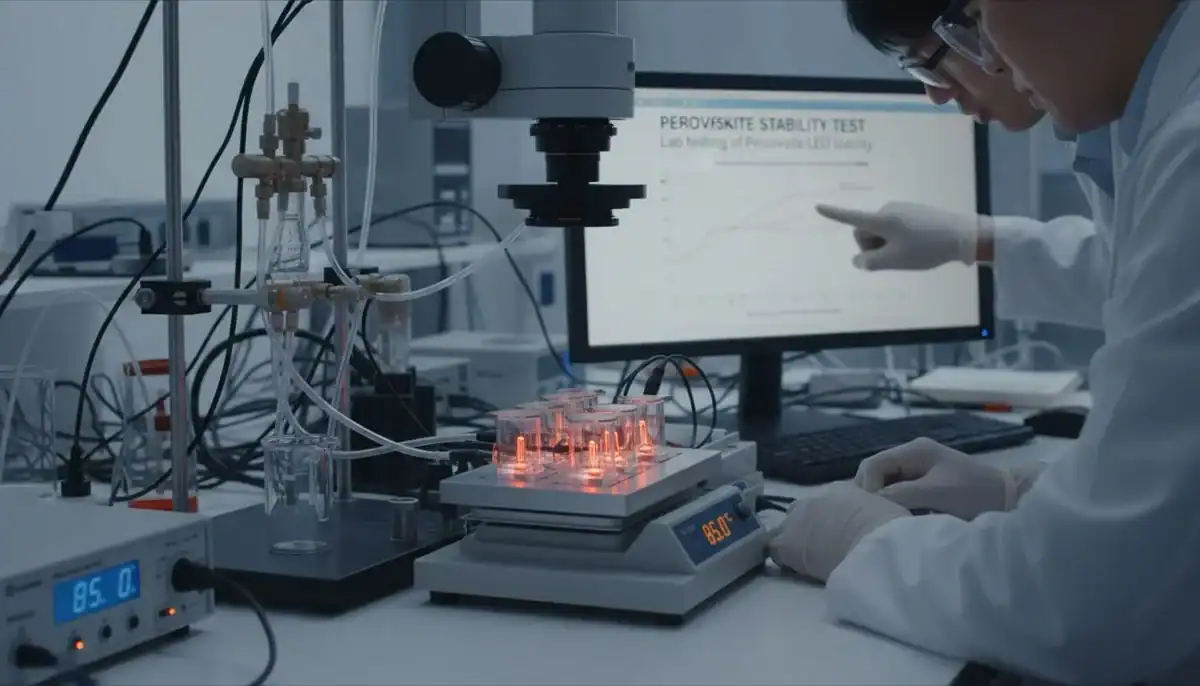
I know you care about certifications. You need CE, RoHS, and FCC to clear customs smoothly. Perovskite LEDs (PeLEDs) have a "dirty secret." Many of the most efficient ones contain lead. This is a toxic material.
In Europe and North America, regulations like RoHS restrict hazardous substances. If you import PeLEDs containing lead, you could face huge fines or customs seizures. This is a risk you do not want to take.
Also, there is the "Blue Bottleneck." PeLEDs are great at making green and red light. But they struggle to make stable blue light. Without stable blue light, you cannot make good white light. White light is a mix of colors. If the blue part dies fast, your white light turns yellow or green.
My advice is to wait. Scientists are working on lead-free versions. They are improving the blue lifetime. But until I can test them on my production lines and guarantee 50,000 hours, they are not safe for your catalog. Stick to the LED strips and linear lights that we know pass every test.
Perovskite LEDs often contain lead, which complicates RoHS compliance.True
High-efficiency Perovskites typically use lead-based structures, posing regulatory and environmental challenges.
PeLEDs have solved the issue of blue-light stability.False
Blue-light operational lifetime in Perovskites lags significantly behind red and green, limiting white light creation.
When will new tech beat LED on TCO?
Price drives your market. When will advanced lighting be cheap enough to replace your current inventory?
New tech will not beat LED Total Cost of Ownership (TCO) for at least another decade in general lighting. Existing LED manufacturing is mature, cheap, and efficient. New supply chains take years to build.

Total Cost of Ownership (TCO) is not just the price of the bulb. It is the price plus the energy cost plus the replacement cost. Right now, LED is the champion.
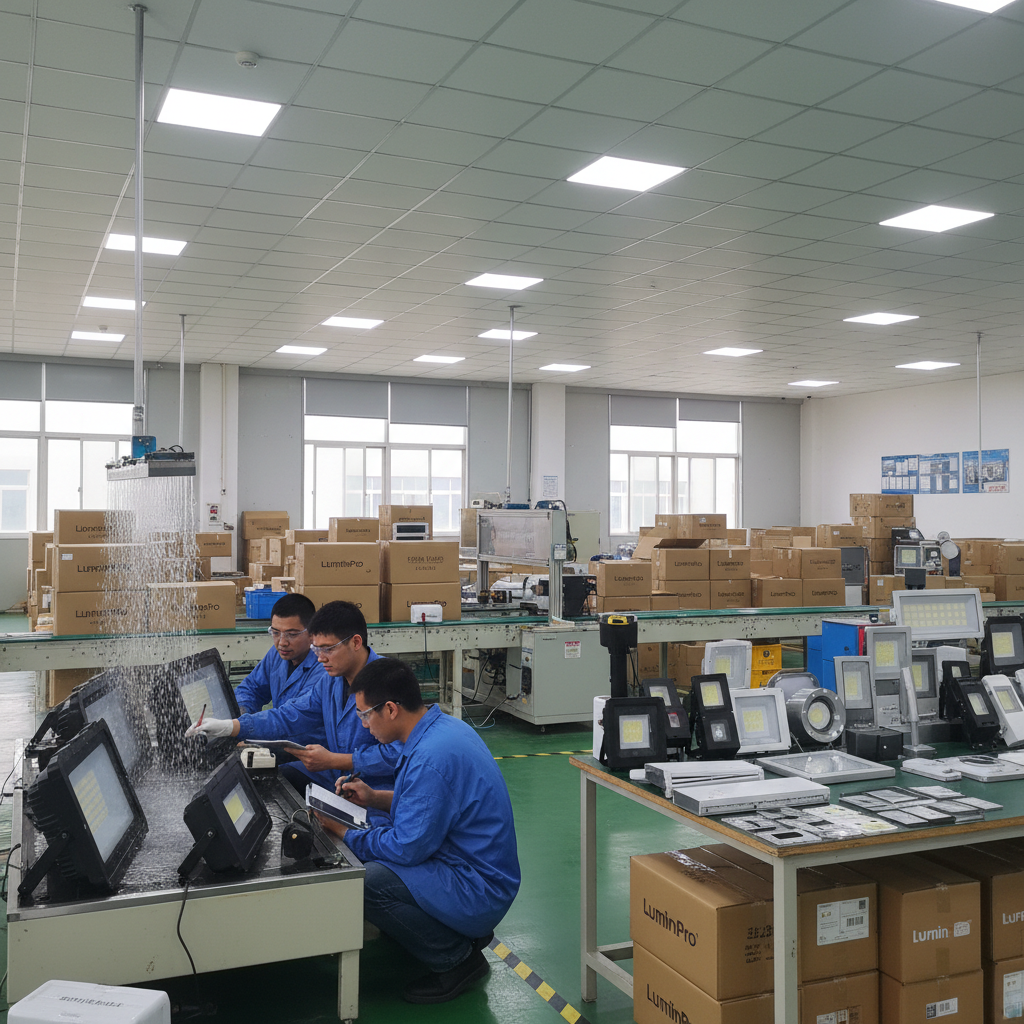
Think about my factory. We have five production lines optimized for surface-mounted LEDs (SMD). We buy chips in millions. The drivers, the aluminum profiles, and the pc covers are all standardized. This scale keeps your price low.
If we switch to a new tech like MicroLED today, the price jumps 100 times higher. The energy saving might be 5% better. Does a client want to pay $1000 for a light to save $2 on electricity? No.
Also, consider the driver. The power supply is often the first thing to fail, not the light source. New light sources still need drivers. So the maintenance cost remains similar.
Here is the reality of the supply chain:
- Raw Materials: LED uses abundant silicon and sapphire.
- Equipment: Factories worldwide already have LED machines.
- Labor: Workers know how to assemble LED lights.
Until a new tech can use this existing infrastructure, it will remain a niche luxury item. For your wholesale business, standard LED is the profit maker.
The manufacturing infrastructure for standard LEDs is fully mature.True
Global supply chains and factory equipment are optimized for standard LED production, keeping costs low.
New lighting technologies offer 50% energy savings over current top-tier LEDs.False
Current LEDs are already near theoretical efficiency limits; gains from new tech are incremental, not massive.
Is OLED a practical successor for street or industrial lighting?
OLED4 looks beautiful and modern. But can it handle the heat, dust, and intensity of the street?
OLED is not practical for street or industrial use. It lacks the intensity and throw distance needed. It is too expensive and fragile. It will remain a niche for high-end, decorative indoor designs.

I have clients ask about OLED for architectural projects. It is very thin and the light is soft. It is beautiful. But it is a "surface" light source. It glows. It does not "throw" light.
For a street light, you need to push light down from 8 or 10 meters high. You need a point source. A small LED chip is a point source. We can put a lens on it and direct the beam exactly where we want it.
If you put an OLED panel on a street pole, the light scatters everywhere. It will not reach the ground with enough brightness. To get enough light, the panel would need to be huge. This creates wind resistance. A strong wind could blow the pole down.
Also, OLEDs are sensitive to heat and water. Industrial environments are harsh. A warehouse gets hot. A street light gets wet. Encapsulating OLEDs to survive this is very expensive.
Application Suitability Table
| Application | LED | OLED | Why? |
|---|---|---|---|
| Street Light | Excellent | Poor | LED has better throw and durability. |
| Warehouse | Excellent | Poor | LED handles heat and high lumens better. |
| Museum | Good | Excellent | OLED is soft and has no glare. |
| Office | Excellent | Good | LED is cheaper; OLED is for design. |
OLEDs are ideal for long-distance light projection.False
OLEDs are diffuse area sources and cannot easily be focused into tight beams for long distances.
LEDs are point sources that work well with optical lenses.True
The small size of LED chips allows for precise beam control using secondary optics.
What do official roadmaps say about post-LED evolution?
Governments set the rules. What are they planning for the next ten years regarding energy efficiency5?
Official roadmaps from the DOE and IEA focus on improving current LED efficiency and controls, not replacing them. The goal is better manufacturing and smart integration, favoring established solid-state lighting supply chains.
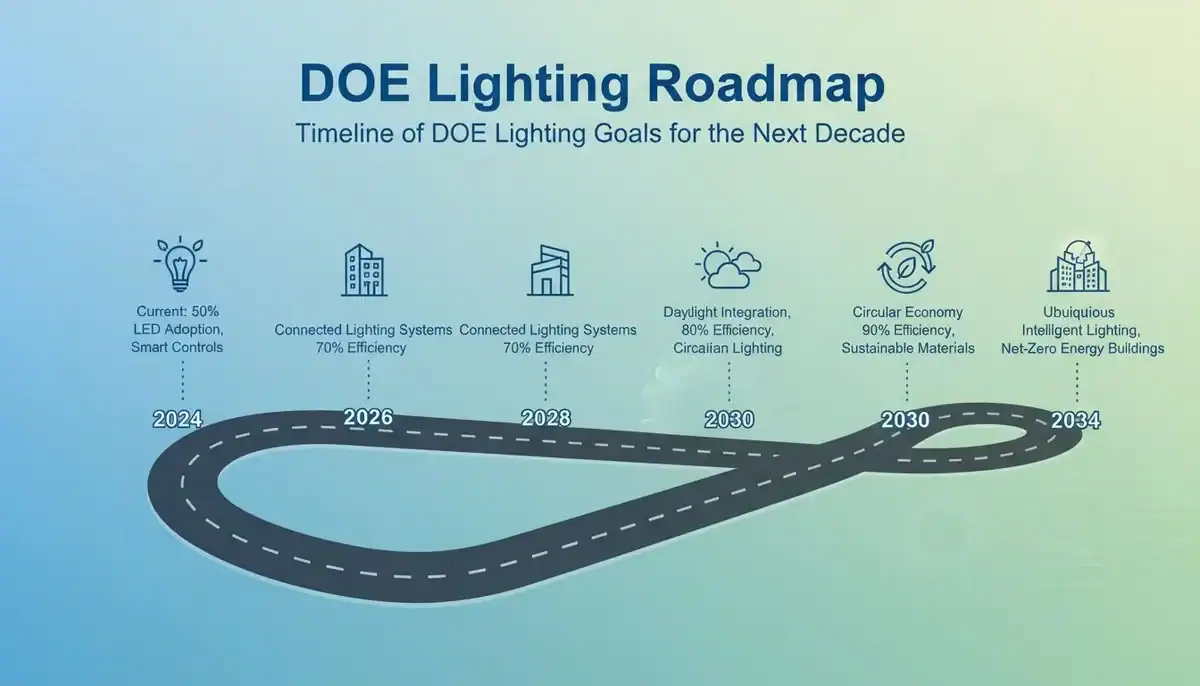
I follow the regulations closely. It helps me advise clients like you. The US Department of Energy (DOE) and the International Energy Agency (IEA) are not looking for a "magic new bulb."
They are looking at "Connected Lighting." This means smart controls6. They want lights that turn off when no one is there. They want lights that dim automatically.
The roadmap focuses on three things:
- Efficacy: Squeezing a few more lumens per watt out of standard LEDs.
- Manufacturing: Making production cleaner and faster.
- Spectrum: Improving the quality of light for human health.
This is good news for us. It means the LED strips and linear lights you buy today will not be obsolete tomorrow. The technology is stable. The innovation is in the control systems, not the diode itself.
When you source products, look for compatibility with smart systems (DALI, Zigbee, Tuya). That is the real future. It is not about replacing the LED; it is about telling the LED what to do.
Government roadmaps prioritize replacing LEDs with laser lighting.False
Roadmaps prioritize increasing LED efficiency and integrating smart controls/sensors.
Future energy savings will come largely from controls and sensors.True
With source efficiency peaking, the next major energy gains come from turning lights off or dimming them when not needed.
Conclusion
Do not wait for a magic replacement. The future is better, smarter LEDs, not just new tech. Stick with proven quality for your business growth.
References
Explore the benefits of MicroLEDs, including their brightness and lifespan, and how they compare to traditional LEDs. ↩
Learn about Perovskite LEDs, their efficiency, and the challenges they face in stability and mass production. ↩
Understand the environmental and regulatory challenges posed by lead toxicity in Perovskite LEDs. ↩
Discover why OLEDs are not suitable for street lighting and the advantages of LEDs in harsh environments. ↩
Stay updated on the latest advancements in energy efficiency and how they impact lighting technology. ↩
Explore how smart controls enhance lighting efficiency and user experience, shaping the future of lighting. ↩