

Ever wonder what powers the street lights that guide us home each night?
Street lights commonly use 120V-277V AC for urban areas, 480V AC for highways, and 12V-24V DC for solar-powered lights. Voltage standards may vary regionally, and smart street lights may require specific DC voltage for integrated systems. Always verify local voltage compatibility to ensure optimal performance and avoid installation issues.
Thinking about the voltage of street lights might seem like a mundane detail, but it’s crucial for those of us dealing with installation or maintenance. I remember diving into this topic when working on a project that involved upgrading our neighborhood’s lighting system. Understanding the voltage not only ensured compliance with local standards but also optimized the efficiency and safety of the lights we chose. In this article, we'll explore how different environments and technologies impact these voltage requirements, offering insights that could save time and money on your next project.
Street lights operate at 120V to 277V AC in urban areas.True
Urban street lights commonly use this voltage range for efficiency and safety.
Solar street lights use 480V AC systems on highways.False
Solar street lights typically use 12V to 24V DC, not high voltage AC.
Why Do Urban Street Lights Use 120V-277V AC?
Ever wondered why the streetlights in your city glow so reliably? It all comes down to the power behind them.
Urban street lights use 120V-277V AC because it perfectly aligns with local electrical grids, ensuring easy integration and dependable performance. This voltage range simplifies installation and boosts reliability.
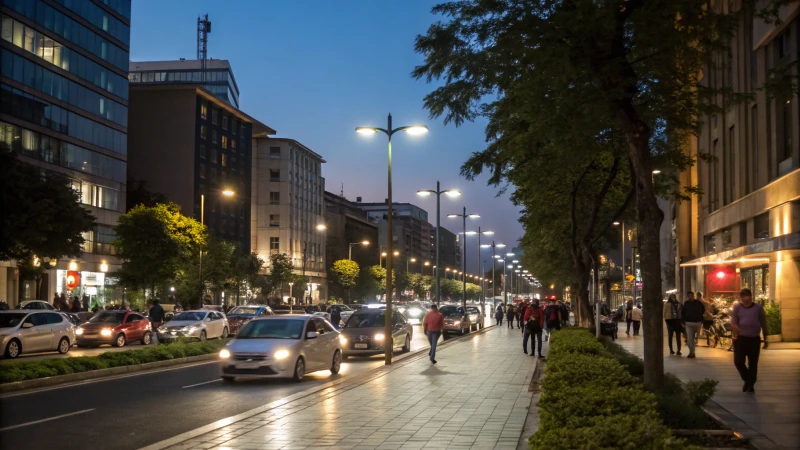
Understanding Voltage Compatibility in Urban Settings
When I first got into the lighting business, I never realized how much thought went into something as simple as a street light. But there's real genius in using 120V-277V AC for urban street lights. This range isn't just pulled out of thin air; it's chosen because it meshes seamlessly with the city's existing power grid. Imagine plugging in a new gadget at home without needing an adapter—that's what this voltage does for street lights, making sure they fit right into the city's electrical network without extra fuss or costly equipment.
Advantages of Using 120V-277V AC
1. Simplified Maintenance: From my experience, I can tell you that maintenance becomes a breeze when everything sticks to a standard. Technicians don't have to waste time figuring out alien systems. This means repairs get done faster, and it doesn't cost an arm and a leg.
| Advantage | Explanation |
|---|---|
| Cost-Efficiency | Reduces the need for expensive equipment. |
| Safety | Consistent voltage reduces safety risks. |
| Flexibility | Supports various light fixtures easily. |
2. Efficient Power Usage: It's all about getting the most light with the least hassle. This voltage range lets energy flow efficiently to multiple lights, keeping them shining bright and steady. This efficiency is golden, especially for urban planners who are always on the lookout for energy-saving solutions1.
Exploring Alternative Voltages
Sometimes, I think about how different environments need different setups. For highways, 480V AC is the way to go because it powers lots of lights from a single circuit—just what you need for those long stretches of road. And then there are solar street lights2, which use 12V-24V DC systems—perfect for places where renewable energy is the star of the show.
Regional Considerations
Traveling has taught me that what's standard in one place might be different elsewhere. For example, Europe often uses 230V AC, while North America sticks with 120V AC. So, if you're planning a project, you've got to match up with local standards to avoid unnecessary headaches and ensure everything runs smoothly without needing major overhauls.
This deep dive into why urban street lights operate on 120V-277V AC is more than just technical jargon—it's a guide to making smart, efficient choices in lighting projects that benefit everyone involved.
Urban street lights use 120V-277V AC for cost efficiency.True
Using this voltage reduces equipment costs by aligning with grid standards.
Street lights using 480V AC are common in urban areas.False
480V AC is typically used for highways, not urban street lighting.
How does 480V AC benefit highway lighting systems?
Imagine driving down a highway at night with clear, bright lights guiding your way efficiently and cost-effectively.
480V AC enhances highway lighting by supporting longer cable runs with minimal voltage drop, reducing the need for additional circuits, and facilitating efficient power distribution across numerous light fixtures.

Energy Efficiency and Cost Savings
When I first dove into highway lighting3 projects, I was amazed at how much of a game-changer 480V AC could be. Not only does it minimize energy loss over long distances, but it also allows for those endless stretches of highway to be lit up without a hitch. Remember that road trip where you were awestruck by the seamless lighting? Well, the magic lies in the reduced voltage drop of 480V AC—it ensures the power reaches every light fixture just right.
- Voltage Drop Reduction: I learned that with higher voltage, like 480V AC, the current is lower for the same power level. It's like ensuring more of your coffee stays warm until you finish it, rather than cooling down halfway through.
- Installation Cost: Another perk is the cost savings. Fewer circuits mean fewer cables and less labor. When we applied this on a large-scale project, it was like cutting down unnecessary baggage on a long journey, saving both time and resources.
Simplified Infrastructure
With 480V AC, we've been able to power more fixtures from a single circuit—think of it like getting more mileage out of your gas tank. Here's a simple breakdown:
| Voltage | Circuit Capacity | Distance |
|---|---|---|
| 120V AC | Limited | Short |
| 480V AC | Extensive | Long |
This setup is perfect for expansive areas needing robust lighting without complex wiring.
Compatibility with Advanced Systems
Incorporating smart features into lighting systems was always a bit challenging until 480V AC came along. It’s like finding a universal charger that works with all your gadgets. With sensors and communication modules becoming essential, having a compatible voltage is crucial for smooth operations.
These smart lighting systems4 thrive on higher voltages, offering enhanced performance while trimming operational costs. It’s fascinating how technology can be a step ahead while still keeping an eye on budget efficiency.
By weighing these factors, I can see how decision-makers can truly leverage 480V AC as a strategic asset in highway lighting, ensuring it meets current demands and future upgrades with ease.
Considerations for Implementation
Of course, no solution is one-size-fits-all. When adopting 480V AC, it’s critical to check regional voltage standards and regulatory compliance. Imagine planning an international trip but missing key visa requirements—that’s what skipping these checks would be like!
Consulting experts and reviewing wiring diagrams5 for 480V systems has been invaluable in optimizing design and functionality for various projects. This meticulous approach ensures we meet safety standards while maximizing the potential of highway lighting systems.
480V AC reduces energy loss in highway lighting.True
Higher voltage means lower current, reducing energy loss over distances.
Using 480V AC increases installation costs for highway lighting.False
480V AC reduces costs by requiring fewer circuits and less material.
What Are the Advantages of Solar Street Lights Operating on 12V-24V DC?
I remember the first time I saw a solar street light in action—it was like witnessing the future unfold right in front of me.
Solar street lights operating on 12V-24V DC are energy-efficient, reduce installation costs, and enhance safety. These low-voltage systems effectively harness solar power, making them both cost-effective and environmentally friendly.

Energy Efficiency and Environmental Impact
The first time I came across solar street lights using a 12V-24V DC system was during a project overseas. It was fascinating to see how such low-voltage systems could be so energy-efficient. The minimal energy loss during electricity transmission6 felt like a game-changer. The way these lights operate independently from the grid by utilizing solar panels and batteries not only cuts down on energy consumption but also significantly reduces carbon footprints. It's a win for both the wallet and the planet!
Cost-Effectiveness and Installation Benefits
When I think about cost-effectiveness, I can't help but recall a particular installation project where we switched from traditional AC to solar DC lights. The savings were immediately apparent. With 12V-24V DC solar street lights, the need for extensive trenching for cables vanished, and the setup was quicker and more straightforward. The reduction in labor costs was something that delighted our entire team.
| Feature | Traditional AC Street Lights | Solar DC Street Lights |
|---|---|---|
| Voltage | 120V-277V AC | 12V-24V DC |
| Installation Complexity | High | Low |
| Maintenance | Regular | Minimal |
Safety and Reliability
Safety is always a top priority for me, and using low-voltage 12V-24V DC systems in public areas offers peace of mind. The reduced risk of electric shocks7 is a huge benefit, especially in places frequented by families and children. Plus, these systems' resilience to power outages means consistent lighting during emergencies—a feature that has proven invaluable in several projects I've overseen.
Flexibility in Design and Deployment
One of my favorite aspects of these solar street lights is their flexibility. They can be deployed anywhere, even in the most remote areas where traditional power lines can't reach. This standalone nature has allowed us to bring light to places that once seemed out of reach. It's incredibly rewarding to know that we're not just providing illumination but also enhancing safety and quality of life in those communities.
Explore more about how solar technology integrates with smart controls8 to further enhance the functionality of street lighting systems.
Solar street lights reduce carbon footprints.True
They operate independently from the grid, using solar power.
Traditional AC street lights have lower installation costs.False
They require extensive wiring and trenching, increasing costs.
Why Does Street Light Voltage Vary with Regional Standards?
Ever found yourself staring at street lights, pondering why they glow with different intensities in various places? It's not just about aesthetics—it's all about regional standards!
Regional standards are the unsung heroes that determine street light voltage by considering local infrastructure, safety norms, and energy efficiency objectives. Picking the right voltage isn't just about flicking a switch; it ensures seamless compatibility and peak performance, cutting down on installation and maintenance hassles.
%[A modern street light illuminating maps of voltage standards on an urban street.]
Understanding Regional Voltage Norms
Let me take you back to when I first delved into the world of lighting. I was fascinated by how different regions have distinct voltage standards for street lights. In North America, 120V AC is common, mirroring what's used in homes and businesses. I remember thinking about the practicality of such a system when I visited Europe, where 230V AC reigns supreme, fitting snugly with their power grids.
Table: Voltage Standards by Region
| Region | Standard Voltage |
|---|---|
| North America | 120V AC |
| Europe | 230V AC |
| Asia | Varies (100V-240V) |
Impact on Installation and Maintenance
Imagine you're embarking on a street lighting project. Choosing the right voltage based on regional standards is like finding the perfect pair of shoes—comfort and fit matter! Opting for 480V AC on highways can significantly simplify installations, requiring fewer circuits and cables, which translates into lower installation costs9. This isn't just about following rules; it's about ensuring that everything works smoothly and efficiently.
Energy Efficiency Considerations
Energy efficiency has always been close to my heart. Different regions have unique goals in this area, affecting voltage choices. Higher voltages can reduce energy losses during transmission—think about those long highway stretches where 480V AC is preferred. Meanwhile, in secluded areas where solar power shines, solar street lights10 using 12V-24V DC systems become the go-to for optimal battery performance.
Navigating Regional Compliance
Navigating regional compliance is like trying to find your way through a maze without a map—it can be tricky but is essential to avoid hiccups down the road. Compliance isn't just about ticking boxes; it's about making sure your lighting systems meet local safety and performance benchmarks. This includes ensuring voltage compatibility with smart systems, which often demand 12V-24V DC for their tech-savvy sensors and communication gadgets.
Conclusion
So, why does street light voltage vary with regional standards? It's all about aligning with local norms and regulations to enhance performance and cost-efficiency. Understanding these intricacies can be the key to unlocking successful lighting projects that not only illuminate but also innovate.
North America uses 230V AC for street lights.False
North America typically uses 120V AC for street lights.
480V AC is preferred for highway street lights.True
480V AC reduces energy loss and installation costs on highways.
Conclusion
Street lights typically operate at 120V-277V AC in urban areas, 480V AC on highways, and 12V-24V DC for solar models, ensuring efficiency and compatibility with local standards.
Explore the advantages of implementing energy-saving solutions in urban lighting projects for enhanced efficiency. ↩
Discover the operational principles of solar street lights and their benefits in sustainable urban planning. ↩
Learn how 480V AC enhances efficiency and reduces costs in highway lighting. ↩
Discover smart systems that integrate seamlessly with 480V AC infrastructure. ↩
Find detailed wiring diagrams to ensure proper installation and safety. ↩
Understanding low-voltage transmission helps assess its efficiency in solar systems. ↩
Learn about the safety benefits of low-voltage systems in public areas. ↩
Discover how smart controls can optimize solar street lighting. ↩
Explore how higher voltage systems decrease wiring needs and lower project expenses. ↩
Discover the benefits of low-voltage systems for solar energy efficiency and storage. ↩