
I remember the first time I revamped my living room—it was like night and day, literally. Lighting transformed the whole vibe!
Track lighting uses a straight track system where fixtures attach and can be repositioned, ideal for focused or task lighting. Rail lighting features a flexible, curved rail that allows more design creativity and accommodates decorative needs. Both systems are versatile, but track lighting is better for functional spaces, while rail lighting suits aesthetic-focused areas.
When I first explored lighting options for my home office, I was struck by the distinct benefits of track versus rail lighting. Track lighting, with its straight lines, seemed perfect for focusing on specific tasks—like spotlighting my favorite artwork or providing direct light over my desk. On the other hand, rail lighting offered a world of creative possibilities, with its curvable design adding flair to any space, like the cozy nooks in my reading corner.
As I learned more, I realized each system has its own charm and purpose. Track lighting is simpler to install and often more budget-friendly, making it ideal for functional spaces. Meanwhile, rail lighting's flexibility can transform a room into an artistic masterpiece, albeit with a bit more installation effort and cost. It became clear that choosing between them depends largely on whether you prioritize straightforward functionality or want to make a bold design statement.
Track lighting is more flexible than rail lighting.False
Track lighting is rigid, while rail lighting offers flexibility.
Rail lighting is better for aesthetic designs.True
Rail lighting allows dynamic patterns, enhancing aesthetic appeal.
Why Choose Track Lighting for Your Space?
Imagine being able to spotlight your favorite artwork or illuminate a kitchen island with ease.
Track lighting is characterized by its adjustability, straightforward installation, and energy efficiency. Its linear design offers flexibility in placing fixtures, making it perfect for both task-oriented and accent lighting.
%[A modern living room with adjustable track lighting and minimalist design]
Flexibility and Adjustability
There’s something magical about having the power to direct light exactly where you want it. I remember the first time I installed track lighting in my living room. Suddenly, I could highlight my beloved bookshelf collection or my grandmother's quilt hanging on the wall, simply by adjusting the fixtures. The flexibility1 and adjustability of track lighting have made it a staple in dynamic spaces where needs often change.
Ease of Installation
I’m no DIY expert, but setting up track lighting was surprisingly straightforward. With just one connection point, even I managed to install it without needing an electrician’s degree. The tracks usually mount directly to the ceiling, connecting to a single electrical outlet, which makes the process a breeze whether you’re a professional or just someone who enjoys a weekend project.
| Feature | Description |
|---|---|
| Adjustability | Easily direct light where needed. |
| Installation | Simple setup with a single connection point. |
| Energy Efficiency | Compatible with LED bulbs for reduced energy consumption. |
Energy Efficiency
Switching to LED bulbs was one of the smartest moves I've made with my track lighting system. Not only do they last longer, but they also help reduce energy bills significantly. Knowing that I’m being more environmentally conscious while saving money is a win-win situation.
Customization Options
Track lighting isn't just functional; it's customizable too! I've had fun experimenting with different fixture styles, like spotlights and pendants, to suit my home's aesthetic. Whether you prefer a modern look or something more traditional, you can tailor the lighting setup to match your style perfectly.
- Fixture Styles: Choose from spotlights, pendants, or floodlights.
- Track Types: Available in H, J, and L types, accommodating different installation needs.
- Customization options2 allow users to tailor their setup precisely.
Application Versatility
In spaces like galleries or retail stores where accent lighting is crucial, track lighting truly shines (pun intended). I’ve seen it transform dull spaces into vibrant showcases by highlighting products or art pieces effectively. Its versatility allows it to enhance any space without overpowering it, which is why it remains a popular choice for many designers and homeowners alike.
For anyone looking for a versatile, efficient, and adaptable lighting solution, track lighting offers an array of benefits that cater to diverse needs and preferences.
Track lighting is difficult to install.False
Track lighting is known for its straightforward installation process.
LED bulbs can be used with track lighting.True
Many track lighting systems are compatible with energy-efficient LED bulbs.
How Does Rail Lighting Enhance Aesthetic Appeal?
Ever walked into a room and felt an instant vibe shift? That’s the magic of rail lighting, blending practicality with artistic flair to elevate any space.
Rail lighting enhances aesthetic appeal by offering customizable, flexible designs that fit various architectural styles. Its ability to shape and highlight specific areas makes it ideal for creating stylish, ambient environments.
%[A modern living room with rail lighting and abstract art]
The Flexibility of Design
I've always been fascinated by how a simple change in lighting can transform a room's mood. Rail lighting is like that versatile friend who can fit in anywhere and make everything better. It’s not just about lighting up a space; it's about shaping it. The flexibility in design is a game-changer, letting you play with curves and loops to create patterns that speak to your style. Whether you're sprucing up a cozy nook in your home3 or adding a touch of elegance to a swanky restaurant, the adaptability of rail lighting ensures that the aesthetic appeal is always on point.
Enhancing Architectural Features
I remember walking into an art gallery once, where each piece seemed to glow, drawing me in closer to admire its details. That’s the power of rail lighting. It excels at spotlighting architectural features and artworks, turning them into focal points that captivate and enhance the viewer’s experience. By providing focused illumination, rail lighting doesn't just light up a room—it tells a story, highlighting elements you want to shine.
Customization for Unique Ambiance
Creating the right ambiance is like setting the stage for an unforgettable experience. With rail lighting, the options are endless. Imagine being able to adjust the fixtures' placement and direction to suit your mood or the occasion. You can shift from a soft, ambient glow for a relaxing evening to brighter, task-oriented lighting when you need to focus. This level of customization allows you to craft an inviting atmosphere that aligns perfectly with the mood you want to set.
| Feature | Track Lighting | Rail Lighting |
|---|---|---|
| Design Flexibility | Rigid | Flexible |
| Installation | Simple | Requires precision |
| Application | Commercial Focus | Aesthetic Enhancement |
Integrating with Modern Aesthetics
In today's world, where minimalism meets functionality, rail lighting seamlessly integrates into modern aesthetics. I love how its sleek lines and unobtrusive fixtures can complement a minimalist space while allowing for expressive design in more eclectic environments. If you're someone who values both style and functionality, rail lighting offers an ideal solution that harmonizes with your vision. It's like finding that perfect accessory that completes your look—subtle yet impactful.
Rail lighting is only suitable for commercial spaces.False
Rail lighting is adaptable for both commercial and residential spaces.
Rail lighting can be customized to create unique ambiance.True
It allows adjustment of fixture placement and direction for varied effects.
Which Lighting System Is More Cost-Effective?
Ever found yourself standing in the lighting aisle, overwhelmed by choices, wondering which option will save you money and brighten your life?
To figure out the most cost-effective lighting system, consider both initial costs and long-term energy savings. LED lights may cost more upfront but save you money over time through lower energy use and maintenance.

Understanding Initial Costs
I remember when I first had to choose a lighting system for my new office. I was on a tight budget, and the upfront cost4 was a major concern. Incandescent bulbs seemed like the obvious choice because they were cheaper to buy. But then I learned about LED lights. Although LEDs had a higher initial price tag, they promised durability and efficiency that could offset those initial costs over time. It was a classic case of short-term pain for long-term gain.
Analyzing Energy Consumption
Energy consumption was another eye-opener. I used to think a bulb was just a bulb until I discovered how much energy some of them can gulp down. LEDs consume significantly less power than incandescent bulbs. For instance, a 10-watt LED bulb gives off the same brightness as a 60-watt incandescent. It's like switching from a gas-guzzling SUV to a hybrid car—it just makes sense! Over time, those savings on my electricity bill made LEDs the clear winner in my book.
| Lighting Type | Wattage for Equivalent Brightness | Lifespan |
|---|---|---|
| Incandescent | 60 watts | 1,000 hours |
| LED | 10 watts | 25,000 hours |
Maintenance and Longevity
Maintenance was also a major factor. Incandescent bulbs need to be replaced so frequently, it felt like I was always standing on a ladder. LEDs, on the other hand, last much longer, reducing both replacement frequency and the hassle of maintenance. For someone like me, who’d rather spend time on meaningful projects than changing light bulbs, LEDs were the way to go.
Environmental Impact
Choosing lighting isn't just about the wallet; it's also about our planet. Knowing that LEDs consume less energy and have a longer lifespan made me feel like I was doing my part for the environment. Plus, LEDs don’t contain hazardous materials like mercury—unlike some other options out there.
When you weigh these factors—upfront costs5, energy efficiency, maintenance, and environmental impact—you get a full picture of what might be more cost-effective for your needs. Exploring further insights into lighting trends can help you make an informed decision that aligns with your values and budget.
LED lights consume less power than incandescent bulbs.True
LEDs use about 10 watts for the same brightness as 60-watt incandescent bulbs.
Incandescent bulbs have a longer lifespan than LEDs.False
Incandescent bulbs last about 1,000 hours, while LEDs last up to 25,000 hours.
When Should You Choose Track Over Rail Lighting?
Choosing between track and rail lighting isn't just a design decision—it's about transforming your space into something truly special.
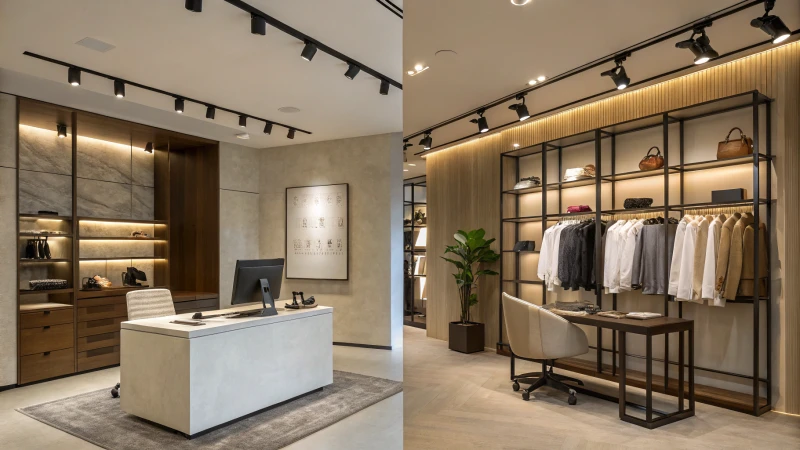
Opt for track lighting when precision is key, like in an art gallery or office. Choose rail lighting for its flexibility and style, perfect for modern homes or boutiques.
Understanding the Basics
Track Lighting: Known for its linear design6, track lighting is ideal for settings requiring focused illumination. It excels in environments like offices and galleries where specific areas need to be highlighted.
Rail Lighting: With a more flexible design, rail lighting allows for curves and loops, making it perfect for decorative purposes. This type suits spaces aiming for a visually appealing setup.
Key Considerations
| Feature | Track Lighting | Rail Lighting |
|---|---|---|
| Design | Rigid, straight track | Flexible, can form curves |
| Installation | Easier, less precision needed | More complex, requires precision |
| Functionality | Focused, directional lighting | Combines ambient and accent lighting |
When to Choose Track Lighting
Focused Task Lighting: Think of an office where each cubicle needs its own light source to help keep everyone in their zone. Track lighting is perfect for these settings, providing just the right amount of adjustability.
Commercial Spaces: I remember consulting on a retail project where track lighting's straightforward design helped keep energy costs low while providing ample illumination.
When to Choose Rail Lighting
Aesthetic Appeal: Rail lighting became my go-to choice when working on a sleek restaurant renovation. Its dynamic patterns added an artistic flair that made the dining experience unforgettable.
Ambient Lighting: For spaces like cozy lounges or trendy bars, where you want a soft glow to create an inviting atmosphere, rail lighting nails that perfect balance.
Consider Energy and Cost Implications
- Track Lighting: Generally more affordable due to its simpler design and installation process.
- Rail Lighting: Offers design flexibility but often comes with higher upfront costs due to the complexity of installation.
In the end, your choice will reflect what you value most in your project. Whether it's the precise functionality of track lighting or the artistic flexibility of rail lighting, understanding these nuances will help you illuminate your space beautifully.
Track lighting is ideal for ambient lighting.False
Track lighting is best for focused, directional lighting, not ambient.
Rail lighting allows for curved designs.True
Rail lighting is flexible, enabling curves and loops in design.
Conclusion
Track lighting offers focused, adjustable illumination ideal for task-oriented spaces, while rail lighting provides flexible, artistic designs perfect for enhancing aesthetics in modern interiors.
Explore how adjustable track lighting can enhance flexibility and precision in illuminating your space. ↩
Learn about the diverse customization possibilities available with track lighting to suit your unique design requirements. ↩
Explore various flexible rail lighting designs that can transform your living space into a modern masterpiece. ↩
Discover comprehensive analyses of different lighting systems' costs to aid in making informed decisions. ↩
Discover comprehensive analyses of different lighting systems' costs to aid in making informed decisions. ↩
Explore how linear design enhances focused lighting control in commercial settings. ↩
Topic cluster context
Track Lighting vs. Rail Lighting: What’s the Difference?
This guide supports the Commercial Indoor Lighting hub. Product, protocol, certification, ranking and performance claims remain subject to the evidence and compatibility checks stated in the article governance record.