
# How Can You Find the Best OEM LED Lighting Solutions for Your Business?

Tired of supplier delays and inconsistent quality? These issues can hurt your brand and profits. The right Original Equipment Manufacturer (OEM) partner is the solution to grow your business reliably.
**The best [OEM LED solutions](https://logoslighting.com/blog/top-oem-led-lighting-solutions-for-your-needs/ "logoslighting.com")[^1] come from partners who offer deep customization, verifiable certifications, and full control over their supply chain. This ensures you get high-quality, compliant products delivered on time, helping you build your brand and accelerate your speed-to-market.**

Finding a good supplier can feel like a gamble. I've spoken with many business owners like Jose from Mexico, who are tired of poor communication and the constant risk of receiving low-quality products with fake certificates. They need a partner, not just a supplier. A true OEM partner works with you to build products for your brand, giving you a competitive edge. But how do you tell the good ones from the bad? It comes down to asking the right questions about their process, from design and testing to logistics. In this guide, I'll share what I've learned over 10 years in the business to help you choose a partner that prevents risk and accelerates your growth.
All OEM LED suppliers offer the same level of customization.False
Customization capabilities vary widely. Top-tier OEMs offer CCT/CRI tuning, custom lengths, and control integration, while others only offer basic branding.
An OEM partnership can significantly reduce a product's time-to-market.True
By leveraging an OEM's existing production lines, certifications, and supply chain, businesses can launch new products much faster than developing them from scratch.
## What is OEM LED lighting and why do B2B buyers choose it?
Struggling to stand out in a crowded market? Selling generic products makes it hard to build a brand. OEM lets you create unique products under your own name.
OEM, or Original Equipment Manufacturer, lighting is when a factory like ours, Besenled, manufactures products based on your specific designs and brand requirements. B2B buyers choose this model to gain a competitive edge through product differentiation, control over quality, and faster market entry.

For a business owner like Jose, who resells lights in Mexico, OEM is a powerful tool. Instead of just buying what's available, he can define the exact specifications he needs for his market. This goes beyond just putting a logo on a box.
### Key Advantages of an OEM Partnership
* **Brand Building:** You sell products that are uniquely yours. This builds brand equity and customer loyalty, allowing you to command better prices.
* **Customization:** You control the features. This could mean a specific color temperature (CCT), a higher color rendering index (CRI), or integration with a particular control system.
* **[speed-to-market](https://modera.com/automotive/the-importance-of-building-strong-relationships-with-oem-suppliers/ "modera.com")[^2]:** You don't have to build a factory. You leverage our existing production lines, engineering team, and supply chain to launch products quickly.
At Besenled, we act as an extension of your team. We help you turn your idea into a finished, certified product ready for your customers.
OEM is only for large corporations with huge order volumes.False
Many OEM factories, including Besenled, are equipped with flexible production lines to handle both large and small custom orders, making it accessible for small to medium-sized businesses.
Choosing OEM gives you more control over product specifications than buying wholesale.True
OEM is built around meeting the buyer's unique specifications for performance, design, and branding, whereas wholesale involves purchasing pre-made, standard products.
## How do you select an OEM LED partner?
Worried about fake certificates or products that fail early? Choosing a partner based on price alone is risky. You need to verify their quality and support systems.
Select an OEM partner by carefully checking their [certifications](https://www.ledlightexpert.com/led-certification-required?srsltid=AfmBOoqgDeKh9i430mn-YaZK_4nxlzRYVoUNXNeulpHUhqDDyOYBNa76 "ledlightexpert.com")[^3], testing procedures, and post-sales support. A reliable partner will have verifiable documents (like CE, RoHS, UL), conduct rigorous in-house testing, and offer clear warranty and service level agreements (SLAs) to protect your investment.

I always tell my clients to look beyond the sales pitch. The real proof of a factory's quality is in its documentation and processes. When a client asks for a certificate, we provide the full report from the testing lab, not just a summary page. This transparency is crucial, especially for buyers like Jose who have been burned by falsified documents.
### What to Verify Before Signing a Contract
| Verification Area | What to Ask For | Why It Matters |
| :--- | :--- | :--- |
| **Certifications** | Full, unedited test reports for CE, RoHS, FCC, UL/DLC. | Prevents customs delays and legal issues. Proves the product was actually tested and passed. |
| **Testing** | Details on their aging tests, thermal tests (junction temperature), and color consistency tests (ANSI binning, TM-30). | Brochure claims are not enough. Real reliability is revealed in worst-case scenario tests, which predict field performance. |
| **[post-sales support](https://www.linkedin.com/pulse/revealed-how-after-sales-service-partner-upholds-oem "linkedin.com")[^4]** | A clear warranty document and Service Level Agreement (SLA). | Defines their responsibility if products fail. Protects you from financial loss and project risk. |
A good partner is proud to show you their [quality control](https://www.olamled.com/how-to-control-the-quality-of-led-products/ "olamled.com")[^5]. If a supplier is hesitant to share these details, it's a major red flag.
A CE certificate guarantees a product's quality and longevity.False
A CE mark only indicates that a product meets EU safety, health, and environmental protection requirements. It is not a mark of quality or durability.
In-house aging tests at high ambient temperatures are a good predictor of an LED's real-world reliability.True
These tests simulate harsh conditions and accelerate potential failure points in drivers and thermal management, revealing weaknesses that standard tests might miss.
## What OEM capabilities accelerate projects?
Are slow design changes and limited options delaying your projects? A partner with weak capabilities creates bottlenecks. You need a factory that can keep up with your vision.
OEM capabilities that truly accelerate projects are in-house customization, integrated lighting controls, and validated photometry. A partner who controls these processes can quickly create and verify products, turning your ideas into reality without delays from third-party suppliers.

When a customer needs a linear light of a very specific length with tunable white capabilities, the project can get complicated. If a factory has to outsource the aluminum extrusion, the PCB design, and the control system programming, the project timeline can stretch for months. Each step adds a risk of delay and miscommunication.
At Besenled, we've invested in bringing these critical steps in-house.
### Core Capabilities for Fast Turnaround
* **Deep Customization:** We handle custom-length aluminum extrusions and PCB layouts right here in our factory. This means we can create a prototype for a unique linear light in days, not weeks.
* **Integrated Controls:** Whether you need simple 0-10V dimming or complex DALI or Zigbee controls, our engineers can integrate and test them. This ensures the controls work perfectly with the fixture from day one.
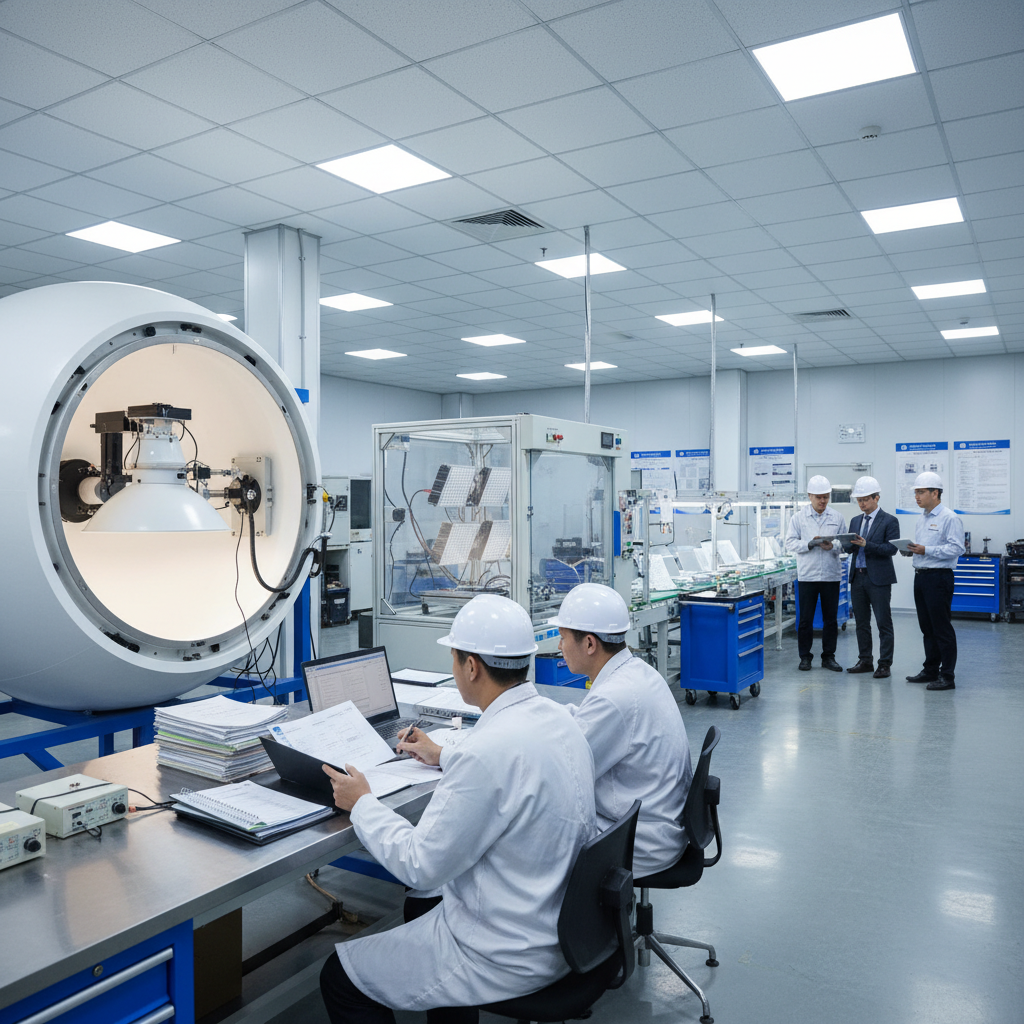
* **Validated Photometry:** We have our own photometric testing equipment. When we create a custom fixture, we can generate the IES file for you immediately. This allows your lighting designers to model its performance in their software right away, speeding up the approval process.
By controlling these elements, we remove the variables that slow projects down.
Any factory can provide accurate IES photometric files for their lights.False
Accurate IES files require expensive goniophotometer equipment and trained technicians. Many smaller factories estimate these files or use generic ones, leading to inaccurate lighting simulations.
In-house PCB design allows for faster prototyping of custom LED fixtures.True
Controlling PCB layout and production internally eliminates reliance on outside vendors, drastically cutting down the time it takes to create and test custom-sized or custom-featured LED boards.
## How do you navigate regional compliance?
Are you worried about your shipment getting stuck in customs? Navigating the complex web of global certifications like UL, CE, and FCC can be a headache for distributors.
Understand the key differences: UL/DLC standards are for North America, focusing on safety and efficiency rebates. CE/RoHS are for Europe, covering safety and hazardous materials. FCC is for the US, regulating electronic interference. A good OEM partner provides the correct documentation for your specific region.

I often talk to buyers who are expanding into new markets, for example, from South America to North America. They are experts in their home market but are unsure about the requirements for the new region. This is where we step in to guide them. It's not just about having a certificate; it's about having the *right* one.
### A Simple Guide to Major Certifications
| Certification | Region | Primary Focus | Why it's Important for You |
| :--- | :--- | :--- | :--- |
| **UL/cUL** | USA / Canada | Electrical Safety | Required by law in many areas for installation. Non-UL products are a huge liability risk. |
| **DLC** | USA / Canada | Energy Efficiency | Not a safety standard, but often required to qualify for energy-saving rebates from utility companies. |
| **CE** | European Union | Safety, Health, Environment | Mandatory for products sold in the EU. Without it, your shipment will be rejected at the border. |
| **RoHS** | European Union | Restriction of Hazardous Substances | Works with CE. Restricts materials like lead and mercury. |
| **FCC** | USA | Electronic Interference | Ensures the electronic driver in the LED doesn't interfere with radio communications. |
We make sure every product we ship has the correct, valid documentation for its destination. This simple step saves our clients from the massive headaches of customs delays, fines, and rejected shipments.
A CE mark is sufficient for selling LED products in the United States.False
The US market requires UL certification for safety and often DLC for efficiency rebates. CE is a European standard and is not recognized as a substitute in North America.
Proper FCC documentation is crucial for any LED product with an electronic driver sold in the US.True
The FCC regulates electronic emissions to prevent interference with wireless communications. Non-compliant products can be pulled from the market and result in fines.
## How can you get 3–15 day deliveries?
Are long and unpredictable [lead times](https://insights.regencysupply.com/how-long-will-it-take-to-get-my-lighting-order "insights.regencysupply.com")[^6] from suppliers killing your sales cycle? Missing a selling season because a shipment is late can be devastating for a distribution business.
Fast lead times of 3–15 days are only possible when an OEM partner has strong in-house control over its key production steps. Structuring your Purchase Orders (POs) with clear timelines and holding partners accountable is key, but their internal capabilities are what make it happen.

Many buyers are skeptical when I tell them we can ship custom orders in as little as 3 days. They are used to waiting 30, 60, or even 90 days. The secret isn't magic; it's vertical integration. When a factory outsources critical parts of its process, it introduces delays and variability that are out of its control.
### The In-House Advantage for Speed
* **Aluminum Extrusion & Powder Coating:** Many factories buy pre-made housings. We have our own extrusion and coating lines. If you need a custom-length linear light in a specific RAL color, we don't have to wait for an outside supplier. We can make it the next day.
* **PCB Production:** We design and populate our own Printed Circuit Boards (PCBs). This means we can quickly produce boards with the specific LEDs and layout you need for your project.
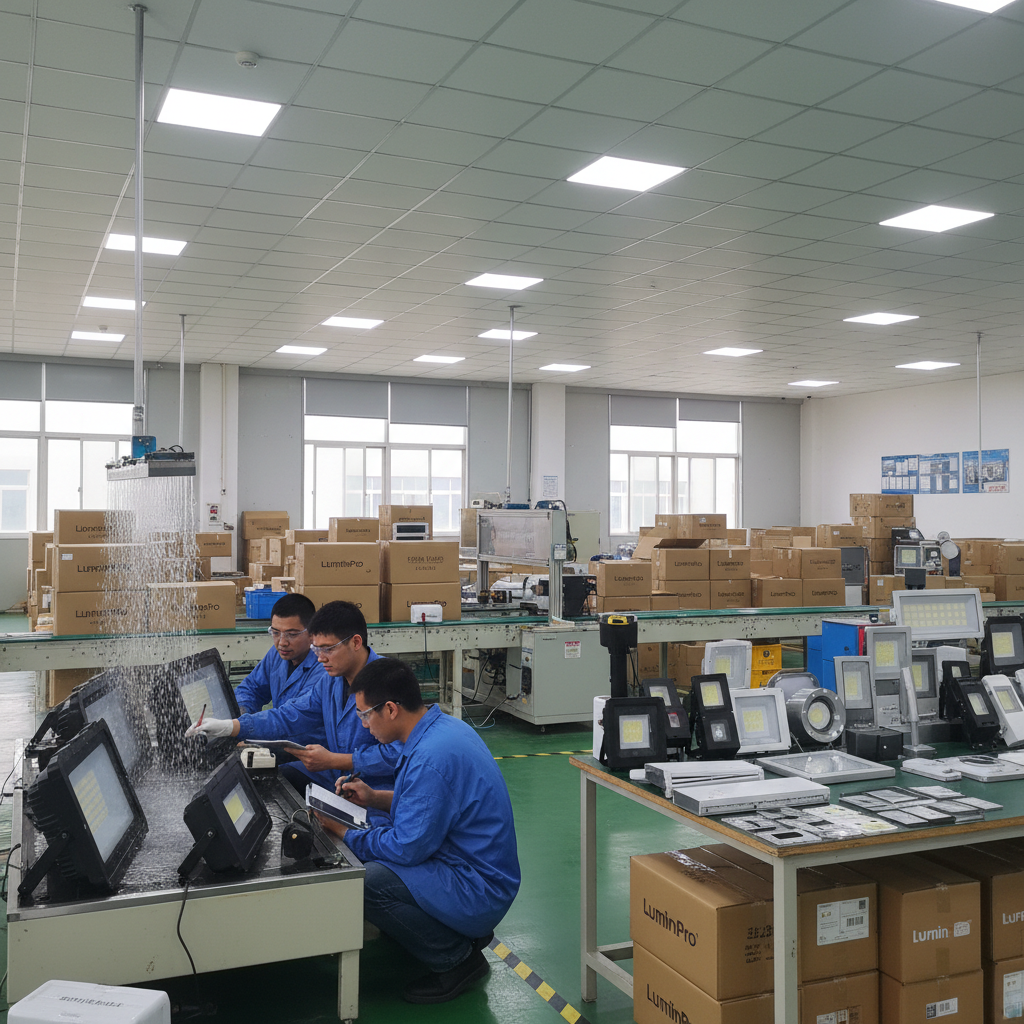
* **Assembly & Testing:** With 5 production lines, we can assemble and test products simultaneously. Our in-house aging and photometric testing mean we don't wait for a third-party lab to validate the product.
When you structure a PO with us, we can commit to a firm delivery date because we control the entire process. This is how we help our partners avoid the costly delays that are so common in this industry.
A 15-day lead time is standard for all custom LED orders from China.False
Most factories that rely on outsourcing key components have lead times of 30-60 days. A 3-15 day lead time is only achievable for highly integrated factories with in-house control.
Factories with in-house extrusion and PCB production can offer significantly faster lead times on custom orders.True
By eliminating the need to order and wait for custom components from third-party suppliers, these factories remove major sources of delay and can move a project from PO to shipment much faster.
## How do you balance cost vs. reliability?
Tempted by a very low price? Be careful. A cheap LED fixture can cost you far more in the long run with failures, returns, and damage to your brand's reputation.
To balance cost and reliability, focus on the components that cause the most failures: the driver, surge protection, and thermal design. A high-quality driver and good heat management are far more important for long-term reliability than the brand of the LED chip itself.

I've analyzed thousands of field returns over the last decade, and a clear pattern emerges. It's what I call the 90/10 rule. About 90% of all LED fixture failures are caused by either the driver failing or by heat-related issues that degrade the LED chips over time. Only about 10% are from the LED chips themselves being faulty from the start.
### Where to Invest for Reliability
* **[driver choice](https://www.paclights.com/explore/led-accessories-how-it-affects-fixture-selection-and-placement/ "paclights.com")[^7]:** The driver is the heart of the fixture. A low-cost, no-name driver is the number one point of failure. We recommend and use reliable brands known for their longevity. It adds a small amount to the upfront cost but saves a fortune in warranty claims.
* **Surge Protection:** Power surges are silent killers of LED drivers. Especially in industrial settings or regions with unstable power grids, having robust surge protection (e.g., 4kV or 6kV) built into the driver is critical.
* **Thermal Design:** LED chips produce heat. If that heat isn't pulled away effectively, their lifespan and light output drop dramatically. We verify the junction temperature of our LEDs in our lab to ensure they operate well within safe limits, even in hot environments. A heavy, well-designed aluminum heat sink is a sign of good [thermal management](https://optraffic.com/blog/thermal-management-led-light-tower/ "optraffic.com")[^8].
Don't be fooled by a spec sheet that boasts about a top-tier LED chip but is silent on the driver brand or thermal design. The real value is in the engineering that protects those chips.
The brand of the LED chip is the most important factor for a fixture's long-term reliability.False
While chip quality matters, over 90% of LED failures are due to driver failure or poor thermal management, making the driver and heat sink design more critical for reliability.
Fixtures with verified low junction temperatures (Tj) will have a longer lifespan and better light maintenance.True
Heat is the primary cause of LED degradation. A good thermal design keeps the LED's operating temperature low, directly leading to a longer, more stable life.
## What are some case-ready specs for common applications?
Unsure what specifications to request for your project? Starting from scratch can be overwhelming. Having a proven baseline helps you write a better PO and get a better product.
Here are some reliable starting specifications for common applications. Use these as a baseline for your OEM request, and we can customize them to meet your project's exact needs for office, industrial, roadway, and architectural lighting.

Over the years, we've developed optimized "recipes" for different environments. These specs are designed for performance, reliability, and compliance in their target application. Think of them as a great starting point for our conversation.
### Example Specifications by Application
| Application | Key Specifications | Why These Specs? |
| :--- | :--- | :--- |
| **Modern Office** | CCT: 4000K, CRI: >90, UGR: <19, Controls: DALI or 0-10V | A high CRI shows colors accurately. Low UGR (Unified Glare Rating) is crucial for office comfort. DALI controls offer flexibility. |
| **Industrial / Warehouse** | CCT: 5000K, Efficacy: >150 lm/W, IP Rating: IP65, Surge Protection: 6kV | High efficacy saves energy in large spaces. IP65 protects against dust and water. High surge protection is vital in industrial environments. |
| **Roadway / Street** | CCT: 3000K, Optics: Type II/III, IP Rating: IP66, IK Rating: IK08 | Warmer CCT is better for residential areas. Specific optics distribute light correctly on the road. IP66 and IK08 ratings ensure durability against weather and impact. |
| **Architectural Linear** | CCT: 2700K-6000K Tunable, CRI: >95, Binning: 3-Step MacAdam | Tunable white allows for dynamic scenes. Very high CRI is needed for facade lighting. Tight binning ensures perfect color consistency from fixture to fixture. |
When you come to us with a project, you can simply say, "I need a solution for a warehouse," and we can start with these proven specs and then tailor them to your budget and specific needs.
A UGR (Unified Glare Rating) of <19 is recommended for all lighting applications.False
UGR<19 is specifically recommended for tasks requiring focus, like offices and schools, to reduce eye strain. For areas like hallways or warehouses, a higher UGR is acceptable.
For outdoor roadway lighting, an IK08 rating provides significant protection against vandalism and impact.True
The IK rating measures impact protection. IK08 means the fixture can withstand an impact of 5 joules, equivalent to a 1.7 kg mass dropped from 300mm, making it durable for public spaces.
## What warranty and SLA terms prevent project risk?
Does a 5-year warranty truly protect you? Not if the terms are vague or the company disappears. The details in the warranty and Service Level Agreement (SLA) are what really matter.
A strong warranty that prevents project risk clearly defines the failure criteria, the replacement process, and the responsible party for labor costs. A good SLA guarantees response times, ensuring you aren't left waiting for a solution when a product fails.

A long warranty period looks great on paper, but the fine print is where your risk lies. I've seen warranties that exclude the driver, or that require the customer to pay for shipping the failed product back to China, which is often more expensive than the product itself. This makes the warranty effectively useless.
### Key Terms to Look For
* **Clear Failure Definition:** What constitutes a failure? Is it a complete failure, or does it include significant lumen depreciation (e.g., below L70)? The definition should be clear.
* **Replacement Process:** Will they ship a replacement product immediately upon proof of failure (like a photo or video)? Or do you have to send the faulty product back first? A good partner will advance-ship the replacement to minimize downtime.
* **Labor Costs:** This is a big one. Who pays for the electrician to take down the old fixture and install the new one? Some premium warranties may include a labor allowance, which is a huge benefit for large projects.
* **SLA for Communication:** Your SLA should state that your partner will respond to a warranty claim within a set time, like 24 or 48 hours. This prevents you from being ignored when you have a problem.
At Besenled, our warranty is straightforward. We stand behind our products, and our goal is to resolve issues quickly to protect your reputation and your bottom line.
Most standard LED warranties cover the cost of labor for replacing a failed fixture.False
The vast majority of warranties only cover the replacement of the product itself. Labor cost coverage is a premium feature and is not standard.
A warranty that requires the customer to ship a failed product back to the factory internationally at their own expense offers little practical value.True
The high cost and long transit time of international shipping can make it more expensive to claim the warranty than to simply buy a new product, rendering the warranty ineffective.
## FAQ: Your Top OEM Questions Answered?
Still have questions? You're not alone. Choosing an OEM partner is a big decision. Here are quick answers to the most common questions I get from buyers.
This section directly addresses the most frequent concerns buyers have when considering an OEM partnership, from timelines and business models to technical issues and comparing quotes.

These are the questions that come up in almost every first conversation I have with a potential partner. Getting clear answers to these is essential for making a confident decision.
### Your Questions, Answered
* **OEM LED vs ODM: which model fits your brand launch timeline?**
Choose **OEM (Original Equipment Manufacturer)** if you have a specific design or feature set in mind and want to build a unique product for your brand. The timeline is longer but results in a proprietary product. Choose **ODM (Original Design Manufacturer)** if you need to launch very quickly. With ODM, you select one of our existing, pre-certified designs and we simply add your branding. It's the fastest way to get a product to market.
* **How fast can OEM orders ship?**
It depends entirely on the factory's integration. At a factory like ours with in-house control over extrusion, PCBs, and testing, standard OEM orders can ship in **3–15 days**. If a factory relies on many outside suppliers, expect 30–60 days or more.
* **What causes most LED failures?**
About 90% of failures are caused by two things: **the driver failing** or **poor thermal management** (heat). The LED chips themselves are rarely the problem. Always prioritize a quality driver and a robust heat sink design.
* **Can I get tunable white and keep brightness constant?**
Yes. This is called constant lumen output. It requires a sophisticated driver and careful LED selection to ensure that as the color temperature shifts (e.g., from 2700K to 6000K), the driver adjusts the power to each channel to maintain the same level of brightness. It is a premium feature that a good OEM partner can provide.
* **How do I compare OEM quotes beyond price?**
Look deeper than the total cost. Create a checklist to compare quotes:
1. **Driver Brand & Warranty:** Is it a reputable brand or a no-name?
2. **Thermal Design:** How heavy is the fixture? Is there a clear heat sink?
3. **Certifications:** Are they providing full test reports or just a summary?
4. **[warranty terms](https://insights.regencysupply.com/how-long-does-led-lighting-really-last-and-what-is-actually-covered-by-your-warranty "insights.regencysupply.com")[^9]:** Who pays for shipping and labor on returns?
5. **Lead Time:** Is their promised lead time realistic based on their capabilities?
ODM is always a better choice than OEM for new businesses.False
ODM is faster, but OEM allows for product differentiation, which can be a more powerful long-term strategy for building a brand, even for new businesses.
Maintaining constant lumen output in a tunable white fixture requires a standard, off-the-shelf driver.False
This feature requires an advanced, programmable driver that can precisely manage the power to different CCT channels to keep brightness stable, which is not a standard feature.
## Conclusion
Choosing the right OEM partner is about building trust, not just finding the lowest price. Focus on quality, in-house capabilities, and transparent communication to ensure your projects succeed and your brand grows.
---
## References
[^1]: Explore the latest innovations in OEM LED solutions to enhance your business's lighting quality and efficiency.
[^2]: Find out how OEM partnerships can accelerate your product launch and give you a competitive edge.
[^3]: Discover essential certifications that guarantee product safety and compliance in the LED lighting industry.
[^4]: Learn about the importance of post-sales support and how it can protect your investment in LED products.
[^5]: Learn about effective quality control measures to ensure the reliability and performance of LED products.
[^6]: Get insights into lead times for OEM LED orders and how to manage expectations with suppliers.
[^7]: Understanding the impact of driver selection can help you make informed decisions for reliable LED lighting.
[^8]: Explore the importance of thermal management in ensuring the longevity and performance of LED fixtures.
[^9]: Understanding warranty terms is crucial for protecting your investment and ensuring product reliability.Topic cluster context
Top OEM LED Lighting Solutions You Should Know?
This guide supports the End-to-End Project Support hub. Product, protocol, certification, ranking and performance claims remain subject to the evidence and compatibility checks stated in the article governance record.