# How Can You Master 0-10V Dimming for Your Lighting Projects?

Struggling with complex dimming controls? Incompatible drivers and [flickering lights](https://dawsonselectric.com/why-your-lights-are-flickering-and-how-to-fix-the-issue/ "dawsonselectric.com")[^1] can ruin a project and cost you money. I'll show you how to get it right from the start.
**[0-10V dimming](https://www.prolighting.com/blog/2020/03/25/understanding-0-10v-dimming-with-todays-led-commercial-fixtures/?srsltid=AfmBOoqyNBWoS_5pShv0jhxVwVzajTfSIx9P8JLMiMJsXui9cGaR-sNE "prolighting.com")[^2] is an analog lighting control method. It uses a low-voltage DC signal from 0 to 10 volts to control the light output. A 10V signal means 100% brightness, and a 0V signal means the minimum light level, often 1% or completely off.**

As the owner of Besenled, I've seen many lighting distributors like you face challenges with [dimming systems](https://light.fi/different-dimming-types-for-led-lighting/ "light.fi")[^3]. A project in Mexico City I supplied had issues where half the lights flickered because the installer mixed up the control wires. It was a simple mistake that caused a big headache. This guide is built on over 10 years of my factory experience to help you avoid these exact problems. We will cover everything from the basics to advanced troubleshooting, so you can specify and install 0-10V systems with confidence. Let's make sure your next project is a success.
0-10V dimming was originally developed for controlling fluorescent ballasts.True
The standard was first created to provide a simple, reliable way to dim fluorescent lighting, and it was later adapted for LEDs due to its simplicity and widespread adoption.
All 0-10V drivers can dim lights down to a complete off state.False
Many 0-10V drivers are actually 1-10V, meaning they only dim down to 10% or 1%. A true 0-10V 'dim-to-off' driver is needed for a complete shutdown without a separate relay.
## What is 0–10V Dimming, the Standard Used in Commercial LED Controls?
Confused by what 0-10V actually means? Misunderstanding this standard can lead to choosing the wrong products for your commercial projects. I'll explain it simply so you can be confident.
0-10V dimming is a simple, reliable analog protocol. It's the go-to standard for commercial lighting because it's easy to install and troubleshoot. It uses a dedicated pair of low-voltage wires to send a dimming signal from a controller to the LED driver.

This control method has been a workhorse in the lighting industry for decades. It's not new and flashy, but it is incredibly dependable, which is why it remains the top choice for commercial buildings, warehouses, and large retail spaces. The system works on a very straightforward principle.
### How the Signal Works
A controller, like a wall dimmer or a building automation system, sends out a DC voltage somewhere between 0 and 10 volts. The LED driver receives this signal and adjusts the light output accordingly.
- **10V Signal**: The driver provides 100% of its power, and the light is at full brightness.
- **5V Signal**: The driver provides 50% power, and the light is at medium brightness.
- **1V Signal**: The driver provides 10% power, and the light is very dim.
- **0V Signal**: The driver goes to its minimum level. This could be 1%, 10%, or completely off, depending on the driver's design.
This simplicity is its greatest strength. For a distributor like Jose in Mexico, this means fewer callbacks from installers and easier troubleshooting. It doesn't require complex software or programming, making it a robust solution for projects where reliability is key.
0-10V dimming requires a five-wire connection to the luminaire.True
A standard 0-10V dimmable fixture requires three wires for power (Line, Neutral, Ground) and two low-voltage wires for the dimming signal (Dim+ and Dim-), making a total of five conductors.
You can use standard telephone wire for 0-10V control signals.False
While it might work on short runs, telephone wire is typically unshielded and too thin (22-24 AWG). This makes it very susceptible to electrical noise and voltage drop, which can cause flickering and poor dimming performance.
## 0–10V vs DALI vs PWM vs TRIAC: Which Control Fits Your Project?
Choosing the wrong dimming system can be a costly mistake. Are you unsure which technology—0-10V, DALI, PWM, or TRIAC—is best for your needs and your clients' projects?
0-10V is great for simple, zone-based dimming in commercial spaces. DALI offers individual fixture control but is more complex. PWM is used within fixtures for dimming the LEDs themselves, and TRIAC is common for residential retrofits but can cause issues with LEDs.

As a supplier, I always ask my clients about the project's goals before recommending a dimming type. A large warehouse needs something different than a high-end hotel lobby. Let's break down the options so you can guide your customers to the right choice.
### Dimming Technology Comparison
Understanding the core differences is key to a successful specification. Here is a simple table to help you compare.
| Feature | 0-10V Dimming | DALI | PWM Dimming | TRIAC Dimming |
| :--- | :--- | :--- | :--- | :--- |
| **Best For** | Commercial, Warehouses | Smart Buildings, High-End | LED Strips, Components | Residential Retrofits |
| **Control Type** | Analog, Zone-based | Digital, Addressable | Digital, Component-level | Analog, Phase-cut |
| **Wiring** | Low-voltage pair | Low-voltage pair | DC wires | AC power line |
| **Complexity** | Low | High | Medium | Low (but problematic) |
| **Cost** | Low | High | Low (built-in) | Very Low |
| **Key Benefit** | Simple & Reliable | Flexible & Data-rich | Smooth, Flicker-free | Uses existing wiring |
For most of my B2B clients, like distributors and contractors, 0-10V hits the sweet spot. It's cost-effective, installers are familiar with it, and it works perfectly for controlling entire rooms or zones of light. DALI is powerful but often too expensive and complex for typical commercial jobs. TRIAC is cheap but was designed for incandescent bulbs, and I see many flicker issues when it's paired with low-quality LED drivers.
DALI systems allow for individual control of every light fixture from a central computer.True
DALI (Digital Addressable Lighting Interface) assigns a unique address to each fixture, allowing for individual control, monitoring, and grouping through software, which is impossible with analog 0-10V systems.
PWM dimming is a type of analog dimming.False
PWM (Pulse Width Modulation) is a digital method. It turns the LED on and off at a very high frequency. The ratio of 'on' time to 'off' time determines the perceived brightness.
## Two-Wire Control Explained: Polarity, Sink vs Source, and Grounding?
Are your dimmers behaving erratically or not working at all? Incorrect wiring of the two control wires is a common cause of failure. I'll show you how to avoid this simple but costly error.
The two control wires, often purple and gray, must be wired correctly. Polarity matters. Always match the positive (+) and negative (-) terminals between the controller and the driver. Mismatched polarity is a top reason for dimming problems I see in the field.

I can't stress this enough: treat the purple and gray wires as a dedicated pair. In my experience, about half of all troubleshooting calls for dimming come down to a reversed connection. It's a five-minute fix, but it can cause days of delays on a job site.
### Understanding the Key Concepts
Let's get these three terms straight, as they are critical for a successful installation.
- **Polarity:** The control signal is DC, so it has a positive and a negative side. The industry standard uses a **purple wire for positive (+)** and a **gray wire for negative (-)**. Always connect purple to purple (+) and gray to gray (-). If you reverse them, the system will likely fail, either by staying at full brightness or not turning on at all. Always check the labels on the driver and controller.
- **Sink vs. Source:** This describes where the 10V signal comes from.
- **Source:** The controller *sends out* (sources) a 10V signal. This is an older method (IEC 60929) and less common today.
- **Sink:** The driver provides its own 10V power on the control circuit. The dimmer *pulls down* (sinks) the voltage to the desired level. This is the modern standard (NEMA SSL-7A) used in almost all commercial LED drivers. You must ensure your controller and driver are both the sink type for them to work together.
- **Grounding:** The gray negative wire is the signal common, but it is not the same as the main safety ground (the green wire). These should be kept separate to avoid ground loops and noise that can cause flicker.
The purple wire in a 0-10V system is for the negative signal.False
The industry standard color code is purple for the positive (Dim+) connection and gray for the negative or common (Dim-) connection.
Most modern 0-10V drivers in North America are 'current sink' devices.True
The NEMA SSL 7A standard, which defines current sink operation, is the dominant standard for commercial LED lighting in North America. The driver provides the power, and the dimmer controls it.
## Wiring Diagrams: Single Driver, Multi-Driver, and Long-Run Topologies?
Unsure how to wire multiple drivers to one dimmer? Incorrect wiring can damage drivers or cause uneven dimming across a room. Let's look at the correct diagrams to ensure a reliable setup.
For a single driver, connect the controller's two wires directly to the driver's dimming inputs. For multiple drivers, you must wire them in parallel to the controller. For long runs, be mindful of voltage drop and the controller's driver limit.

Getting the wiring topology right is fundamental. I've seen installers try to wire drivers in series, like old Christmas lights, which simply doesn't work for 0-10V. It will cause all kinds of strange behavior. Let's review the correct methods.
### Common Wiring Scenarios
- **Single Driver:** This is the simplest setup. You have one dimmer controlling one light fixture.
1. Connect the dimmer's purple (+) wire to the driver's purple (+) input.
2. Connect the dimmer's gray (-) wire to the driver's gray (-) input.
3. The AC power (Line, Neutral, Ground) is wired separately.
- **Multiple Drivers (Parallel Wiring):** This is the standard for controlling a zone of lights. All drivers receive the same voltage signal from the one controller.
1. Connect the dimmer's purple (+) wire to the purple (+) wire of the *first* driver.
2. From that first driver, "daisy-chain" the purple wire to the next driver's purple input, and so on for all drivers in the group.
3. Do the same for the gray (-) wire.
**Important:** Each dimmer has a limit on how many drivers it can control. This is based on its "sink current" capacity. Check the dimmer's spec sheet. A typical dimmer might handle 10-20 drivers.
- **Long-Run Topologies:** When the distance between the dimmer and the last driver is long (e.g., over 100 feet / 30 meters), you must plan for voltage drop. Use a thicker gauge wire (I recommend 18 AWG) to minimize resistance and ensure the last driver gets a clean signal.
You should wire multiple 0-10V drivers in series to a single controller.False
0-10V drivers must always be wired in parallel. Connecting them in series will result in incorrect voltage signals at each driver, causing them to dim improperly or not at all.
A single 0-10V dimmer can control an unlimited number of drivers.False
Every dimmer has a maximum 'sink current' rating, and each driver draws a small amount of current. Exceeding the dimmer's limit by connecting too many drivers will cause the dimming to fail.
## Flicker and Low-End Cutoff: How to Specify Dim-to-1% Without Artifacts?
Do your lights flicker or shut off abruptly when dimmed low? This common issue can ruin the user experience and lead to client complaints. I'll explain how to achieve smooth, deep dimming.
To achieve smooth dimming down to 1%, you need a high-quality driver and a compatible dimmer. The driver's performance at the low end is the most critical factor. Specify "dim-to-1%" or "dim-to-off" and ensure the driver and controller are tested together.

Nothing looks less professional than a room full of flickering lights. As a factory, we invest heavily in our driver technology to ensure smooth performance. This is a common pain point for distributors whose suppliers cut corners on driver quality. Here is what you need to know to specify and get the performance you expect.
### Achieving High-Quality Dimming
- **Flicker:** This is a rapid, visible fluctuation in light output. It's most noticeable at low light levels. The main causes are:
- **Poor Driver Design:** The driver's internal circuit can't maintain a stable output at low power.
- **Incompatibility:** The dimmer's output signal is not clean, or it doesn't work well with the driver's input circuit.
- **Noise:** Electrical noise from nearby power lines can interfere with the low-voltage control signal, as I mentioned earlier. Using shielded cable helps prevent this.
- **[low-end cutoff](https://pathway.acuitybrands.com/-/media/abl/pathway/files/resources/reference-guides/0-10vdc-best-practice.pdf?forceBehavior=open "pathway.acuitybrands.com")[^4]:** This refers to the lowest light level a driver can achieve before it turns off.
- **1-10V Drivers:** These are very common. When the signal drops to 1V, the light is at its minimum (usually 10%), and it stays there even if the signal goes lower. It will not turn off.
- **0-10V (Dim-to-Off) Drivers:** These are higher-performance drivers. As the signal approaches 0V, the light output will drop to 1% or even turn off completely.
- **My Insight:** If you have a mix of 1-10V drivers in a group and need them to turn completely off, you must install a separate line-voltage relay or a dim-to-off controller that has one built-in.
Flicker is only caused by a faulty LED driver.False
Flicker can be caused by many factors, including an incompatible dimmer, electrical noise on the control lines, long unshielded cable runs, or fluctuations in the AC power supply.
A 1-10V driver will turn the lights completely off when the control signal is below 1V.False
A 1-10V driver will only dim to its minimum level, typically 10% brightness, when the signal is at 1V. It will not turn off via the control signal; power must be cut by a switch or relay.
## Driver Compatibility Matrix: NEMA 0–10V, IEC 60929 Annex E, and UL Listings?
Worried about drivers from different brands not working together? Incompatibility is a real risk that can delay projects and frustrate your customers. Let's decode the standards to ensure everything works together.
Not all 0-10V drivers are the same. The main standards are NEMA SSL 7A (current sink) and IEC 60929 Annex E (current source). Most modern commercial systems in North America use the NEMA standard. Always check the driver's spec sheet for compatibility.

For my clients who distribute in North America and Europe, understanding these standards is crucial. It's a key part of avoiding risk. A client in the US once ordered thousands of drivers that used the IEC standard, but all their controllers were for the NEMA standard. Nothing worked. This is the kind of costly mistake we help our partners avoid by ensuring our products, like those from Besenled, have the right certifications and clear documentation.
### Key Standards Explained
- **NEMA SSL 7A:** This is the modern standard for LED lighting, especially in North America.
- **Type:** Current Sink.
- **How it works:** The driver provides the ~10V on the control line. The dimmer "sinks" or pulls down the voltage to control the light level.
- **Compatibility:** This is what you should look for in most commercial projects today. If a driver and dimmer are both NEMA SSL 7A compliant, they have a very high chance of working well together.
- **IEC 60929 Annex E:** This is an older standard, originally for fluorescent ballasts, and is more common in Europe.
- **Type:** Current Source.
- **How it works:** The dimmer *provides* (sources) the control current. The driver responds to the amount of current it receives.
- **Compatibility:** You cannot mix a "source" dimmer with a "sink" driver. They will not function.
- **UL/ETL Listings:** These are not dimming standards, but safety certifications. For a distributor like Jose, this is critical. A UL or ETL mark means the product has been tested for safety by a third-party lab. It's essential for getting projects approved by inspectors and avoiding liability. It also protects you from suppliers who might provide fake or non-compliant products.
NEMA SSL 7A and IEC 60929 are interchangeable standards for 0-10V dimming.False
They are fundamentally different. NEMA SSL 7A defines a 'current sink' system, while IEC 60929 defines a 'current source' system. A sink driver will not work with a source controller, and vice versa.
A UL listing on an LED driver guarantees it will dim smoothly.True
A UL or ETL listing is a safety certification, not a performance certification. It ensures the product won't cause a fire or electrical shock, but it does not guarantee dimming quality, color consistency, or lifetime.
## Tenders and Submittals: Exact Spec Language to Avoid Change Orders?
Tired of costly change orders because of vague specifications? Unclear language in tenders leads to disputes and project delays. I'll give you the exact words to use to protect your projects.
Be precise in your submittals. Specify "0-10V analog dimming, current sink type, compliant with NEMA SSL 7A." Also, state the required dimming range (e.g., "100% to 1%") and that the driver and controller must be verified as compatible.

I work with large corporate buyers who manage huge projects. For them, the specification language is everything. A single ambiguous word can lead to a change order worth thousands of dollars. As their supplier, I help them write clear specs to ensure they get the product performance they need. This builds trust and leads to long-term partnerships. You can use this same strategy to look more professional and win more bids.
### Sample Specification Language
When you are preparing a tender or a submittal for a project, don't just write "0-10V dimming." Use a detailed block of text like this to eliminate any ambiguity.
**Control System Specifications:**
- **Control Protocol:** 0-10V Analog Dimming
- **Governing Standard:** Must be compliant with NEMA SSL 7A for Current Sink operation.
- **Dimming Range:** Luminaires shall dim smoothly from 100% down to 1% of measured light output without steps or flicker.
- **Low-End Behavior:** No visible flicker, pop-on, drop-out, or ghosting shall be present at any point in the dimming range, especially at the minimum level.
- **Compatibility:** The LED driver and dimming controller must be from the same manufacturer or have written verification of compatibility from both manufacturers.
- **Wiring:** Control wiring shall be a minimum of 18 AWG, shielded, twisted-pair, Class 2 cable.
Using language this specific shows you are a knowledgeable professional. It protects you from other bidders substituting cheaper, lower-quality products and ensures the final installation meets the client's expectations.
Simply specifying '0-10V dimming' is enough for a commercial project tender.False
This is too vague. It doesn't specify the standard (sink vs. source), the required dimming range (10% vs. 1%), or performance criteria like flicker, which can lead to disputes and unsatisfactory results.
Verifying compatibility between the driver and dimmer is the contractor's responsibility, not the distributor's.True
While the contractor performs the installation, a good distributor adds value by ensuring the components they sell are compatible, preventing field issues. This builds a stronger client relationship.
## Long Cable Runs: Voltage Drop, Noise, and Shielding Guidelines?
Are lights at the end of a long run not dimming correctly or flickering? Voltage drop and electrical noise can corrupt the control signal. Here's how to protect it and ensure reliable performance.
For runs over 50 feet (15 meters), use shielded, twisted-pair cable of at least 18 AWG. Keep control wiring separate from AC power lines to prevent interference. This is one of my most important tips for large projects like warehouses or big-box stores.

This is a lesson I learned the hard way on a large warehouse project in the Middle East. The contractor used cheap, unshielded wire right next to the 277V power lines. The lights flickered constantly. We had to send my engineer to the site, who identified the problem. Rerouting and replacing the wire with shielded 18 AWG cable solved it completely. It's a simple preventative step that saves a lot of time and money.
### Protecting the Signal on Long Runs
- **Voltage Drop:** The 0-10V signal is low voltage. Over a long, thin wire, resistance causes the voltage to "drop." A 10V signal sent from the dimmer might arrive at the last driver as 9.5V. This means the light will never reach 100% brightness.
- **Solution:** Use a thicker wire. 18 AWG is much better than 22 or 24 AWG for runs over 100 feet (30m).
- **Electrical Noise (EMI/RFI):** High-voltage AC power lines create an electromagnetic field around them. If the low-voltage DC control wires are too close, this field can "induce" a messy, fluctuating voltage onto the signal. The driver interprets this noise as a rapidly changing dimming command, which results in flicker. This is called capacitive coupling.
- **Solution:** Use shielded cable and keep control wires at least 12 inches (30cm) away from parallel AC power conduits.
- **Shielding:** A shielded cable has a foil or braid wrap around the inner wires. This shield intercepts the electrical noise. It should be connected to ground at *one end only* (usually at the controller/dimmer side) to drain the noise away safely. Connecting it at both ends can create a ground loop, which can make the problem worse.
It is best practice to run 0-10V control wires in the same conduit as AC power lines to save installation time.False
This is a major cause of electrical noise and interference. National Electrical Code (NEC) and best practices require keeping Class 2 low-voltage wiring separate from high-voltage line power.
Using 18 AWG wire instead of 22 AWG wire reduces voltage drop on long runs.True
18 AWG wire is thicker and has lower resistance than 22 AWG wire. This allows the DC voltage signal to travel further with less degradation, ensuring the driver at the end of the line receives an accurate signal.
## Commissioning Checklist: Field Tests to Validate Dimming Performance?
How can you be sure the installation is correct before you hand the project over to the client? A simple [commissioning checklist](https://www.csemag.com/lighting-commissioning-guidelines-and-standards/ "csemag.com")[^5] can prevent expensive callbacks and unhappy customers.
After installation, test every zone. Dim slowly from 100% to the minimum level, watching for smooth transitions, flicker, or steps. Check that all fixtures in a group dim uniformly. Verify the "off" state if applicable.

Before we ship any large order from our Besenled factory, we do a final quality check. You should do the same on-site after installation. Taking 30 minutes to run through a checklist is much cheaper than sending a crew back to a finished site a week later. It shows your client that you are thorough and committed to quality, which is exactly what cautious buyers like Jose value.
### A Simple Commissioning Checklist
Give this list to your installers to complete at the end of every job.
- **[ ] Visual Wiring Inspection:** Open a few fixtures in each zone. Verify that polarity is correct (purple to +, gray to -) and that connections are secure.
- **[ ] Smooth Dimming Test:** For each zone, use the dimmer to slowly ramp the lights up and down.
- *Pass/Fail:* Is the transition smooth, with no visible steps or jumps in brightness?
- **[ ] Low-Level Stability Test:** Set the dimmer to its lowest level (e.g., 10%). Hold it there for 5 minutes.
- *Pass/Fail:* Is there any flicker, shimmering, or wavering?
- **[ ] Group Tracking Test:** Look at all the lights in a single control zone.
- *Pass/Fail:* Do they all dim together at the same rate and to the same level? (My insight: Mismatched drivers will fail this test).
- **[ ] Full On/Off Test:**
- *Pass/Fail:* Do the lights reach full brightness at the top of the range? Do they turn completely off or go to the correct minimum level at the bottom?
- **[ ] Voltage Check (for long runs):** At the last driver in a long run, use a multimeter to measure the DC voltage between the purple and gray wires.
- *Pass/Fail:* When the dimmer is at max, is the voltage close to 10V (e.g., above 9.5V)?
Commissioning is an unnecessary expense on small lighting projects.False
Even on small projects, a quick 15-minute commissioning test can catch common errors like reversed polarity, preventing callbacks and ensuring the client is satisfied from day one.
If lights in a group dim at different rates, the drivers are likely from different manufacturers or models.True
Different drivers have different 'dimming curves.' A 5V signal might mean 50% brightness on one driver but 40% on another. This causes them to dim unevenly, which is why grouping similar drivers is critical.
## Troubleshooting: Ghosting, Deadband, Color Shift, and Controller Mismatch?
Facing weird lighting issues like a faint glow when off, or a dimmer that does nothing at the top and bottom of its range? These frustrating problems often have simple solutions if you know what to look for.
"Ghosting" (a faint glow when off) is often due to induced voltage on unshielded wires. "Deadband" (no response at the top/bottom of the dimming range) points to a mismatch. Color shift at low levels is a fixture quality issue.

Over the years, my team and I have helped clients troubleshoot hundreds of field issues. The same problems come up again and again. Understanding these common symptoms will make you look like an expert and help you solve problems quickly for your customers.
### Common Problems and Their Solutions
- **Ghosting:** The lights have a very faint glow even when the dimmer is set to "off."
- **Cause:** This is almost always caused by induced voltage (noise) on long, unshielded control wires that are run next to power lines.
- **Solution:** The best fix is to replace the wire with a shielded, twisted-pair cable. A quicker (but less ideal) fix can sometimes be to install a small resistor across the dimming terminals at the last driver to "bleed off" the stray voltage.
- **Deadband:** The dimmer does nothing for the first 10% of its travel (e.g., from 100% down to 90%) or at the very bottom.
- **Cause:** The voltage range of the dimmer doesn't perfectly match the voltage range the driver expects. For example, the dimmer outputs 1V-10V, but the driver only responds from 1.5V-9.5V.
- **Solution:** Use a higher-quality, matched set of drivers and dimmers. Some advanced dimmers allow you to adjust the high-end and low-end trim to eliminate the deadband.
- **Color Shift (CCT Shift):** The color of the light appears warmer or changes as you dim it down.
- **Cause:** This is a sign of a lower-quality LED chip or driver. The driver is not able to maintain a stable current waveform at low output levels, which affects how the LED performs.
- **Solution:** This is not a wiring or control issue; it's a fixture quality issue. The only solution is to use high-quality luminaires from a reliable factory like Besenled that uses premium components.
Ghosting in LED lights is caused by a faulty power grid.False
Ghosting is almost always an installation issue, caused by induced voltage from running unshielded low-voltage control wires parallel to high-voltage power lines over long distances.
A slight color shift when dimming is normal for all LED products.False
While very minor shifts can occur, a noticeable change in color temperature (CCT) when dimming is a sign of a lower-quality LED or driver. High-quality fixtures are designed to maintain consistent color across their dimming range.
## ROI and Energy Codes: Occupancy + Daylight + 0–10V Savings Model?
Want to justify the cost of a dimming system to your clients? The [energy savings](https://www.paclights.com/explore/the-science-behind-0-10v-dimmer-switch-and-how-it-enhances-efficiency/ "paclights.com")[^6] and ability to meet building codes create a clear return on investment. Let's break down the numbers.
Combining 0-10V dimming with occupancy and daylight sensors can cut lighting energy use by over 60%. This helps meet strict energy codes like ASHRAE 90.1 and provides a fast ROI, often in 1-3 years for new commercial buildings.

For my clients who are large corporate buyers or building owners, the conversation is always about the bottom line. They don't buy dimming for the "cool" factor; they buy it for the savings. Explaining the ROI is the most powerful sales tool you have. It shifts the conversation from "cost" to "investment." This is especially true in markets like North America and Europe with strict energy regulations.
### The Layered Savings Strategy
You can present the energy savings as a series of layers, each adding more value.
1. **High-End Trim (Task Tuning):** Many spaces are overlit. By using 0-10V dimming to cap the maximum brightness at 80%, you can instantly save 20% of energy with no noticeable difference to the occupants.
- *Energy Savings: 15-20%*
2. **Occupancy/Vacancy Sensing:** This is the next layer. An occupancy sensor automatically dims or turns off the lights when a room is empty. This is perfect for offices, conference rooms, and warehouses.
- *Additional Energy Savings: 20-30%*
3. **Daylight Harvesting:** A daylight sensor measures the amount of natural light coming through windows. It then automatically dims the electric lights nearby to maintain a constant light level, saving energy.
- *Additional Energy Savings: 15-25%*
When you combine all three strategies with an efficient 0-10V dimming system, the total energy savings can easily exceed 60%. For a building owner, this translates directly into lower electricity bills and a payback period that is often less than two years.
Lighting controls are only required in California and New York.False
Most modern energy codes, including the international IECC and ASHRAE 90.1 standard, now mandate multi-level lighting controls (like dimming) and automatic shutoff (like occupancy sensors) in most commercial spaces.
Daylight harvesting can save over 40% of lighting energy in perimeter zones of an office.True
Studies by organizations like the Lighting Research Center have shown that in areas within 15 feet (5 meters) of windows, automated daylight harvesting is highly effective and can reduce lighting energy consumption by 20-60%.
## Multi-Brand Interoperability: What Works Together and What to Test?
Can you mix and match drivers and controllers from different brands? This is a huge risk if not managed carefully. I'll share my factory experience on this common but dangerous practice.
While the 0-10V standard exists, performance varies. Dimming curves and low-end performance can differ significantly between brands. For best results, use drivers and controllers from one brand or get samples to test them together before a large-scale installation.

This is a critical point for distributors like Jose. It can be tempting to source the cheapest driver from one factory and the cheapest dimmer from another. But this "Frankenstein" approach often fails in the field. I had a client in South America who did this, and the lights in the same room dimmed at visibly different rates. It looked terrible. They had to replace all the drivers. My advice is always to reduce your risk.
### The Problem: The Dimming Curve
The "dimming curve" describes the relationship between the control voltage and the actual light output.
- **Driver A:** A 5V signal might produce 50% light output (a linear curve).
- **Driver B:** A 5V signal might produce only 30% light output (a logarithmic curve).
If you install both Driver A and Driver B in the same room and control them with the same dimmer, they will not dim uniformly. As you lower the dimmer, the "Driver B" lights will dim much faster than the "Driver A" lights, creating a stepped and unprofessional appearance.
### How to Ensure Interoperability
1. **Single-Source (Best Practice):** The safest method is to source your luminaires (with their integrated drivers) and your dimming controls from the same trusted supplier. At Besenled, we can provide and verify complete, compatible systems.
2. **Test Before You Invest:** If you must mix brands, you have to test. Get samples of the exact driver and dimmer models you plan to use. Wire 2-3 of them together on a workbench and run them through the full dimming range. Watch for uneven dimming, flicker, and deadbands.
3. **Group by Brand/Model:** If you have a large project with mixed drivers, do not mix them within the same room or visual zone. Keep all the "Brand A" drivers in one area and all the "Brand B" drivers in another. This contains any performance differences.
All drivers that say '0-10V' on the label have the exact same dimming curve.False
The 0-10V standard dictates the electrical interface, but not the performance curve. Manufacturers implement their own curves (linear, logarithmic, etc.), which leads to major interoperability issues when mixing brands.
Testing a sample driver with a sample dimmer on a workbench is a reliable way to predict field performance.True
A bench test is a crucial, low-cost step to verify compatibility. It allows you to identify flicker, deadband, and curve mismatch issues before you've installed hundreds of units on a job site.
## FAQ?
Still have questions? Many of my clients ask the same things when they are planning a project. Let's cover the most common questions I get about 0-10V dimming from distributors and contractors.
Common questions include: How many drivers can I put on one dimmer? What wire should I use? Can 0-10V turn lights completely off? I'll answer these and more to clear up any final confusion.

My goal is to be a partner, not just a supplier. That means sharing my knowledge to help you succeed. Here are the direct answers to the questions I hear most often.
### Your 0-10V Questions Answered
- **Q: How many drivers can I connect to one 0-10V dimmer?**
- **A:** It's not about the number of drivers, but their total current draw. Each driver "sinks" a small amount of current from the controller (usually 0.1mA to 0.5mA). Each controller has a maximum sink current rating (e.g., 50mA). To find the limit, divide the controller's rating by the driver's rating. For example, 50mA controller / 0.5mA per driver = 100 drivers. Always check the spec sheets.
- **Q: What kind of wire do I have to use for the control signal?**
- **A:** The signal is low-voltage, so it's considered a Class 2 circuit. While technically thin wire works for short distances, I strongly recommend using a minimum of **18 AWG shielded twisted-pair cable** for all professional installations. This prevents voltage drop and noise issues.
- **Q: Does 0V on the controller mean the lights will be completely off?**
- **A:** It depends on the driver. A driver labeled **"1-10V"** will only dim to its minimum level (e.g., 10% or 1%) and will not turn off. A driver specifically labeled **"0-10V, Dim-to-Off"** is designed to turn completely off as the signal approaches 0V. If you need a guaranteed "off," you may need a controller with a built-in power relay or a separate contactor.
- **Q: Can I run the purple and gray wires in the same conduit as the AC power lines?**
- **A:** No, you should never do this. It is against electrical code in most places and is the #1 cause of flicker and noise problems. Always run low-voltage control wiring in a separate conduit or maintain at least 12 inches (30cm) of separation from parallel AC power lines.
You can calculate the maximum number of drivers per dimmer by dividing the dimmer's sink current capacity by the driver's current draw.True
This is the correct engineering method. For example, a dimmer with a 100mA capacity can control 100 drivers that each draw 1mA.
A 'Dim-to-Off' driver and a '1-10V' driver function identically at low light levels.False
They are very different. A '1-10V' driver stops dimming at its minimum level (e.g., 10%). A 'Dim-to-Off' driver will continue to dim down to zero light output, turning the fixture completely off.
## Conclusion
Mastering 0-10V dimming ensures successful projects and happy clients. By focusing on compatibility, proper wiring, and quality components, you can deliver reliable, high-performance lighting systems every time.
---
## References
[^1]: Identifying the causes of flickering lights can help troubleshoot and improve lighting performance.
[^2]: Understanding 0-10V dimming is crucial for effective lighting control in commercial projects.
[^3]: Learn about various dimming systems to choose the best one for your lighting projects.
[^4]: Understanding low-end cutoff helps in selecting the right drivers for smooth dimming performance.
[^5]: A thorough commissioning checklist ensures proper installation and performance of lighting systems.
[^6]: Discover how 0-10V dimming can significantly reduce energy consumption in commercial buildings.


We are the Leader in manufacturing Magnetic Track Light
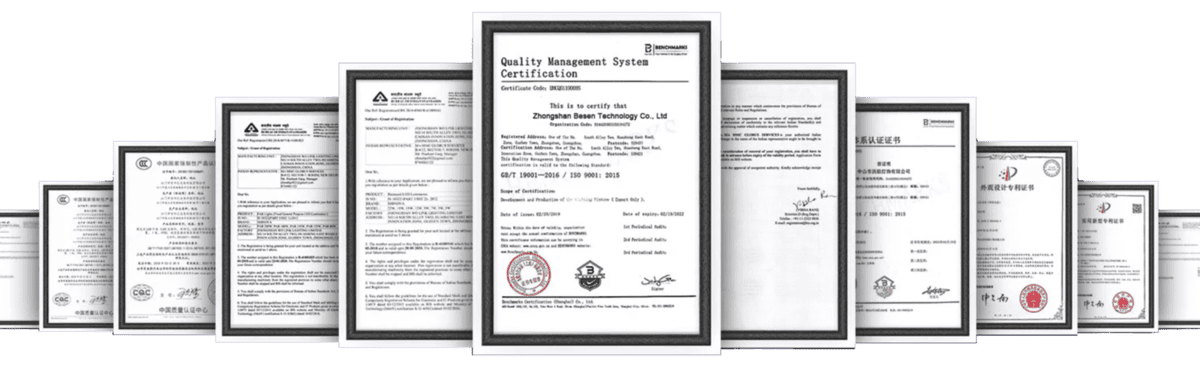
At Besen LED, we’re committed to delivering the most innovative, highest-quality magnetic track lighting solutions. With 15 years of expertise and cutting-edge technology, we’ve established ourselves as a leading manufacturer in the industry.”
- 15 Years' Experience in OEM Manufacturing
- Efficient Lean manufacturing
- Fast Response To Unique Design Requirements
- Accept Any Order Size