

Have you ever wondered if you can mix white and RGB LED strips for a perfect blend of lighting?
Combining white and RGB LED strips is feasible, but it requires a compatible control system and a sufficient power supply to handle both types of lighting. Hybrid strips, which integrate both RGB and white LEDs, offer a simpler solution for projects that require both dynamic and consistent lighting. Ensure your controller system can seamlessly manage both channels for optimal performance.
I remember the first time I decided to revamp my living room lighting—it was all about finding the perfect balance between functionality and flair. While the basic answer is straightforward, I quickly learned that achieving the best results requires a bit more planning. Dive into our comprehensive guide and learn how to blend white and RGB LED strips seamlessly for stunning lighting effects that can transform any space.
White and RGB LED strips can be combined.True
Combining them creates versatile lighting with proper control systems.
Combining LED strips requires no technical considerations.False
Integration needs compatible controls and power management for success.
What Are the Key Differences Between White and RGB LED Strips?
Ever found yourself standing in the lighting aisle, wondering whether white or RGB LED strips are right for you?
White LED strips shine when you need steady, reliable lighting for tasks, while RGB LED strips splash vibrant colors for setting the mood. Weigh factors like control systems, power needs, and color mixing to decide which suits your vision best.

Control Systems
Picture this: I was once remodeling my home office and decided to experiment with lighting. It was the control systems that got me scratching my head. White LED strips are a breeze with simpler controllers—perfect if you're just looking to adjust between warm white and cool white1. But when I went for RGB strips, I needed a four-channel controller to juggle all those colors. If you're thinking of mixing both, like I did for a more dynamic setup, you'll want a sophisticated system that can handle multiple channels.
Power Supply Requirements
Let me take you back to the time I underestimated the power needs of RGB LED strips during a project. I thought my existing setup could handle it, but boy, was I wrong! RGB strips tend to gobble up more power because of all the vibrant hues. So, make sure your power supply can cope with the total wattage if combining both types2. On the flip side, white LED strips are more energy-efficient—perfect if you're keen on saving some bucks on your energy bill.
| LED Type | Power Consumption | Control Channels |
|---|---|---|
| White | Low | 1-2 |
| RGB | High | 4 |
Color Mixing Control
Here's a little nugget from my lighting adventures: if you're aiming for those seamless color transitions or precise temperature shifts (think cozy warm white to crisp cool white), invest in top-notch dimmers or controllers. This can make all the difference in achieving that professional look in your space. High-quality dimmers or controllers are essential for smooth transitions3 between RGB and white channels.
Manufacturing Flexibility
Did you know some savvy manufacturers now offer hybrid LED strips? These combine RGB and white LEDs in one strip, which means fewer wires and easier installation. This was a game-changer for me when I wanted both vibrant effects and consistent illumination without the hassle. Explore hybrid options4 that meet your project's unique needs.
Customization for Projects
Combining RGB and white LED strips opens a world of possibilities for creative lighting designs. I remember using RGB for striking accent lighting and white LEDs for essential task lighting in a commercial space I worked on. By exploring custom solutions5, you can ensure that your design aligns perfectly with your project's unique goals.
White LED strips need four-channel controllers.False
White LED strips use 1-2 channel controllers, unlike RGB strips.
RGB LED strips consume more power than white LED strips.True
RGB LED strips have higher power demands due to multiple LEDs.
How Can You Manage Power Requirements for Mixed LED Systems?
Ever found yourself puzzling over the power setup for a mixed LED system?
To effectively manage power for mixed LED systems, start by calculating the total wattage, then choose a compatible power supply and controllers. Consider using separate channels for RGB and white LEDs to ensure optimal control and performance.

Understanding LED System Components
Imagine you're setting up a mixed LED system for the first time—it's like piecing together a puzzle where each piece has its unique fit. You’ve got these vibrant RGB strips, lighting up like a mini disco, and the white LEDs providing that steady, ambient glow. Each type demands its own power and control, much like how different instruments need tuning in an orchestra. While RGB strips are all about colors, needing a four-channel controller6 for red, green, blue, and ground, the white LEDs often stick to simpler single or dual-channel systems. It’s about having that perfect balance between color splash and serene brightness.
Calculating Total Wattage
Let's say you’re planning to jazz up your office with a 5-meter RGB strip and a similar length of white LEDs. You start by calculating total wattage—it’s like checking how much cake you’ll need for a party. Add up the power consumption of each type:
| LED Type | Length (m) | Power/m (W) | Total Power (W) |
|---|---|---|---|
| RGB | 5 | 14.4 | 72 |
| White | 5 | 9.6 | 48 |
You’ve got 120W in total—a good baseline to ensure your power supply can handle the demand.
Choosing the Right Power Supply
Selecting a power supply is like picking the right backpack for a hiking trip—it should be sturdy and reliable, with some room to spare. Make sure it not only meets but exceeds the total wattage to account for any power surges. Stable voltage is key to prevent those pesky flickers or damages, much like avoiding potholes on a road trip. Look into efficiency ratings7 as they play a crucial role in ensuring smooth operation.
Utilizing Compatible Controllers
When it comes to integrating both RGB and white LED strips, think of it as coordinating an intricate dance—each step needs precision. High-quality controllers allow for seamless transitions and exact adjustments in color temperature and brightness. Hybrid controllers are like those multi-tools you love—offering both functionality and ease of use8.
Project-Specific Customization
Every commercial project I’ve worked on feels like its own unique story, with lighting playing a pivotal role in setting the mood. The mix of RGB and white LEDs provides flexibility akin to having both a spotlight and a gentle floodlight at your disposal. It’s about crafting that perfect ambiance, aligning with both aesthetic and functional goals, and ensuring that every light configuration shines just right for optimal performance. Embracing these lighting solutions9 can transform spaces into something truly special.
RGB LED strips require a four-channel controller.True
RGB LEDs need separate channels for red, green, blue, and ground.
A power supply should exactly match the total wattage of LEDs.False
Power supply must exceed total wattage to handle surges and ensure stability.
What Control Systems Work Best for Integrating White and RGB LEDs?
Ever looked at a room and imagined it drenched in vibrant colors, dancing lights, and that perfect ambiance? I know I have.
The most effective control systems for combining white and RGB LEDs are smart controllers with multi-channel outputs. These allow seamless color transitions and power management, creating an immersive lighting experience.

Understanding the Basics of LED Control Systems
I remember the first time I tried to set up a LED system at home. It felt like trying to solve a puzzle without the picture on the box. If you’re like me, you want something that not only looks good but also functions flawlessly. LED control systems are the backbone of any great lighting setup, managing color, brightness, and even patterns. When you bring together white and RGB LEDs10, you need a system that handles multiple channels with grace, ensuring each color—red, green, blue, and white—shines just right.
Smart Controllers: The Future of LED Control
If you're anything like me, juggling work calls and family dinners, smart controllers are a game-changer. They're like having a personal assistant for your lights. Imagine controlling your home’s lighting with just your voice or a tap on your phone. It’s the kind of futuristic living I dreamed about as a kid. These controllers sync with smart home systems, letting you set schedules, access remotely, and even customize scenes to fit your mood.
Features of Smart Controllers
| Feature | Benefits |
|---|---|
| Multi-Channel | Supports simultaneous control of RGB and white channels |
| App Integration | Easy setup and management through mobile applications |
| Voice Control | Hands-free operation through systems like Alexa or Google Assistant |
Choosing a smart controller with these features is like adding a bit of magic to your daily life.
Power Supply Considerations
Speaking from experience, there’s nothing more frustrating than setting up a beautiful display only to see it flicker or go dim because of power issues. RGB LEDs demand more juice compared to their white counterparts. It’s crucial to ensure that your power supply can handle the total wattage of both types of LEDs. A reliable power supply11 keeps everything running smoothly without hiccups.
Mixing Colors and Adjusting Temperatures
I love the ability to switch from a warm cozy glow to a cool crisp light at the flick of a switch. To achieve that silky smooth color transition or temperature adjustment, you need a top-notch dimmer or controller. This ensures both RGB and white channels play nice together without any flicker or lag.
Hybrid LED Strips: A Simplified Solution
For those who prefer simplicity without sacrificing quality, hybrid LED strips might be your best friend. They’re like the Swiss Army knife of lighting solutions, combining RGB and white LEDs in one neat package. Less wiring means less hassle, making them perfect for projects where you need vibrant colors alongside reliable white lighting.
When planning your project, think about what you really need: dynamic lighting effects, energy efficiency, or perhaps an easy-to-use system. Dive into different options12 before deciding. A well-chosen system doesn’t just light up a space; it transforms it into something truly special.
Smart controllers support multi-channel LED control.True
Smart controllers manage RGB and white LEDs simultaneously, enhancing flexibility.
RGB LEDs require less power than white LEDs.False
RGB LEDs need more power due to multiple color channels.
How Can Color Mixing Enhance Your Lighting Design?
Ever walked into a room and felt an immediate shift in mood? That's the magic of color mixing in lighting design—it's like painting with light!
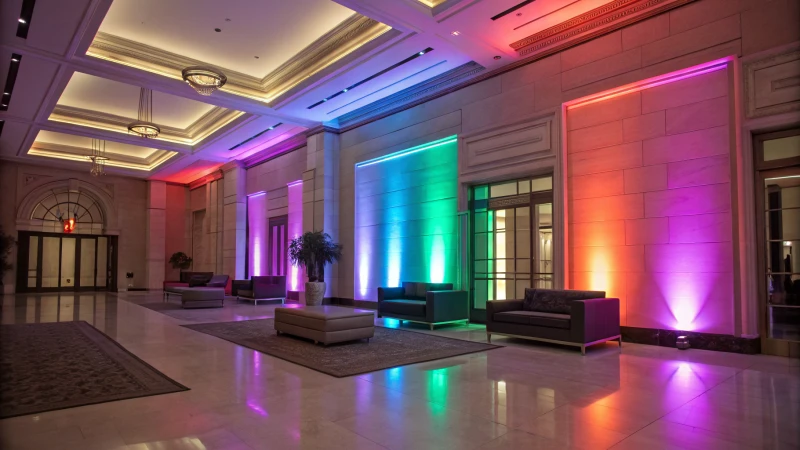
Color mixing enhances lighting design by blending various light hues to create vibrant atmospheres. By using RGB LEDs, designers can access a full spectrum of colors, shaping moods and spotlighting architectural elements.
Understanding the Basics of Color Mixing
Color mixing involves blending light wavelengths to produce different hues. Two primary methods, additive and subtractive color mixing, are used in lighting design13. Additive mixing combines red, green, and blue (RGB) lights, while subtractive mixing is more about filtering out colors.
| Method | Principle | Application |
|---|---|---|
| Additive | Combines RGB to form new colors | Used in stage lighting |
| Subtractive | Filters colors using gels or LEDs | Common in photography lighting |
Enhancing Mood and Atmosphere
Using color mixing, designers can create specific moods or highlight architectural features. For instance, warm tones can evoke coziness, while cooler tones offer a modern aesthetic14. By adjusting the intensity of RGB channels, you can create endless color variations.
Practical Applications in Commercial Spaces
In commercial settings, mastering color mixing is like holding a key to ambiance. Imagine a restaurant basking in warm hues, making every dining experience feel special, or a retail store dazzling with vibrant colors to catch every passerby’s eye. Additionally, smart lighting systems15 allow for dynamic adjustments based on time of day or event.
Technical Considerations for Effective Mixing
Successful color mixing requires understanding equipment such as LED controllers and dimmers. A well-designed control system ensures seamless color transitions and precise adjustments. Consider using a hybrid LED system that combines both RGB and white LEDs for versatile lighting solutions.
Tip: When selecting your equipment, ensure compatibility between RGB and white LED strips for optimal performance.
Advanced Techniques for Professional Use
Professionals might explore advanced techniques like adjusting color temperature or creating dynamic sequences. These techniques can be programmed through sophisticated control systems to achieve desired effects16. For instance, transitioning from a warm sunrise to a cool afternoon using automated settings can enhance user experience in hospitality environments.
Color mixing in lighting design is an art that blends creativity with technical know-how. Mastering it can transform your projects and leave a lasting impact.
Additive color mixing uses RGB to create new colors.True
Additive mixing combines red, green, and blue light to form various hues.
Subtractive mixing is primarily used in stage lighting.False
Subtractive mixing is more common in photography lighting, not stage lighting.
Conclusion
Combining white and RGB LED strips is possible with compatible control systems and sufficient power supply, allowing for dynamic lighting designs that enhance ambiance and functionality.
Learn about the impact of color temperature on ambiance and task lighting applications. ↩
Understand how to calculate total power needs for mixed LED strip setups. ↩
Discover techniques for seamless color transitions with high-quality controllers. ↩
Explore how hybrid strips simplify installation while offering dynamic lighting effects. ↩
Find tailored solutions that align with specific project requirements and goals. ↩
Learn about different LED controller types to enhance lighting system flexibility. ↩
Discover efficient power supplies that maximize LED performance. ↩
Find top-rated LED controllers for managing mixed LED systems. ↩
Identify lighting solutions that offer versatility for commercial applications. ↩
This link explores top-rated multi-channel LED control systems that seamlessly integrate white and RGB LEDs. ↩
This link provides insights into reliable LED power supplies, essential for stable performance. ↩
This link helps explore various options for integrating LED lighting systems efficiently. ↩
Explore how additive color mixing works with RGB LEDs to create new hues in lighting design. ↩
Discover how different light tones can influence mood and create desired atmospheres. ↩
Learn about smart systems that allow dynamic light adjustments for various settings. ↩
Understand programming techniques for creating sophisticated lighting sequences. ↩