
Lighting can completely transform a space, but finding the right beam angle is like picking the perfect shade of paint.
Beam angle in lighting refers to the spread of light emitted by a fixture, measured in degrees. Narrow angles (10°-30°) provide focused light, ideal for accent lighting, while medium angles (30°-60°) are suitable for task lighting, and wide angles (60°+) offer uniform coverage for ambient lighting. Choose the right beam angle based on room size, lighting purpose, and desired effect—narrow beams for accentuating features, and wider beams for general illumination or large spaces.
I remember the first time I tried to light up my living room. I wanted to showcase a beautiful painting, but ended up with a glaring spotlight instead. It was then I learned the magic of beam angles. From cozy nooks to vibrant galleries, each angle serves a unique purpose. Let's delve deeper into how understanding these angles can elevate your lighting game, uncovering tips and common pitfalls along the way.
Narrow beam angles are best for spotlighting artwork.True
Narrow angles focus light on specific areas, ideal for highlighting art.
Wider beam angles create cozy corners in a room.False
Wider angles provide broad coverage, not ideal for creating cozy corners.
What Are the Different Types of Beam Angles?
Ever wonder how the right lighting can make or break a space? It all comes down to beam angles.
The three main types of beam angles are narrow, medium, and wide. Narrow beams (10°-30°) focus light precisely, medium beams (30°-60°) spread it moderately, and wide beams (60°+) cast a broad glow.

Understanding Beam Angles
I remember the first time I walked into a room and was struck by the lighting. It wasn’t too bright or too dim; it was just right. That was when I realized how much beam angles matter. Beam angles essentially dictate how light spreads from a fixture, and choosing the right one can transform a space. Let's explore different types of beam angles1.
Narrow Beam Angles
Think about the last time you admired an art piece or a striking architectural feature. Chances are, narrow beam angles were at work. Ranging from 10° to 30°, these beams focus intensely on a specific area, making them perfect for accent lighting.
| Application | Beam Angle Range | Example Uses |
|---|---|---|
| Accent | 10°-20° | Art pieces, sculptures |
| Task | 20°-30° | Workstations, reading nooks |
Imagine using them to spotlight a cherished sculpture or a masterpiece hanging on your wall.
Medium Beam Angles
For those cozy reading corners or a softly lit kitchen, medium beam angles ranging from 30° to 60° offer that ideal balance. These beams provide general illumination without overpowering a space—just like that comforting glow you might find in your favorite café.
Wide Beam Angles
Ever walked into a grand hall or attended an outdoor event where everything seemed perfectly lit? Wide beam angles, starting at 60°, are responsible for this magic. They cover large areas with ease, making spaces like conference rooms or expansive gardens come alive.
| Application | Beam Angle Range | Example Uses |
|---|---|---|
| Ambient | 60°+ | Large halls, outdoor areas |
| General | 60°-80° | Offices, living rooms |
Choosing the Right Beam Angle
Choosing the perfect beam angle feels a lot like picking the right tool for the job. For instance, if you're setting up task lighting in your home office, narrower angles work wonders to focus light where you need it most. On the other hand, ambient lighting benefits from wider angles to ensure even coverage across a room.
Understanding these nuances helps in tailoring lighting to suit different environments—from cozy nooks to vast open spaces. And if you're keen to dive deeper into how these angles impact your lighting projects, exploring their practical applications2 can be quite enlightening.
Narrow beam angles are ideal for task lighting.True
Task lighting benefits from narrow angles to focus light precisely.
Wide beam angles are unsuitable for outdoor lighting.False
Wide beam angles provide broad coverage, ideal for outdoor areas.
How Does Room Size Influence Beam Angle Choice?
Remember that time you walked into a room and the lighting just felt... off? It might have been the beam angle to blame!
The size of your room plays a big role in choosing the right beam angle for lighting. Smaller rooms thrive with narrower angles that concentrate light, while larger spaces benefit from wider angles to ensure even coverage and reduce shadows.
%[Infographic showing three room sizes with beam angles]![]
Understanding Beam Angles
I remember standing in my living room, staring at my new light fixture, trying to figure out why it just didn't look right. It turns out, the beam angle makes a huge difference! You see, beam angles determine how light spreads from a fixture. A narrow beam angle focuses light on a specific area, while a wider angle disperses it across a broader space. This little detail is crucial when selecting lighting fixtures for different rooms3.
| Beam Angle | Type | Ideal Room Size |
|---|---|---|
| 10°-30° | Narrow Beam | Small Rooms |
| 30°-60° | Medium Beam | Medium Rooms |
| 60°+ | Wide Beam | Large Rooms |
Why Room Size Matters
It's like when I tried to light up my cozy reading nook with a wide-beam bulb—it was as if I was trying to illuminate a football field! For smaller rooms, like bathrooms or closets, using a narrow beam angle (10°-30°) keeps the light focused and prevents unnecessary spillover, accentuating features without overwhelming the space. On the other hand, in large open areas such as living rooms or conference halls, wide beam angles (60°+) are preferable. They provide uniform lighting, reducing shadows and ensuring even distribution4.
Practical Applications
Here's what I've learned: for task lighting in kitchens or offices, medium beam angles (30°-50°) offer that perfect balance of focused illumination without causing glare. But when it comes to ambient lighting in expansive areas, wider beams maintain a balanced light level throughout.
For instance, think about pendant lights in a dining room. Narrower beams can create those cozy focal points on tables, while recessed downlights with wider beams help achieve general illumination5 in corridors.
Factors Influencing Beam Angle Choice
Apart from room size, I've found that factors like ceiling height and wall color play a big role too. High ceilings might require narrower beams to keep the light from dissipating before it hits the floor. Similarly, darker walls can absorb more light, which might mean tweaking the beam angle or adjusting where fixtures are placed to compensate.
Understanding these nuances really helps in optimizing lighting strategies, ensuring both functional efficiency and aesthetic appeal across various room sizes and layouts. It's like having a secret weapon in creating the perfect ambiance!
Narrow beam angles are ideal for large rooms.False
Large rooms require wide beam angles for even light distribution.
Wide beam angles reduce shadows in large spaces.True
Wider beams provide uniform lighting, minimizing shadow formation.
What Beam Angle Is Best for Task Lighting?
Have you ever squinted at a recipe because your kitchen lighting wasn't up to the task?
For task lighting, opting for a medium beam angle between 30° and 50° is usually best. This range ensures focused illumination, making tasks like reading, cooking, or intricate work easier and more comfortable.
%[Cozy home office with wooden desk and warm lighting]
Understanding Beam Angles
The beam angle of a light fixture is something I didn't think much about until I found myself struggling with poor lighting while working late one night. It's essentially how the light spreads from the fixture, impacting how well a space is illuminated. The choice of beam angle can make a world of difference in visibility and comfort.
| Beam Angle Type | Degrees | Typical Uses |
|---|---|---|
| Narrow (Spotlight) | 10° - 30° | Accent lighting, highlighting features |
| Medium (Floodlight) | 30° - 50° | Task lighting, focused area coverage |
| Wide (Wide Flood) | 60° and above | Ambient lighting, large area illumination |
Choosing the Right Beam Angle for Tasks
Purpose of Lighting:
I remember trying to cook a new recipe without proper lighting—an experience I don't wish to repeat. For tasks like reading or cooking, medium beam angles (30°-50°) provide just the right amount of focused light without overwhelming adjacent areas.
- For tasks like reading or cooking, a medium beam angle (30°-50°) is beneficial. It ensures focused light without spilling into adjacent areas.
- A narrow beam angle may be used when precision is crucial, such as highlighting a workspace on a kitchen counter.
Room Size and Shape:
Small rooms or workspaces benefit greatly from medium beam angles, focusing light where it's needed most and avoiding spillover that could distract or waste energy. In larger spaces, mixing different angles can maintain efficiency6 while ensuring comprehensive coverage.
Practical Applications of Medium Beam Angles
- Kitchens: A beam angle of 30° to 50° is ideal for illuminating countertops efficiently, helping you see every ingredient clearly without casting harsh shadows.
- Offices: Desks and workspaces lit with these angles help reduce eye strain during long hours, making it easier to focus on detailed tasks.
Medium beam angles are adaptable; they can be fine-tuned to meet specific needs in various environments. They strike a balance between targeted illumination and overall brightness, enhancing both functionality and comfort in your workspace.
A medium beam angle is best for task lighting.True
Medium angles (30°-50°) focus light effectively for tasks.
Wide beam angles are ideal for task lighting.False
Wide angles are better for ambient lighting, not focused tasks.
How Do Beam Angles Impact Outdoor Lighting Design?
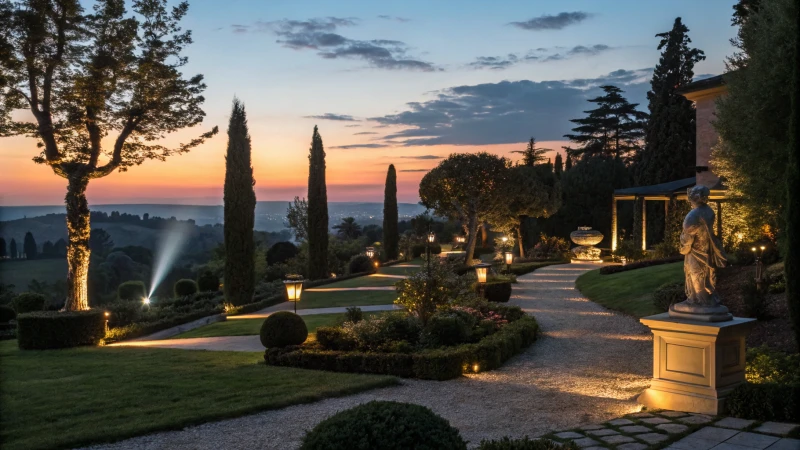
Imagine stepping into your backyard and feeling like you've entered a beautifully lit gallery, where every corner and detail is perfectly highlighted. That's the magic of choosing the right beam angles for outdoor lighting.
Beam angles impact outdoor lighting by determining how light spreads and focuses. Narrow angles are perfect for highlighting features, while wide angles ensure broad coverage. Selecting the right angle enhances both aesthetics and functionality.
Understanding Beam Angles in Outdoor Settings
When I first started experimenting with outdoor lighting, I was amazed at how something as simple as a beam angle could completely transform a space. Imagine using a narrow beam angle—somewhere between 10° and 30°—to spotlight a beloved garden sculpture. Suddenly, that piece becomes the star of your yard, casting intriguing shadows and catching the eye of every guest who visits.
Then there’s the beauty of a wide beam angle, over 60°, which I find perfect for creating that soft, inviting glow over larger spaces like patios or gardens. It’s like wrapping your space in a cozy blanket of light, ensuring both safety and an inviting atmosphere.
| Beam Angle Type | Typical Degree Range | Application Examples |
|---|---|---|
| Narrow (Spotlight) | 10° - 30° | Highlighting sculptures |
| Medium (Floodlight) | 30° - 60° | General lighting for pathways |
| Wide (Wide Flood) | 60°+ | Ambient lighting for large areas |
Selecting Beam Angles for Different Outdoor Applications
Accent Lighting
I've always loved the dramatic effect of accent lighting. Using a narrow beam angle to highlight elements like trees or water features can create a scene straight out of a storybook. It’s not just about highlighting; it’s about adding depth and intrigue to your landscape.
Safety and Security
Safety is always a priority in my outdoor projects. Medium beam angles, ranging from 30° to 60°, are my go-to for pathways because they provide excellent visibility without overwhelming glare. And when security is a concern, opting for wide beams ensures every corner is well-lit.
Enhancing Architectural Features
For me, showcasing architectural elements like columns or textured walls often involves a blend of narrow to medium beams. This combination not only highlights these features but also adds a layer of sophistication to the overall design.
Considering Environmental Impact
As someone who values sustainability, I’m mindful of how beam angles affect energy efficiency and light pollution. Narrow beams help reduce unnecessary spillover, ensuring that light is concentrated exactly where it’s needed. This approach not only saves energy but also minimizes disruption to local wildlife.
For those who share my passion for sustainable practices, integrating smart control systems can further optimize energy use by adjusting beam angles automatically based on specific needs or times of day automatically7.
Narrow beam angles are ideal for garden illumination.False
Wide beam angles over 60° are better for illuminating gardens.
Wide beam angles help reduce light pollution.True
Wide beams spread light evenly, minimizing spillover and reducing pollution.
Conclusion
Choosing the right beam angle in lighting is crucial for achieving desired ambiance and functionality, with narrow angles for accents and wide angles for general illumination across different room sizes.
Learn how various beam angles influence light distribution and impact the aesthetics of your space. ↩
Gain insights into choosing appropriate beam angles for various lighting applications. ↩
Explore how different lighting fixtures suit various room sizes for optimal illumination and aesthetic balance. ↩
Learn techniques for ensuring consistent lighting in large spaces, minimizing shadows and uneven brightness. ↩
Find tips on achieving effective general lighting in corridors, enhancing safety and aesthetics. ↩
Exploring this helps identify which beam angles provide efficient lighting solutions for specific tasks. ↩
Discover how smart systems adjust beam angles automatically for optimal outdoor lighting efficiency. ↩