
Buying the wrong track lighting system creates huge headaches. You face angry customers, expensive returns, and wasted shipping fees. I want to help you avoid this common mistake today.
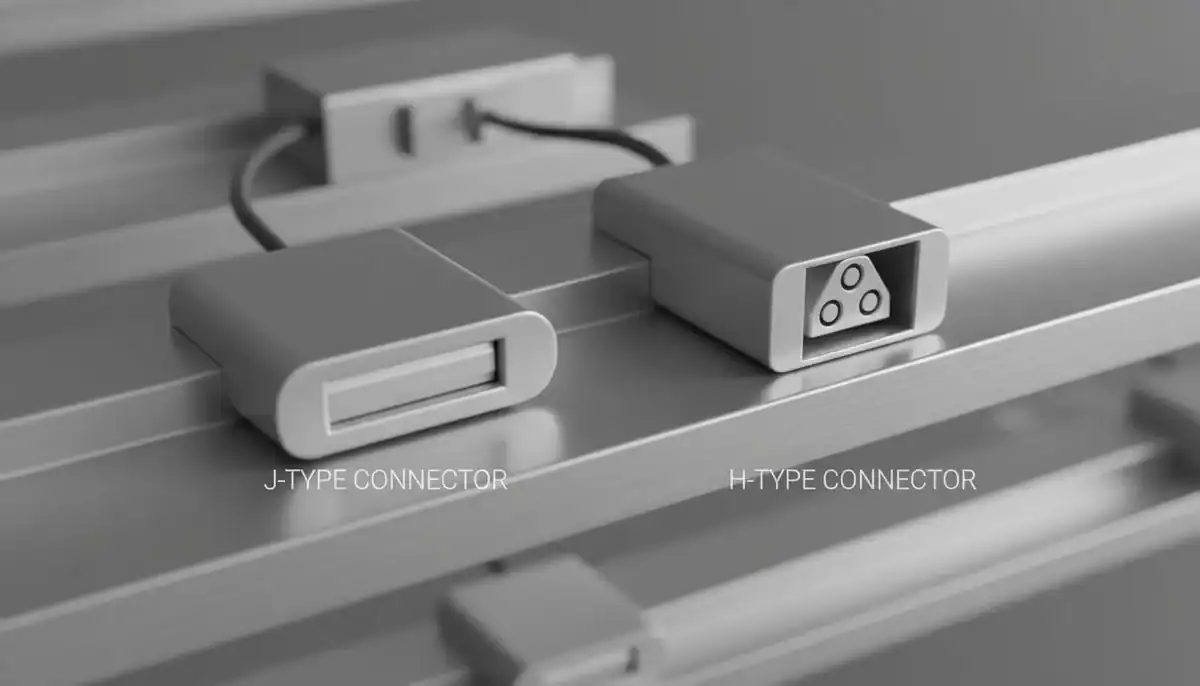
The main difference lies in the contact points29. H-type (Halo) is the most common and has three contact points: two strips and a ground tip. J-type (Juno) has two contact strips spaced widely apart, usually about 1 inch. They are physically different and you cannot swap them.
I have worked with many distributors in Mexico who struggle with this. They import goods, and when the container arrives, the track heads do not fit the rails they already have in stock. This stops their cash flow. It is a painful situation. But if you know what to look for, you can identify the right type in seconds. This guide will explain exactly how to tell them apart and which one is better for your business.
H-type and J-type track lights are interchangeable.False
They have different physical contact points and dimensions, making them incompatible without specific adapters.
H-type is the most widely used standard in North America.True
Halo (H-type) style tracks hold the majority market share due to availability and cost.
1:Identify in 60 Seconds: J-type or H-type?
You are at a job site or checking a sample in your warehouse. You need to know the track type immediately to close the deal.
Look at the connector base. If you see three contact points, it is H-type30. If you see two contact strips that are far apart, it is J-type. H-type tips look like a triangle face, while J-type looks like a flat line.
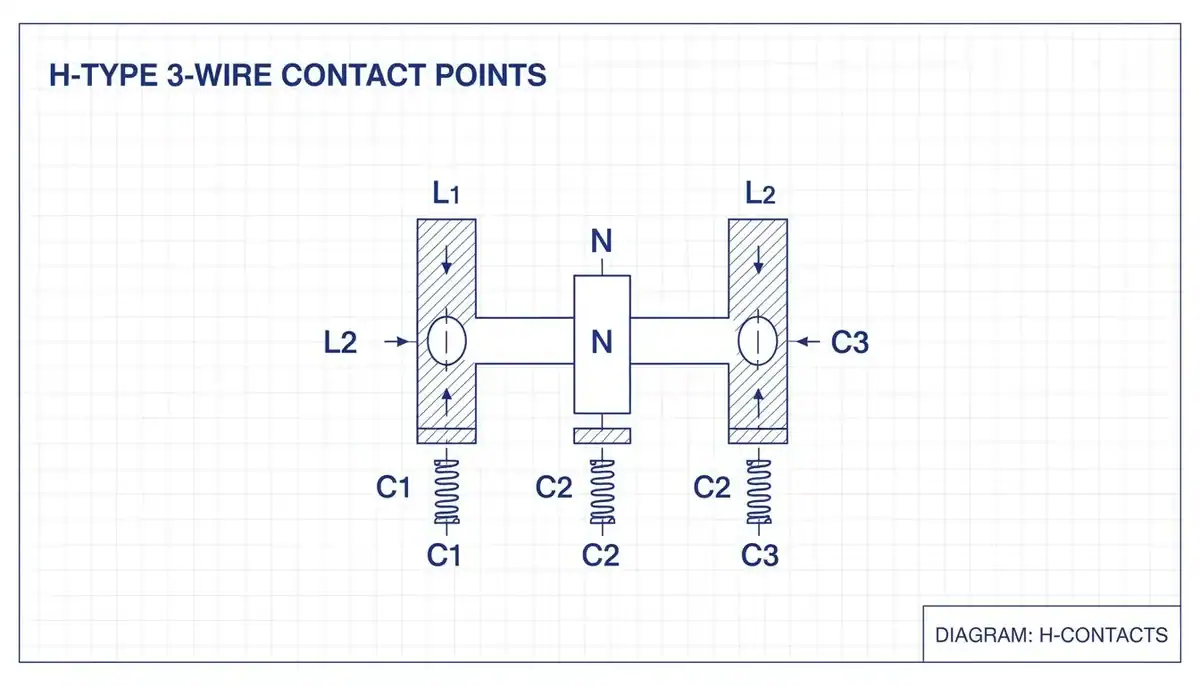
Let us look closer at the physical details. This is the most reliable way to check your inventory. I always tell my clients to ask for a photo of the connector before they place a bulk order.
H-Type (Halo Compatible):
This is the "3-wire" system. When you look at the part that goes into the track, you will see three distinct points. Two are on one side, and one (the ground) is on the other. The tips are usually pointy. This is the standard I sell the most to North America and Latin America.
J-type31 (Juno Compatible):
This is a "2-wire" wide system. The copper contacts are about 1 inch apart from each other. One contact is usually slightly higher than the other if you look from the side. It does not have the third grounding tip in the same way H-type does.
Here is a simple table to help you remember:
| Feature | H-Type (Halo) | J-Type (Juno) |
|---|---|---|
| Contacts | 3 Points | 2 Strips |
| Spacing | Close triangle shape | Wide (1 inch apart) |
| Appearance | Three distinct clips | Two flat copper areas |
| market share32 | Very High | Moderate |
If you are still not sure, check the label. Manufacturers often mark them as "HT" or "JT". But visual inspection is faster. At Besenled, we double-check these specs before we start our 5 production lines for your order. We know that sending the wrong type to Mexico takes too long to fix.
J-type connectors have contacts spaced 1 inch apart.True
This wide spacing is the key visual identifier for Juno-style track systems.
You need a multimeter to identify track types.False
Visual inspection of the contact points is sufficient and faster.
2:Mixing Is a Myth: Why J and H Don’t Interlock?
Can you force a J-type head into an H-type rail? I strongly advise you never to try this.
The physical dimensions prevent a safe connection. The copper strips inside the rail are at different heights and depths. If you force them, you will break the fixture or create a fire hazard.
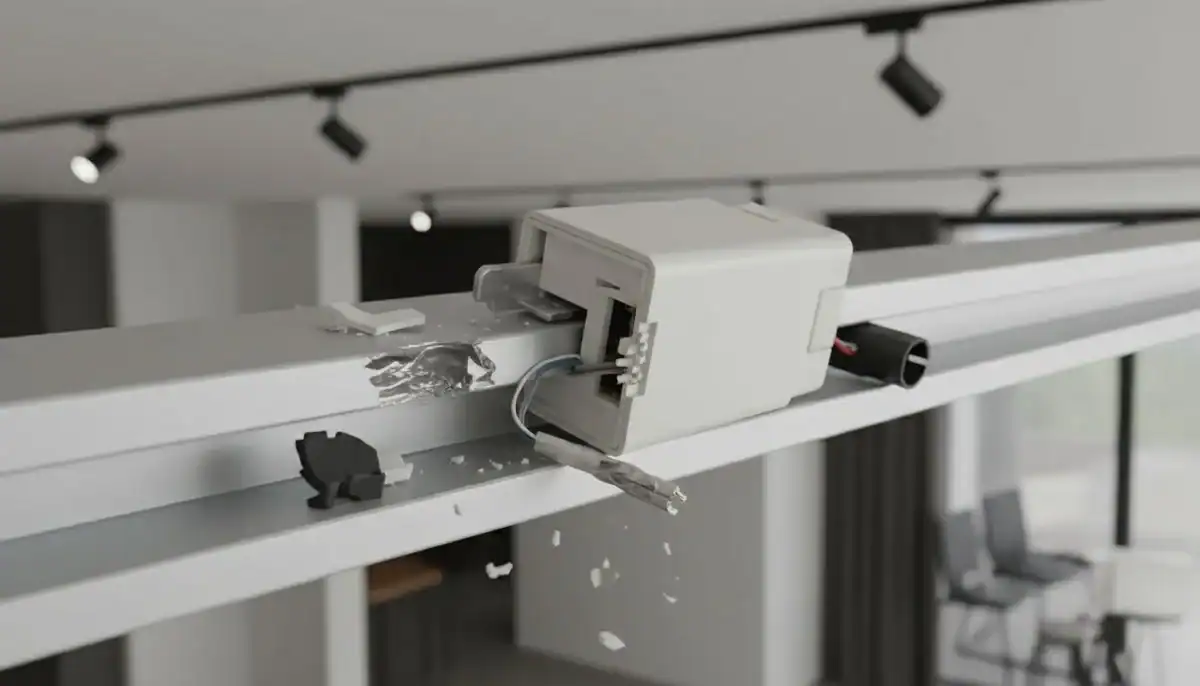
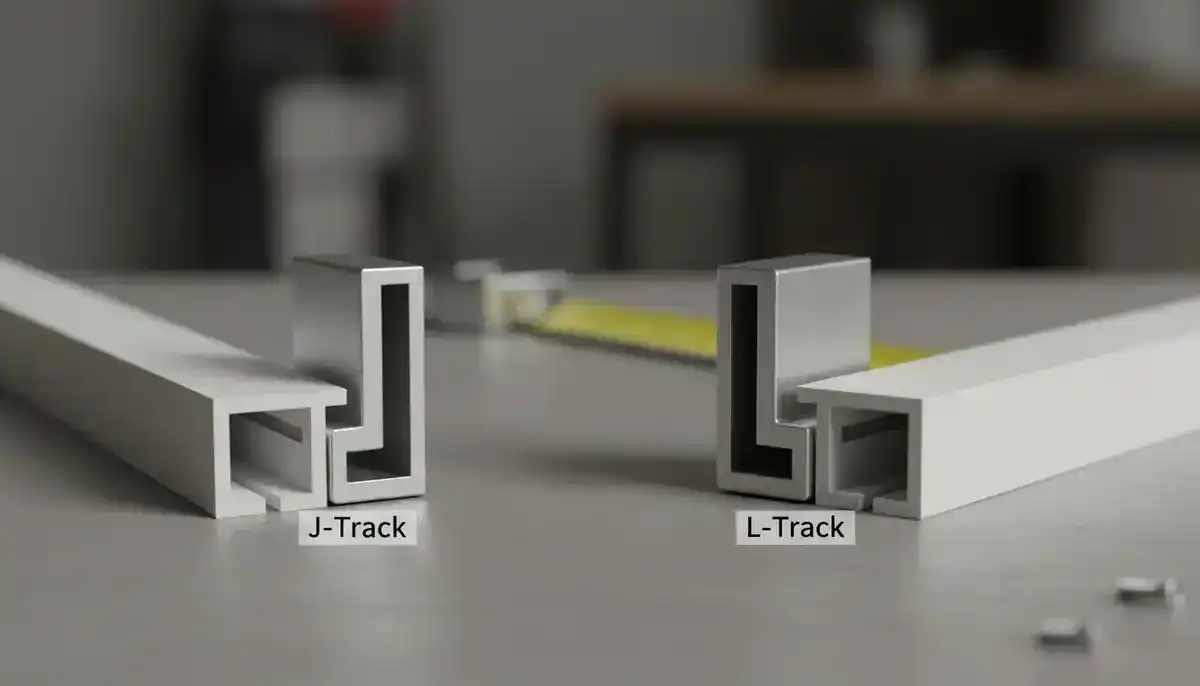
I have seen practitioners try to mix these standards. They think that because the track width looks similar, they can just push harder. This is dangerous. The H/J/L standards are separate ecosystems.
The internal geometry of the aluminum rail is different. An H-type rail has ridges designed to accept the three clips of the H-head. A J-type rail is smooth in different areas to accept the wide J-contacts. If you try to put a J-head into an H-rail, the contacts will not touch the live wires correctly.
Even worse, you might cause an electrical arc. This happens when electricity jumps across a gap. It creates heat and can start a fire. As a factory owner, I ensure our products pass CE and RoHS standards. But these certificates only work if you use the product correctly. Mixing types voids all safety warranties.
Some people ask about adapters. Yes, adapters exist. But in a commercial project, adapters add a weak point. They can fail. It is always better to match the rail standard from the start. If you are replacing lights in an old building, check the rail first. Do not guess.
Forcing mismatched track heads can cause electrical arcing.True
Poor contact alignment creates gaps where electricity can jump, causing heat and fire risks.
Adapters are the best solution for commercial projects.False
Native compatibility is safer and more reliable; adapters add potential failure points.
3:Spec-Grade Choices: Availability and Price Reality (J vs H)
Which option is better for your profit margins? The answer depends on your specific project needs.
H-type typically yields faster fulfillment and broader SKU coverage. It is the volume leader. J-type serves architectural specs33 well but often requires specialty sourcing and costs more.

In the B2B world, time is money. My clients in Mexico often need goods "yesterday." Because H-type is the standard for about 80% of the market, factories like mine keep more components for H-type in stock. This means if you order H-type, I can often finish production in 3 to 7 days.
J-type is different. It is often specified by architects for high-end commercial spaces, like museums or luxury retail stores. Because the demand is lower, fewer factories mass-produce J-type components. This can lead to longer lead times34. You might wait 15 days instead of 7.
Price is another factor. Due to the massive scale of production, H-type components are cheaper to buy. J-type components are more specialized, so they cost slightly more. If you are bidding on a project where price is the only factor, H-type is your winner.
However, if you are supplying a building that already has J-type rails installed, you have no choice. You must supply J-type. Trying to sell them a new H-type rail system to replace the old one is usually too expensive for the end user. So, you must balance availability with the project requirements. Always check the spec sheet35.
H-type components generally have shorter lead times.True
Higher market demand leads to larger stock levels and faster production cycles.
J-type is cheaper than H-type.False
Lower production volume usually makes J-type slightly more expensive per unit.
4:Circuit Matters: Single vs Dual on J and H Tracks
Do you need to control two sets of lights on the same track? This changes which type you should buy.
H-type is standard for single circuits. J-type is often preferred for two-circuit applications because it handles the second switch leg more easily within its design.
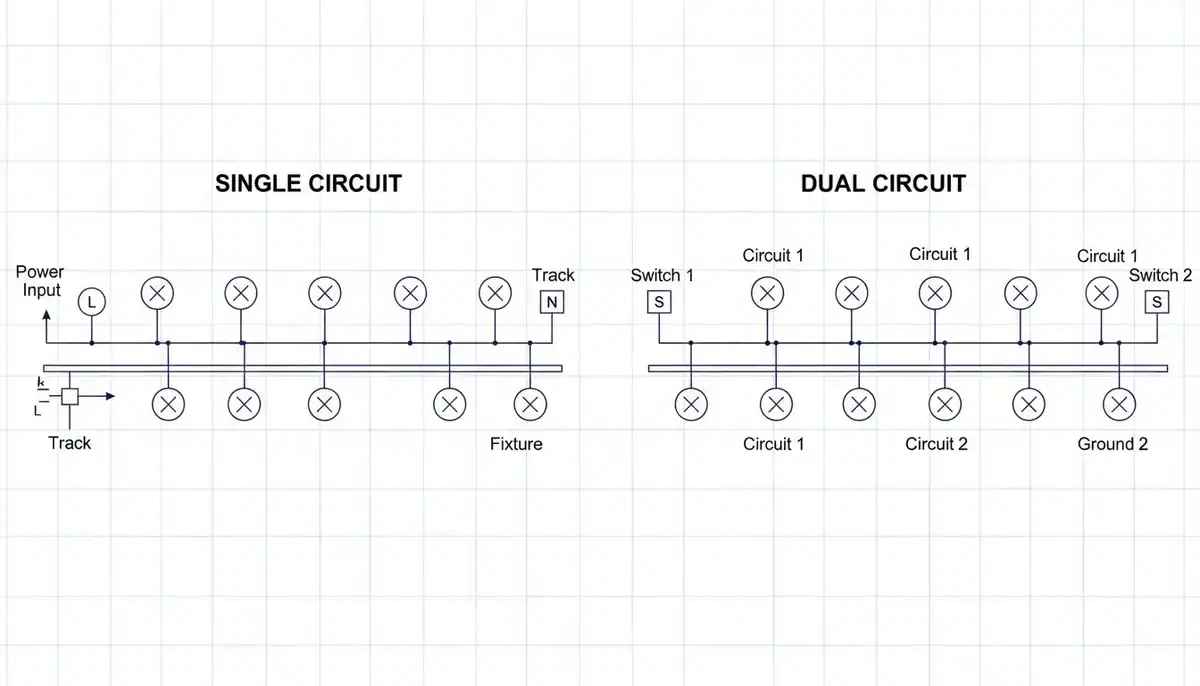
Lighting control is a big trend now. Clients want to dim one group of lights while keeping another group bright. This requires a two-circuit (or dual circuit36) system.
J-type (Juno) was originally designed with this in mind. Many J-type connectors can be converted to two-circuit simply by pulling up a small contact tab. It is very flexible. If your client wants complex lighting zones without running new wires in the ceiling, J-type is a strong candidate.
H-type is mostly single circuit. It has three wires: Hot, Neutral, and Ground. To make H-type dual circuit, you need a specific, less common version of the track that has an extra copper strip. It is not as standard as the single circuit version.
When I produce orders for large corporate buyers, I ask about the control system. If they just want simple on/off, H-type is perfect. If they need advanced zoning, I check if they are using a dual-circuit system. Using a single-circuit head on a dual-circuit track can sometimes work, but you lose the control features. You must match the circuit capability to the rail.
J-type connectors are often convertible to two-circuit.True
Many J-type heads feature a pull-up contact to access a second circuit on the rail.
Standard H-type tracks support dual circuits by default.False
Standard H-type is single circuit; dual circuit requires a specialized version.
5:FAQ
Here are the quick answers to the questions my clients ask me every week.
We cover cross-compatibility, brand mixing, and quick identification tips. These answers will help you make safe and profitable purchasing decisions.

Can J-type heads fit on H-type rails?
No. They will not fit. The contact spacing is different. Do not force them. You will damage the product and risk safety issues.
How do I tell J-type from H-type quickly?
Count the contacts. H-type has 3 contacts (two on one side, one on the other). J-type has 2 contacts that are wide apart. If it looks like a triangle of points, it is H. If it looks like two separate flat strips, it is J.
Can I mix brands within the same track type?
Yes, usually. If you have a Halo-brand rail, you can use a Besenled H-type head. The "H-type" is a universal standard. However, always test a sample first. Some brands have slight size variations in the plastic housing that might make the fit tight.
Does single vs dual circuit change J vs H compatibility?
Yes. A dual-circuit track has extra copper strips. You must ensure your track head is designed for that specific circuit type. A standard single-circuit H-head might not make contact correctly on a specialized dual-circuit rail. Always match the spec sheet exactly.
You can mix different brands if the track type is the same.True
H, J, and L are universal standards, allowing cross-brand compatibility in most cases.
Single circuit heads always work perfectly on dual circuit rails.False
They may physically fit, but you will lose the dual-control functionality and alignment must be checked.
Conclusion
Knowing the difference between J and H types saves you money. H-type is best for speed and price; J-type is for specific architectural needs. Always check the contacts before you buy. If you need help identifying your track, send me a photo at Besenled.
References
Understanding contact points is crucial for ensuring compatibility and safety in track lighting systems. ↩
H-type track lighting is widely used; knowing its benefits can help in making informed purchasing decisions. ↩
J-type track lighting serves specific architectural needs; exploring its applications can enhance project outcomes. ↩
Understanding market share can guide purchasing decisions based on availability and cost. ↩
Understanding architectural specs can help in selecting the right lighting for specific design needs. ↩
Knowing lead times helps in planning projects and managing client expectations effectively. ↩
Checking the spec sheet ensures compatibility and helps avoid costly errors in lighting projects. ↩
Understanding circuit types is essential for designing effective lighting solutions.